Hot Tub Servicing: What’s Worth Paying For?
Hot tub servicing is not one thing. It can mean a ten-minute water test, a deep plumbing purge, a winter shutdown, a leak diagnosis, or a full control-pack repair. Some of those jobs are absolutely worth paying a qualified technician for. Others are convenience services that many owners can handle with a test kit, a hose, and a little consistency.
The goal is not to avoid service altogether. The goal is to stop paying premium labor rates for low-skill tasks while still paying promptly for the work that protects your spa, your warranty, and your safety.
At Hot Tub Value Guide, we think about hot tub servicing the same way we evaluate hot tubs: total ownership value matters more than the sticker price. A cheap tub with frequent service calls can become expensive fast, while a premium tub with poor local service support can be frustrating to own.
The short answer: what is worth paying for?
Pay for hot tub servicing when the job involves safety, warranty risk, freeze risk, hidden leaks, electrical components, or hard-to-access mechanical work.
Do it yourself, or only pay for convenience, when the job is mostly routine water care, filter rinsing, basic cleaning, and simple seasonal upkeep.
Here is the practical breakdown.
| Service task | Usually worth paying for? | Typical U.S. range | Why it matters |
|---|---|---|---|
| Annual mechanical inspection | Yes, especially on 240V tubs | $150 to $350 | Catches pump, heater, seal, and wiring issues early |
| Electrical diagnosis or control-pack repair | Yes | $100 to $200 diagnostic, repair extra | Water plus electricity is not a DIY guessing game |
| Pump, heater, or circulation pump replacement | Yes for most owners | $300 to $1,200+ depending on parts | Mistakes can cause leaks, faults, or warranty denial |
| Leak detection | Usually yes | $150 to $500 diagnostic, repair extra | Leaks can hide in foam, plumbing, jets, or pump seals |
| Winterization in freezing climates | Yes if you are closing the tub | $250 to $500 | Incomplete winterization can crack plumbing |
| Drain, purge, and deep clean | Sometimes | $200 to $450 | Worth it for neglected, used, or biofilm-prone tubs |
| Weekly or biweekly water service | Sometimes | $50 to $120 per visit | Valuable for rentals, second homes, or time-poor owners |
| Routine chemical balancing | Usually no | Often bundled into visits | Most owners can learn this quickly |
| Filter rinse and simple cartridge swap | Usually no | Often bundled into visits | Easy DIY unless access is difficult |
| Cover cleaning and vinyl conditioning | Usually no | Often bundled into visits | Low-skill task, but useful if included cheaply |
These are broad ranges, not quotes. Labor costs vary by region, travel distance, dealer network, access, warranty status, and whether your spa uses common or proprietary parts.
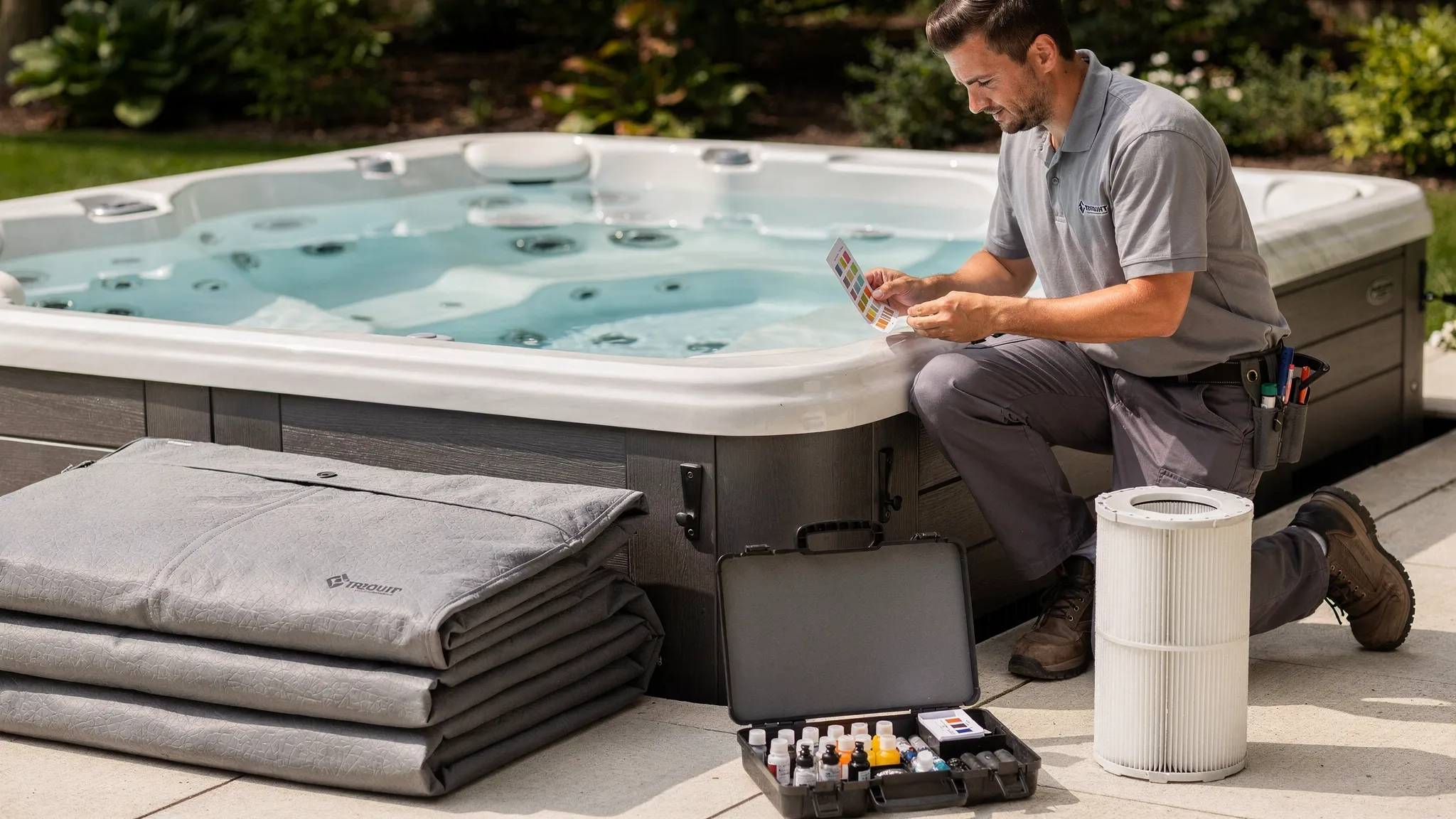
What hot tub servicing usually includes
A service company may use “hot tub servicing” to describe very different packages. Before comparing prices, make sure you are comparing scope.
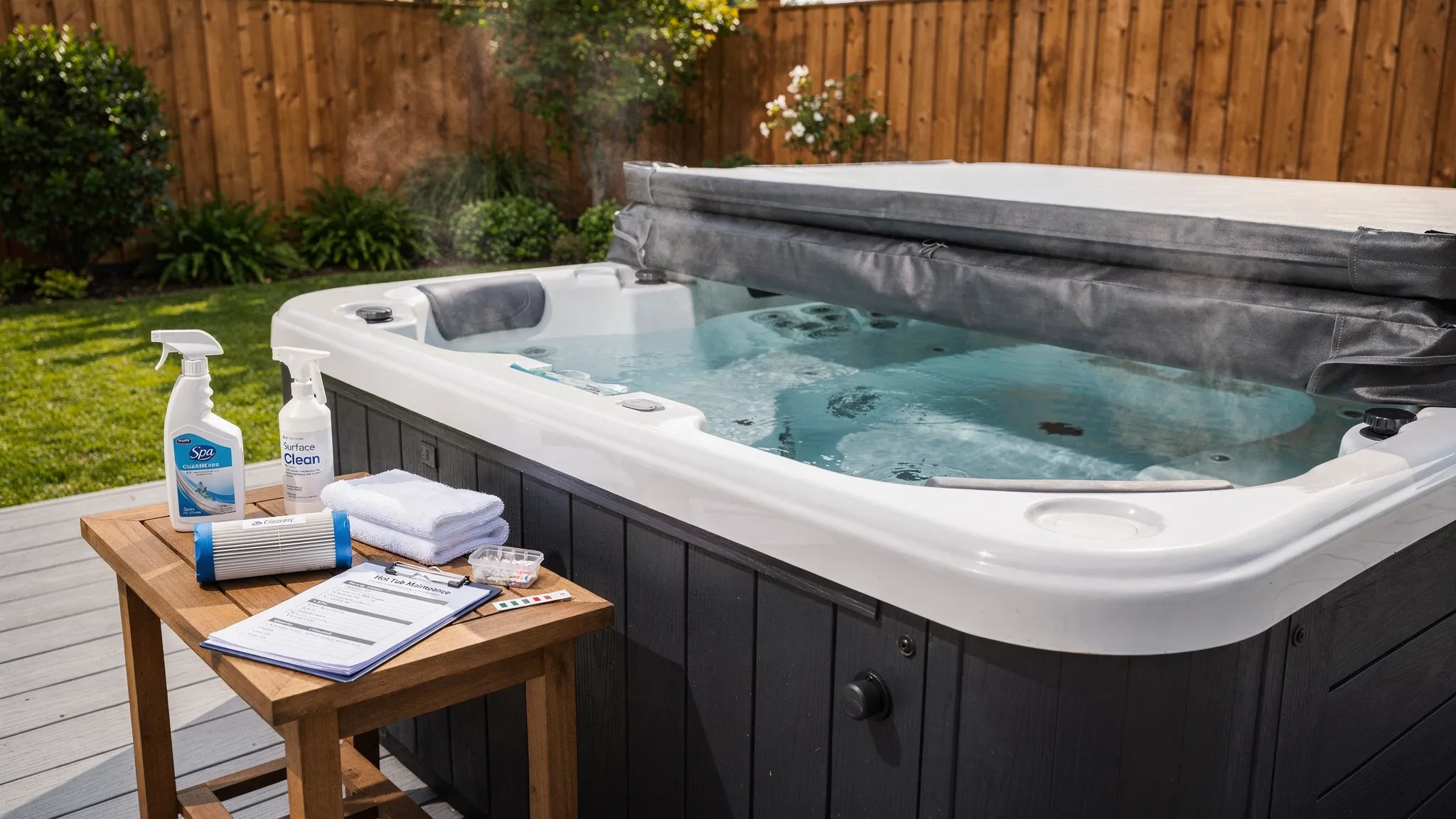
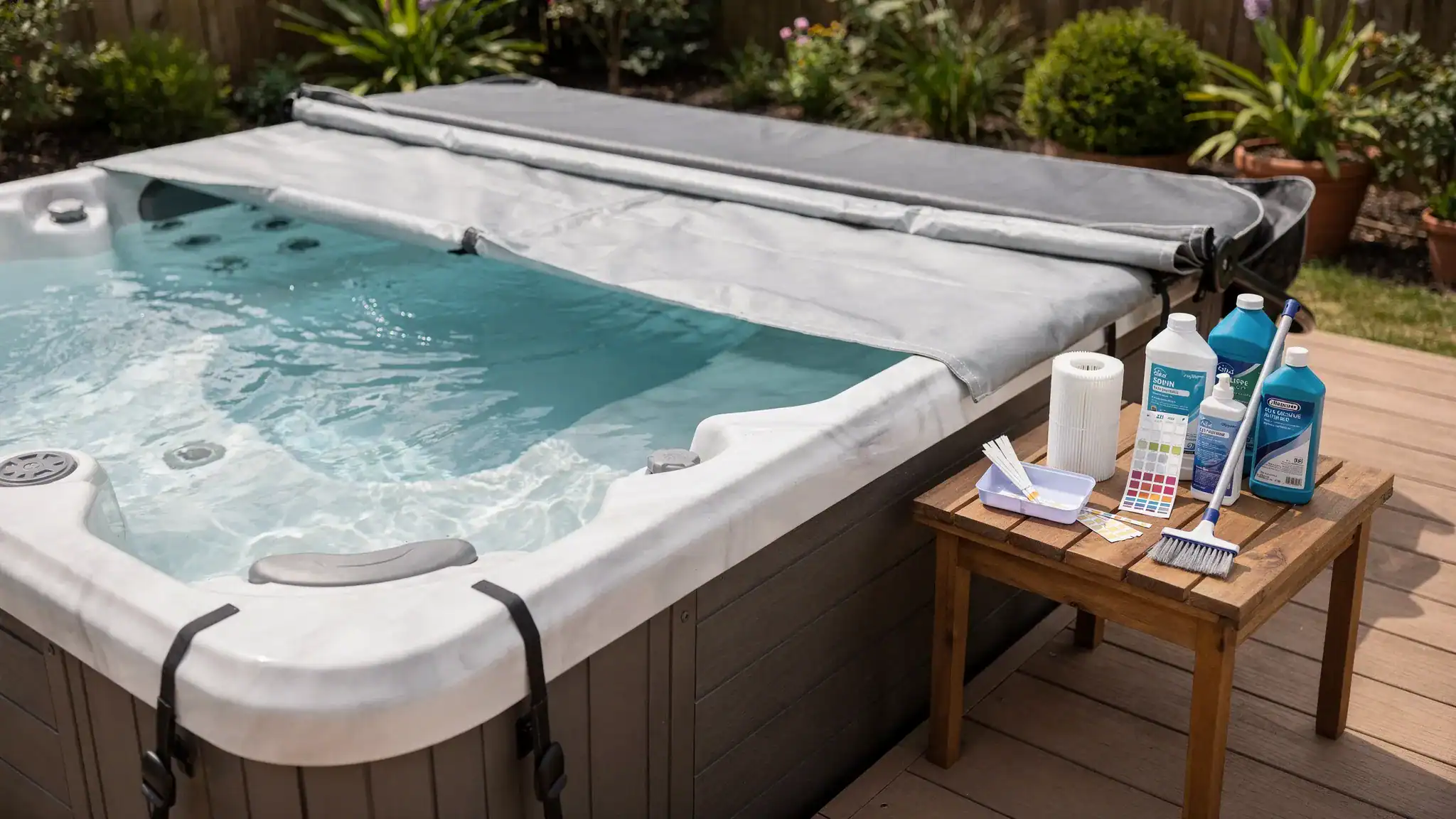
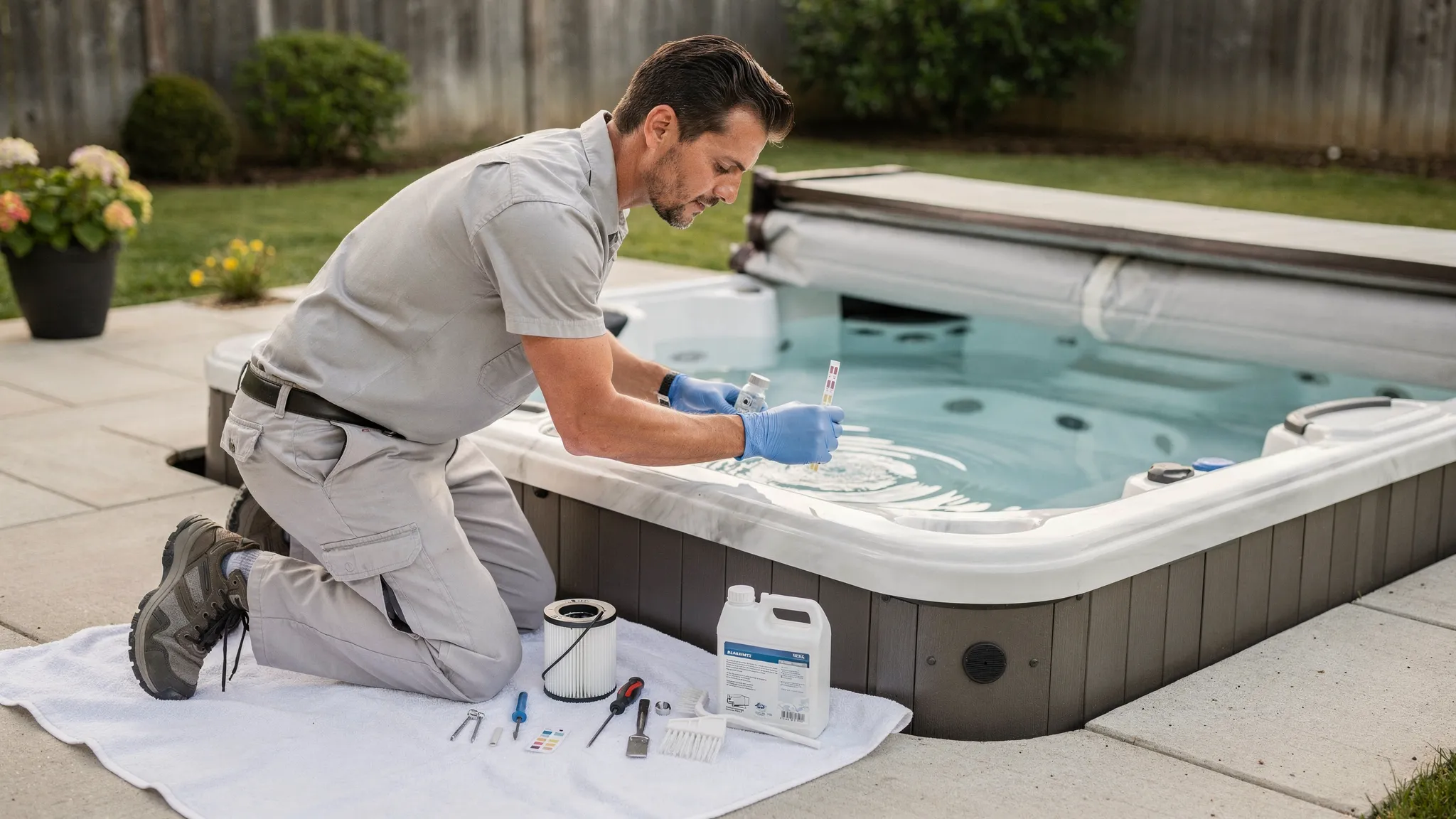
A basic maintenance visit usually includes water testing, sanitizer adjustment, pH and alkalinity correction, filter rinsing, surface wipe-down, and a quick visual inspection. This is convenient, but it is not the same as a mechanical service.
A real mechanical service may include inspecting the equipment bay, checking unions for drips, listening for noisy bearings, checking heater operation, confirming circulation, inspecting the GFCI behavior, looking for rodent damage, and checking the condition of the cover, pillows, jets, valves, and plumbing.
A deep service usually includes draining, line purging, shell cleaning, filter cleaning or replacement, refill, water balancing, and a final operational test. This can be worth paying for if the spa has been neglected, purchased used, rented heavily, or has recurring foam, odor, or cloudy water.
The CDC’s Model Aquatic Health Code is written for public aquatic venues, not private backyard spas, but its focus on sanitizer, pH, filtration, and documentation is a useful reminder: hot tub water care is a health and equipment issue, not just a cosmetic one.
Services that are usually worth the money
Annual mechanical inspection
An annual inspection is one of the better service purchases, especially for a 240V hard-wired spa, an older tub, or any model outside its first year of ownership.
A good annual inspection should be more than a glance under the cabinet. It should check for small leaks, damp insulation, pump noise, heater performance, filter cycle behavior, loose unions, deteriorating gaskets, cracked manifolds, failing cover seals, and signs of electrical or rodent damage.
This is especially valuable before winter. A slow leak in July is annoying. A slow leak in January can become freeze damage.
Electrical, heater, and control-system work
Anything involving the control pack, heater, topside panel, GFCI trips, 240V wiring, breaker behavior, or recurring fault codes is usually worth paying a qualified hot tub technician or licensed electrician to diagnose.
Many owners can reset a breaker or check whether a filter is clogged. But repeatedly resetting a tripping spa, bypassing safety devices, or guessing at live electrical components is not worth the risk.
This is where the difference between 120V and 240V tubs matters. A plug-and-play spa may be simpler to set up, but it still combines water, heat, and electrical components. A 240V spa adds higher-capacity heaters and hard-wired circuits. If you are still comparing spa types, our 120V vs 240V hot tub guide explains the ownership tradeoffs.
Leak diagnosis
Pay for leak diagnosis when the source is not obvious.
Simple leaks, like a loose drain cap or a dripping pump union, can sometimes be spotted by an owner. But many leaks hide in foam insulation, behind cabinets, around jet bodies, inside light housings, at manifolds, or near pump seals.
The longer a hidden leak runs, the more it can damage insulation, cabinets, pumps, framing, and the surrounding pad. In cold climates, it can also increase freeze risk if the water level drops below the intake.
A good technician should tell you whether the quote covers only diagnosis or includes repair. Those are often separate charges.
Winterization and de-winterization
If you plan to keep using the tub through winter, you do not need winterization. You need reliable heat, circulation, water level, and freeze protection.
If you plan to shut the tub down in a freezing climate, professional winterization is usually worth it. Proper winterization means more than draining the shell. Water can remain in pumps, plumbing lines, manifolds, jets, filter housings, and low spots.
A cracked manifold or freeze-damaged pump wet end can cost far more than a winterization visit. This is one of the clearest examples of paying a pro to prevent a bigger bill.
Used hot tub inspection before purchase
If you are buying a used hard-shell hot tub, a pre-purchase inspection can be money well spent. This is especially true if the tub is older, has been sitting empty, has unknown service history, or must be moved.
A used spa can look clean in photos while hiding brittle plumbing, dead pumps, a failing control board, waterlogged insulation, or freeze damage. A technician may not catch everything, but they can often identify expensive red flags before you pay movers.
For used tubs, also ask whether the spa can be filled, heated, and run before purchase. A dry inspection is much less useful than seeing the spa operate under heat and pressure.
Deep cleaning after neglect or heavy use
A professional drain, purge, clean, and refill is worth considering when a spa has recurring foam, odor, cloudy water, slimy surfaces, or unknown maintenance history.
Biofilm inside plumbing can make water care feel impossible. If sanitizer disappears quickly, the water smells off, and filters clog fast, the issue may be inside the lines rather than in the visible water.
For normal owner-occupied use, many people can learn to drain and refill themselves. But for a newly purchased used tub, vacation rental, or neglected spa, paying for one thorough reset can save weeks of frustration.
Services that are often not worth paying for
Routine water testing and balancing
For most owner-occupied tubs, weekly service for water balancing is a convenience, not a necessity.
You still need to learn your water. Even if you hire a service company, you should understand sanitizer, pH, alkalinity, calcium hardness, filter cleaning, and drain intervals. If your technician misses a week or your water goes sideways after a party, you need to know what to do.
If you are new to ownership, start with our hot tub maintenance for beginners guide. Once you understand the basics, you may find that you only need a pro for periodic inspections and repairs.
Filter rinsing and basic cartridge replacement
Filter care is one of the easiest maintenance tasks to do yourself. Rinsing a cartridge, rotating between two filter sets, and replacing worn cartridges are simple once you know where the filters sit and how to remove them.
Paying a technician to rinse filters can make sense if it is included in a larger visit. Paying a premium service charge just for filter rinsing rarely does.
Chemical bundles with vague labels
Be careful with service plans that include “all chemicals” but do not explain what is included. Sanitizer, pH increaser, pH reducer, alkalinity increaser, calcium hardness increaser, shock, purge product, filter cleaner, and specialty cartridges are not the same thing.
Ask whether the plan includes normal sanitizer only, all balancing chemicals, replacement filters, mineral cartridges, salt cells, ozone parts, UV bulbs, or proprietary cartridges. The details change the value.
Cosmetic upgrades disguised as servicing
Not everything around the spa is a service need. Steps, lighting, privacy screens, towel hooks, planters, and patio decor may improve the experience, but they should be budgeted separately from mechanical maintenance.
For example, if you are improving the spa area for safer nighttime access or a more polished backyard setup, compare decor purchases like modern home lighting separately from your hot tub servicing budget. That keeps your true maintenance cost visible.
“Inspection” visits with no written findings
An inspection that produces no readings, no photos, no checklist, and no written recommendations is hard to value.
A good service visit should leave you with clear notes: what was checked, what was adjusted, what parts are aging, what needs replacement soon, and what can wait.
When a service plan is worth it
A recurring hot tub service plan can be smart in the right situation. It is not automatically overpriced. It depends on your use case.
A service plan is more likely to be worth it if the tub is at a vacation home, short-term rental, shared family property, or high-use household. It can also make sense for owners with limited mobility, frequent travel, hard water issues, or a premium spa where dealer service documentation may help with warranty support.
It is less likely to be worth it if you use the tub lightly, live at the property, are willing to test water a few times per week, and can handle routine draining and filter care.
Here is the math that matters: a weekly $75 visit costs about $3,900 per year before major repairs. If you can handle routine maintenance yourself and pay for one annual inspection plus occasional repairs, your yearly service cost may be far lower.
But if a rental property gets constant use, a bad water week can mean refunds, complaints, damage, and health risk. In that case, reliable service may be cheaper than owner-managed maintenance.
What a good service quote should include
Before approving hot tub servicing, ask for specifics. A cheap vague quote can become expensive once the technician arrives, while a higher detailed quote may actually be the better value.
Ask these questions before you agree to the work:
- What exactly is included in the visit?
- Is this maintenance, diagnosis, repair, or all three?
- Are travel charges included?
- Are chemicals included, and which ones?
- Are filters, cartridges, salt cells, UV bulbs, or ozone parts included?
- What is the labor rate after the diagnostic visit?
- Are parts OEM, aftermarket, or refurbished?
- Is there a warranty on labor and parts?
- Will you provide photos or written findings?
- If the tub is under warranty, will you handle the claim?
For dealer-sold premium spas, authorized service may matter for warranty claims. For older out-of-warranty tubs, an experienced independent technician may be more cost-effective, especially if the spa uses common components.
Red flags that you may be overpaying
Not all service companies are equal. Some are excellent. Others lean heavily on upsells.
Be cautious if a company recommends expensive repairs without showing the failed part, refuses to separate diagnosis from repair, pushes a full chemical bundle before testing the water, or says every issue requires proprietary parts without explaining why.
Also be cautious with repeated “fixes” for cloudy water that never address filtration, biofilm, sanitizer demand, drain interval, filter age, or bather load. Clarifier and shock have their place, but they are not a substitute for understanding the root problem.
Another red flag is a service plan that sounds cheap but excludes the expensive items: filters, salt cells, mineral cartridges, UV bulbs, cover care, drain and refill labor, leak diagnosis, and winterization. If the plan only includes quick water balancing, price it accordingly.
A practical servicing schedule for most owners
The right schedule depends on water volume, use, climate, sanitizer system, and cover quality. Still, most residential hot tubs follow a similar rhythm.
| Task | Typical owner schedule | Pay a pro when |
|---|---|---|
| Test sanitizer and pH | 2 to 3 times per week, more after heavy use | You are away often or managing a rental |
| Adjust water balance | As needed after testing | Water chemistry stays unstable despite correct steps |
| Rinse filters | Every 2 to 4 weeks | Access is difficult or included in a larger visit |
| Deep clean filters | Monthly or as recommended by cartridge condition | Filters clog quickly or water quality keeps failing |
| Drain and refill | About every 3 to 4 months for many households | The tub is neglected, heavily used, or hard to drain safely |
| Plumbing purge | Periodically, especially before deep cleans | Odor, foam, slime, or used-tub history suggests biofilm |
| Inspect cover and cabinet | Quarterly | Cover is waterlogged, heavy, torn, or losing heat |
| Mechanical inspection | Annually | Always worth considering before winter or after warranty issues |
| Winterization | Only if shutting down in freezing weather | Strongly recommended in freeze-prone climates |
If your main concern is monthly electricity rather than repair cost, use the hot tub running cost calculator to estimate how cover quality, climate, tub size, voltage, and usage affect your bill.
How hot tub type changes service value
A basic 120V plug-and-play tub usually has lower installation complexity and may be easier for owners to maintain. That does not make it maintenance-free. Covers, filters, water balance, pumps, and heaters still matter.
A 240V hard-wired spa often has stronger heating, more pumps, larger water volume, and more expensive components. Annual inspections, dealer support, and qualified repair work become more important because the cost of mistakes is higher.
Premium dealer-channel spas can be worth servicing through an authorized dealer during the warranty period. Budget and online-sold spas may require more owner involvement, and service availability can vary by region. Before buying any hot tub, check who will actually service it locally. A strong warranty is less useful if no one nearby wants to perform the work.
The best value strategy
The best servicing strategy for most owners is a hybrid approach.
Handle routine water care yourself. Learn testing, balancing, filter care, cover care, and basic troubleshooting. Pay for an annual mechanical inspection, professional diagnosis when something is wrong, winterization if you are shutting down in a freezing climate, and any repair involving electrical components, leaks, pumps, heaters, or control systems.
That balance keeps ownership costs under control without pretending every spa problem is a DIY project.
Frequently Asked Questions
How often should a hot tub be professionally serviced? Many owner-occupied hot tubs do well with one professional mechanical inspection per year, plus service as needed for leaks, fault codes, winterization, or repairs. Rentals, second homes, and heavily used tubs may need more frequent service.
Is weekly hot tub servicing worth it? Weekly servicing is worth it for vacation rentals, second homes, busy owners, and anyone who cannot reliably test and adjust water. For a typical backyard owner willing to learn basic care, weekly service is often more convenience than necessity.
What hot tub repairs should I not do myself? Avoid DIY work on live electrical components, control packs, heaters, recurring GFCI trips, pump wiring, and hidden leaks unless you are qualified. Also be careful with warranty-covered repairs, since unauthorized work can affect claims.
How much does hot tub servicing cost? Basic maintenance visits often run about $50 to $120 per visit. Deep cleans may cost $200 to $450, annual inspections often fall around $150 to $350, and repairs vary widely based on parts and labor. Local rates can differ significantly.
Should I use the dealer or an independent technician? If the spa is under warranty, start with the dealer or manufacturer-authorized service path. If it is out of warranty, a skilled independent technician may offer better pricing, especially for common pumps, heaters, and control components.
Can I maintain a hot tub myself as a beginner? Yes, most owners can handle water testing, chemical balancing, filter rinsing, cover care, and routine cleaning. The key is consistency. Bigger mechanical, electrical, leak, and winterization jobs are where professional servicing earns its keep.
Before you pay for service, know your real ownership cost
Hot tub servicing is only one part of ownership. Electricity, filters, chemicals, covers, repairs, and water care all affect long-term value.
Before you approve a service plan or buy your next spa, compare the full picture. Use Hot Tub Value Guide’s free tools, including the operating cost calculator, value-focused reviews, size guidance, and buyer checklists, to estimate what a hot tub will actually cost to own, not just what it costs to buy.
Helpful next steps