Hot Tub Maintenance Checklist for New Owners
Owning a hot tub should feel relaxing, not like taking on a part-time chemistry job. The good news is that most hot tub maintenance is simple once you turn it into a routine. The bad news is that skipping the basics for even a few days can lead to cloudy water, odors, scale, skin irritation, clogged filters, or expensive service calls.
This checklist is built for new owners who want a practical, no-drama routine. Use it alongside your manufacturer manual, sanitizer label, and local dealer guidance, since every spa has slightly different equipment, water capacity, filtration cycles, and warranty requirements.
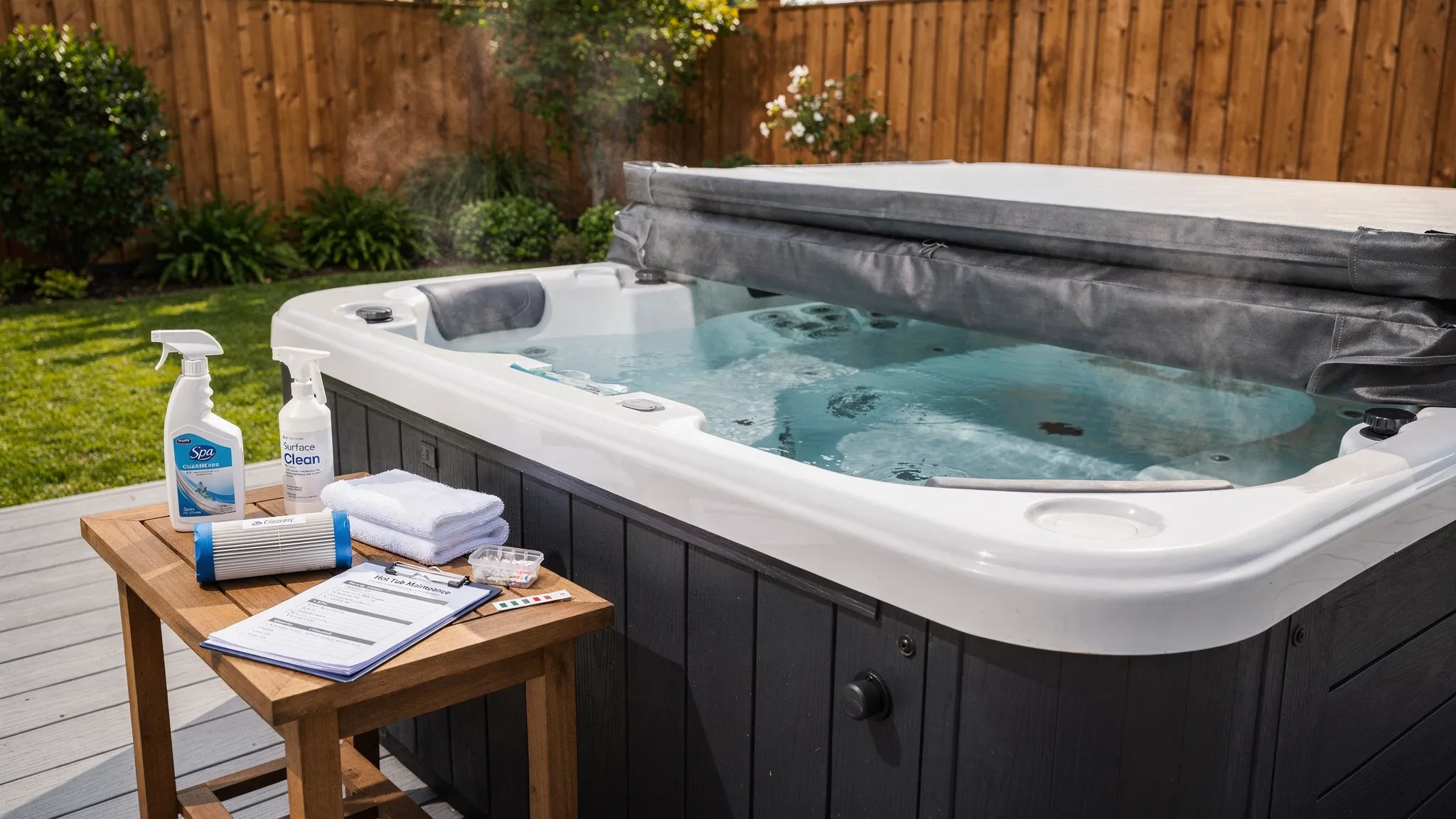
The quick hot tub maintenance checklist
If you only remember one thing, remember this: test often, clean filters regularly, keep the cover in good shape, and drain before the water becomes difficult to balance.
| Frequency | Maintenance task | Why it matters |
|---|---|---|
| Before each soak | Check that water is clear, the cover is secure, and sanitizer is in range | Prevents unsafe soaking and catches problems early |
| 2 to 3 times per week | Test sanitizer and pH | These are the fastest-changing water balance numbers |
| Weekly | Shock or oxidize the water, rinse filters, wipe the waterline | Removes organic buildup from bathers, lotions, and debris |
| Monthly | Deep-clean filters, inspect cover, check jets and pillows | Keeps water flow strong and reduces wear on equipment |
| Every 3 to 4 months | Drain, clean shell, refill, and rebalance | Prevents dissolved solids from making water hard to manage |
| Annually | Inspect cabinet, plumbing access area, cover, electrical disconnect, and overall condition | Helps catch leaks, pests, worn covers, and service issues early |
For most households, this routine takes a few minutes every few days, plus a longer cleaning session once per quarter.
Start with the first-fill routine
The first week matters because new owners are learning the spa, the water is fresh, and sanitizer demand can be unpredictable. Even brand-new hot tubs may have residue from manufacturing, wet testing, shipping, or installation.
Before filling, confirm that the drain valve is closed, the filters are installed correctly, and all unions or visible fittings are snug. Fill the spa through the filter compartment if your manual recommends it, since that can reduce the chance of an air lock. Never turn on pumps or heaters until the water is at the required level.
Once the spa is full, power it on, set the temperature, and begin balancing the water. In most cases, you should adjust total alkalinity first, then pH, then sanitizer. If your source water is very hard, has metals, or comes from a well, a hose pre-filter or metal-control product may be worth discussing with your dealer.
During the first week, test daily. Fresh fills often consume sanitizer faster than expected, especially if the tub gets heavy use right away. If the pump sounds strained, water flow is weak, or you see an error code, stop and check the manual before continuing.
Keep water chemistry simple
Water chemistry is the part of hot tub maintenance that intimidates new owners most, but it becomes much easier if you focus on a few core numbers. The ranges below are common for residential spas, but your spa manual and chemical label should always take priority.
| Test | Common target range | What it affects |
|---|---|---|
| Free chlorine | Often 3 to 5 ppm for residential spas | Sanitizing power and safe soaking |
| Bromine | Often 4 to 6 ppm for residential spas | Sanitizing power, especially in hot water |
| pH | 7.2 to 7.8 | Comfort, sanitizer effectiveness, scale, corrosion |
| Total alkalinity | Often 80 to 120 ppm | pH stability |
| Calcium hardness | Often 150 to 250 ppm, depending on spa type and manual | Scale control, foaming, equipment protection |
The CDC notes that poorly maintained hot tubs can allow germs to grow, including bacteria associated with hot tub rash. For a private backyard spa, the risk is usually manageable when sanitizer, pH, and filtration are maintained consistently.
Use test strips if you want speed and simplicity. Use a liquid drop test kit if you want more precision or if your water is repeatedly cloudy, foamy, or hard to balance. Either way, do not guess. Hot water changes chemistry faster than pool water, and a small hot tub has less water volume to dilute mistakes.
Choose one sanitizer system and stick with it
Most residential hot tubs use chlorine, bromine, mineral systems combined with sanitizer, salt systems, or an ozone/UV assist paired with a residual sanitizer. No matter which system you use, the key is maintaining a measurable sanitizer residual in the water.
Do not mix sanitizer systems casually. For example, switching from bromine to chlorine usually requires draining and refilling first. Never mix dry chemicals together, never add water to chemicals, and always store products according to the label. Add chemicals to the spa water with pumps running, keep the cover open briefly when directed, and wait until levels are safe before soaking.
If you use the tub daily, expect sanitizer demand to rise. Sweat, cosmetics, hair products, body oils, laundry detergent from swimsuits, and leaves all consume sanitizer. A quick shower before soaking is one of the cheapest maintenance habits you can build.
Weekly hot tub maintenance routine
A weekly routine prevents most water problems before they start. Pick a consistent day, such as Sunday evening, and treat it like a reset.
Start by testing sanitizer, pH, and alkalinity. Adjust in small steps, then retest after the water circulates. If sanitizer is low, correct that before anyone soaks. If pH is out of range, fix it promptly because high pH can reduce sanitizer effectiveness and encourage scale, while low pH can irritate skin and stress components.
Next, shock or oxidize the water according to the product label. Shocking helps break down bather waste and other contaminants that normal sanitizer may not fully handle. Many owners shock after heavy use, after a party, or at least once per week. Leave the cover open as directed by the product label to allow gases to escape, but do not leave the spa unattended around children or pets.
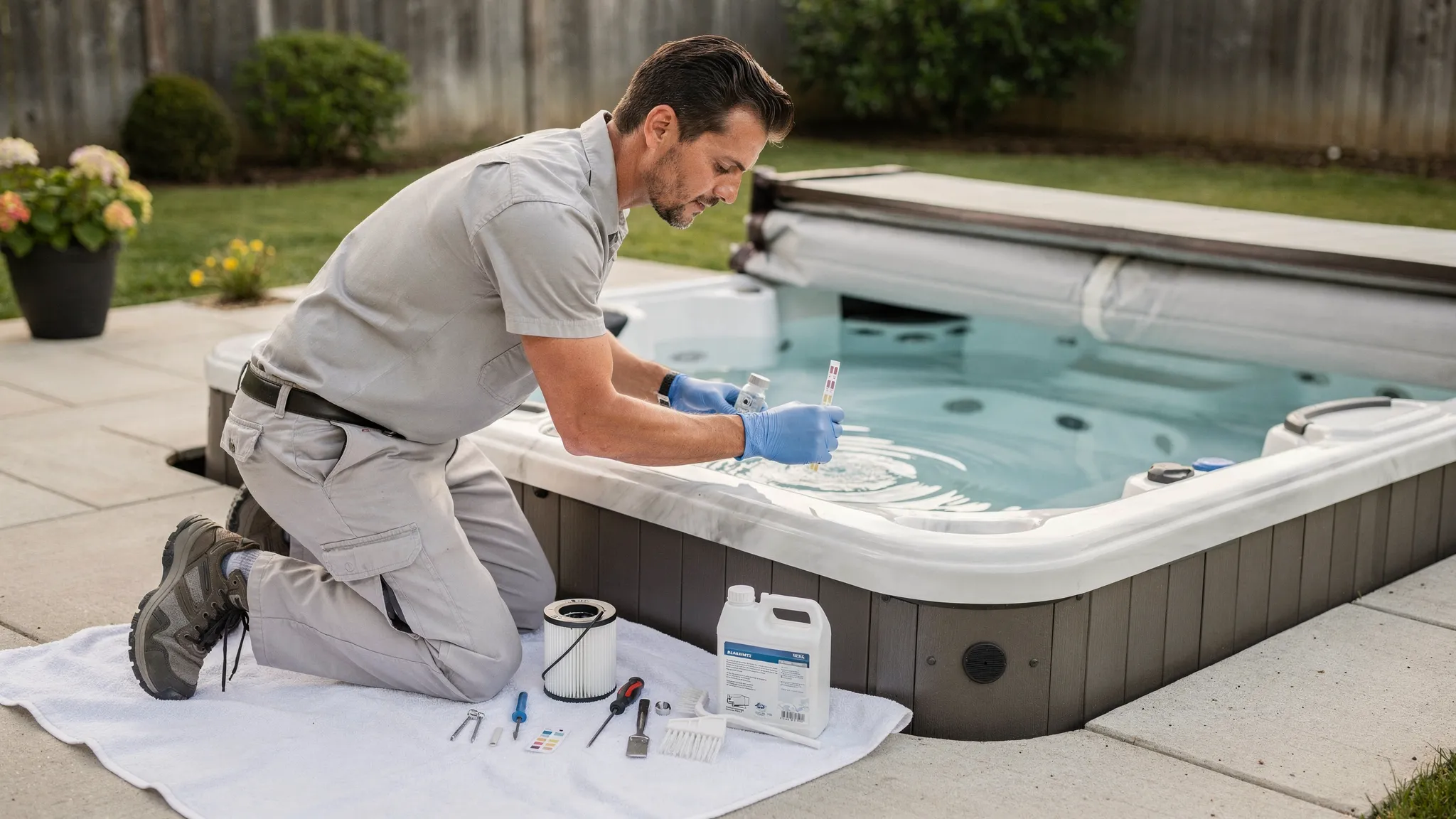
Rinse the filters with a garden hose. Spray between the pleats from top to bottom, using moderate pressure. Avoid pressure washers, which can damage filter media. While the filters are out, check for tears, collapsed pleats, cracked end caps, or oily buildup.
Finally, wipe the waterline with a spa-safe cloth or sponge. The waterline is where oils and debris collect, and cleaning it weekly prevents that sticky ring from becoming harder to remove later.
Filter care for new owners
Filters are the lungs of your hot tub. When they are dirty, circulation drops, the heater may struggle, sanitizer distribution gets worse, and error codes become more likely.
Most owners should rinse filters weekly and deep-clean them monthly with a filter-cleaning solution. If your tub gets heavy use, if guests use it often, or if bathers wear lotions and makeup, clean them more frequently.
It helps to keep a second filter set on hand. That way, one set can soak and dry while the other set stays in the spa. Letting filters dry fully after cleaning can improve performance and makes the maintenance routine easier to manage.
Many cartridge filters need replacement about every 12 to 24 months, but the real answer depends on use, water chemistry, and filter quality. Replace them sooner if the pleats are frayed, the filter no longer comes clean, water flow is weak, or the spa keeps showing flow-related errors.
Drain and refill schedule
Even perfectly maintained hot tub water does not last forever. Over time, dissolved solids build up from chemicals, sweat, body oils, and evaporation top-offs. When that happens, the water becomes harder to balance and may foam, smell, or look dull even when test strips appear acceptable.
For many households, draining every 3 to 4 months is a reasonable starting point. Heavy use, small water volume, frequent guests, or high sanitizer demand can shorten that schedule. Light use may stretch it, but do not treat old water as a badge of honor. Fresh water is often cheaper than fighting a chemistry problem for weeks.
When draining, turn off power at the breaker or disconnect first. Drain according to your manual and local rules, especially if using chlorinated or brominated water. Clean the shell with a spa-safe cleaner, rinse residue thoroughly, clean or replace filters, refill, then rebalance from scratch.
A plumbing line purge before a drain can help remove biofilm and buildup inside the plumbing. Follow the purge product directions carefully, and check your manual if you are unsure whether a product is appropriate for your spa.
Cover maintenance matters more than most owners think
The cover is not just a lid. It is one of the biggest factors in heat retention, energy use, water cleanliness, and safety. A heavy, waterlogged, cracked, or poorly sealed cover can increase operating cost and make the heater work harder.
Clean the vinyl cover monthly with mild soap and water or a cover cleaner approved for spa use. Avoid harsh household cleaners unless your manufacturer allows them. Check the stitching, handles, straps, locks, hinge, and vapor barrier. If the cover feels unusually heavy, sags into the water, or no longer seals well, it may be absorbing water and losing insulation value.
Keep the cover locked when the spa is not in use. This helps with safety, wind resistance, and heat retention. In snowy climates, brush off heavy snow rather than letting it sit. Do not stand or sit on the cover unless it is specifically designed for that load.
If you are trying to understand how cover condition affects your electric bill, use the Hot Tub Monthly Running Cost Calculator to estimate operating cost based on climate, tub size, voltage, usage, and electricity rate.
Seasonal maintenance tips
Hot tub maintenance changes slightly with the season. In winter, heat loss increases, covers work harder, and power outages become more serious. Keep the water level correct, maintain circulation, and check the cover seal often. If you plan to leave for an extended period in freezing weather, do not simply drain and hope for the best. Improper winterization can leave water trapped in plumbing, pumps, or manifolds. Hire a qualified technician if the spa needs to be shut down in freezing conditions.
In summer, sanitizer can disappear faster due to higher temperatures, sunlight exposure when the cover is open, and more frequent use. Some owners lower the set temperature during hot months to make soaking more comfortable and reduce energy use. Keep debris out, clean filters often, and watch for foaming if kids, guests, or sunscreen are involved.
If you are still deciding between plug-and-play and hard-wired ownership, the maintenance routine is similar, but heating recovery and electrical setup differ. The 120V vs 240V hot tub guide explains the practical tradeoffs.
Troubleshooting common hot tub problems
Most water problems have simple causes. The key is to correct the root issue, not just add more chemicals.
| Problem | Common causes | First checks |
|---|---|---|
| Cloudy water | Low sanitizer, dirty filters, high pH, heavy bather load | Test sanitizer and pH, rinse filters, shock if needed |
| Foam | Body oils, detergent in swimsuits, old water, low calcium | Rinse suits without detergent, shock, check hardness, consider draining |
| Strong chemical smell | Combined contaminants, not necessarily too much sanitizer | Test free sanitizer and pH, shock, leave cover open as directed |
| Scale on shell or jets | High pH, high calcium, high alkalinity | Lower pH carefully, check hardness, use scale control if appropriate |
| Green or tinted water | Metals, algae, low sanitizer, source water issues | Test sanitizer, check metals, consult dealer if well water is involved |
| Flow error | Dirty filters, low water level, air lock, circulation issue | Check water level, clean filters, restart only as manual allows |
If a problem repeats after you correct chemistry and clean filters, document your test results and call your dealer or manufacturer support. Repeated flow errors, tripped breakers, leaks, burning smells, or unusual pump noises are not normal maintenance issues.
Mistakes new owners should avoid
The most common mistake is soaking first and testing later. If the water looks questionable, smells off, or has no sanitizer reading, do not use the tub until it is corrected.
Another mistake is adding multiple chemicals at once. Adjust one thing at a time, circulate, then retest. This reduces overcorrection and helps you learn how your specific tub responds.
Do not ignore low water level. Evaporation and splash-out happen quickly, especially in winter. Low water can cause flow problems and may expose jets or intakes.
Avoid using household cleaners inside the spa unless your manual approves them. Many leave residues that cause foam or interfere with sanitizer. Also avoid regular laundry detergent on swimsuits used in the spa. Rinse suits well or dedicate suits specifically for hot tub use.
Finally, do not let maintenance supplies run out. Keep sanitizer, test strips or reagents, pH adjusters, alkalinity adjuster, filter cleaner, and a spare filter set available. Running out of sanitizer before a long weekend is how small problems become messy ones.
A simple starter kit for hot tub maintenance
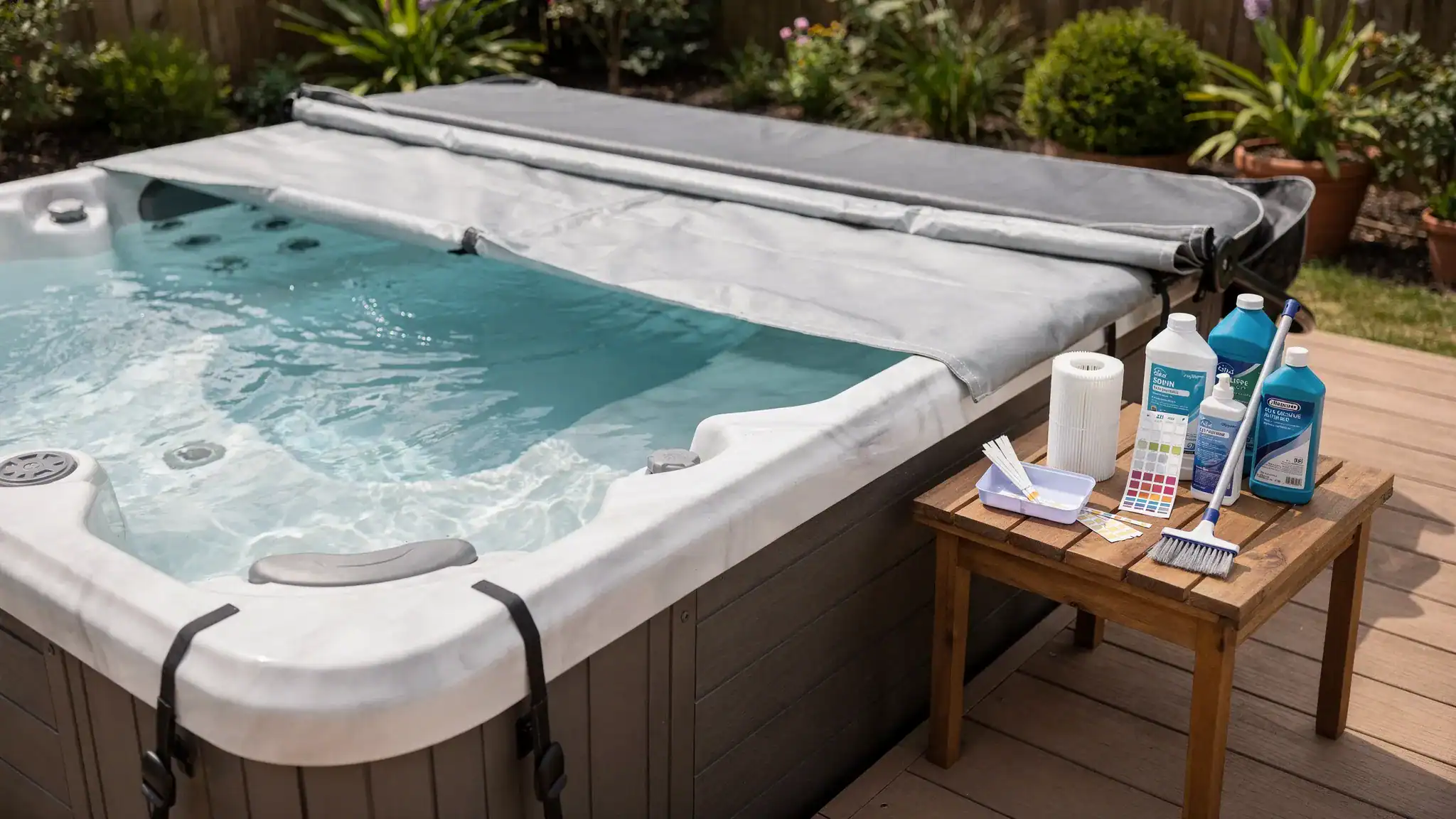
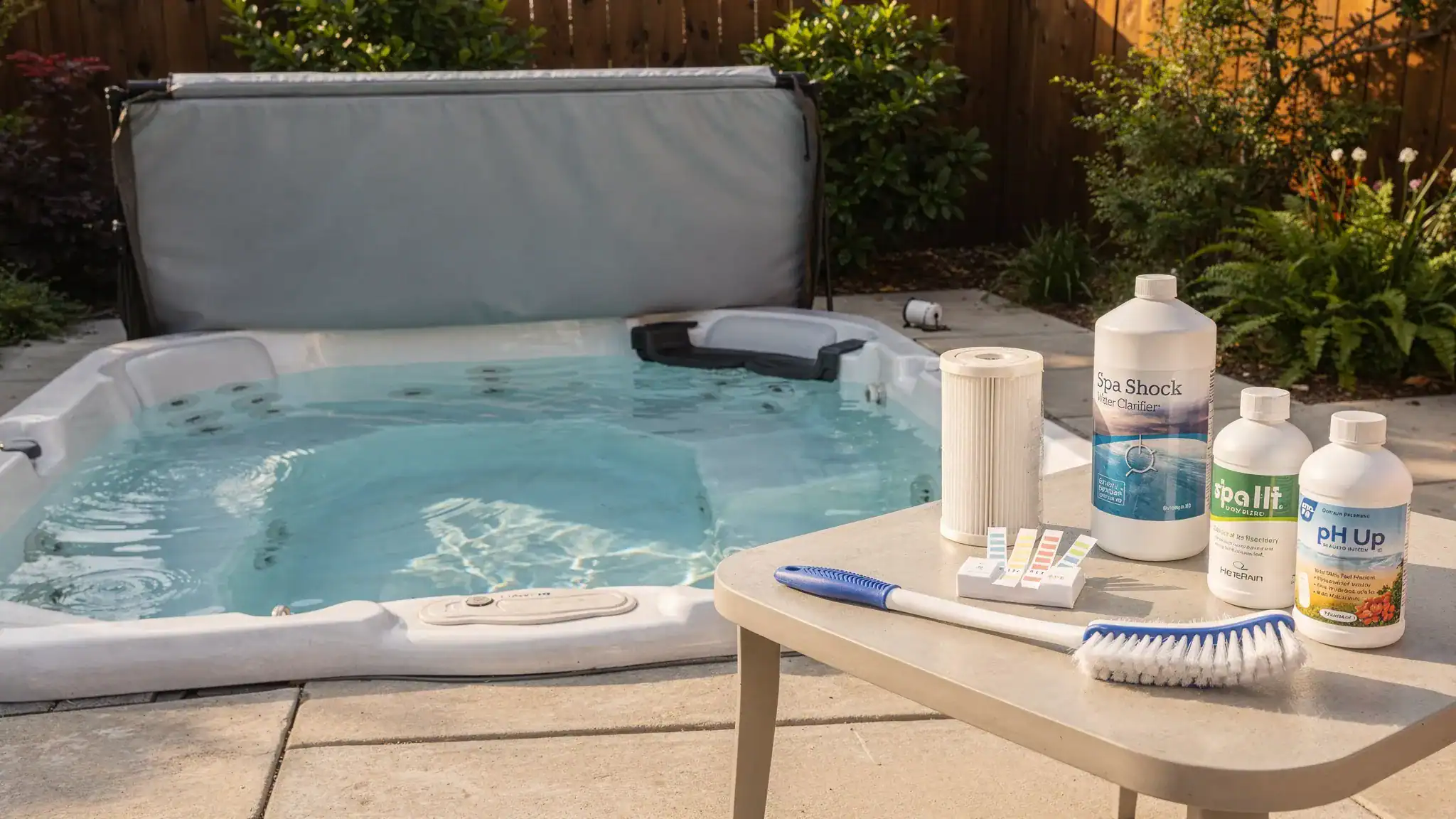
You do not need to buy every spa chemical on the shelf. A practical new-owner kit includes the basics and leaves room to add specialty products only if your water needs them.
- Test strips or a liquid test kit that matches your sanitizer system
- Chlorine, bromine, or the sanitizer specified by your spa system
- pH increaser and pH decreaser
- Alkalinity increaser
- Spa shock or oxidizer compatible with your sanitizer
- Filter-cleaning solution
- Spa-safe sponge or waterline cleaner
- Spare filter cartridge set
- Cover cleaner or vinyl protectant approved by the manufacturer
If you have well water, hard water, or metals, you may also need a pre-filter or metal-control product. Test your source water before guessing.
Frequently Asked Questions
How often should I test my hot tub water? New owners should test daily during the first week, then 2 to 3 times per week once the water is stable. Also test before soaking if the tub has not been used in several days, after heavy use, or after adding chemicals.
How often should I shock my hot tub? Many owners shock once per week and after heavy bather loads. Always follow the shock product label and wait until sanitizer levels return to the safe soaking range before using the spa.
How often should I drain and refill a hot tub? Every 3 to 4 months is a common schedule for residential hot tubs. Drain sooner if the water is foamy, cloudy, difficult to balance, or has seen heavy use.
Can I use pool chemicals in my hot tub? Not always. Hot tubs have hotter water and much smaller volume than pools, so chemical strength and formulation matter. Use products labeled for spas unless your manufacturer or dealer confirms a pool product is appropriate.
Why is my hot tub cloudy even though sanitizer looks okay? Cloudiness can come from dirty filters, high pH, old water, high dissolved solids, lotions, or poor circulation. Clean the filters, test pH and alkalinity, shock if needed, and consider draining if the water is old.
Should I leave my hot tub running all the time? Most portable spas are designed to maintain temperature and run filtration cycles continuously or on a programmed schedule. Turning the spa off repeatedly can reduce water quality and may not save as much energy as expected, especially in cold climates.
Make ownership easier with the right tools
A good maintenance routine protects your water, your equipment, and your wallet. If you are comparing models, checking long-term value, or trying to predict ownership costs, Hot Tub Value Guide offers independent reviews, rankings, and free buyer tools built around practical ownership data.
Start with the running cost calculator to estimate monthly energy use, or review the transparent Hot Tub Value Score methodology to see how maintenance burden, energy efficiency, durability, and warranty support factor into long-term value.
Helpful next steps