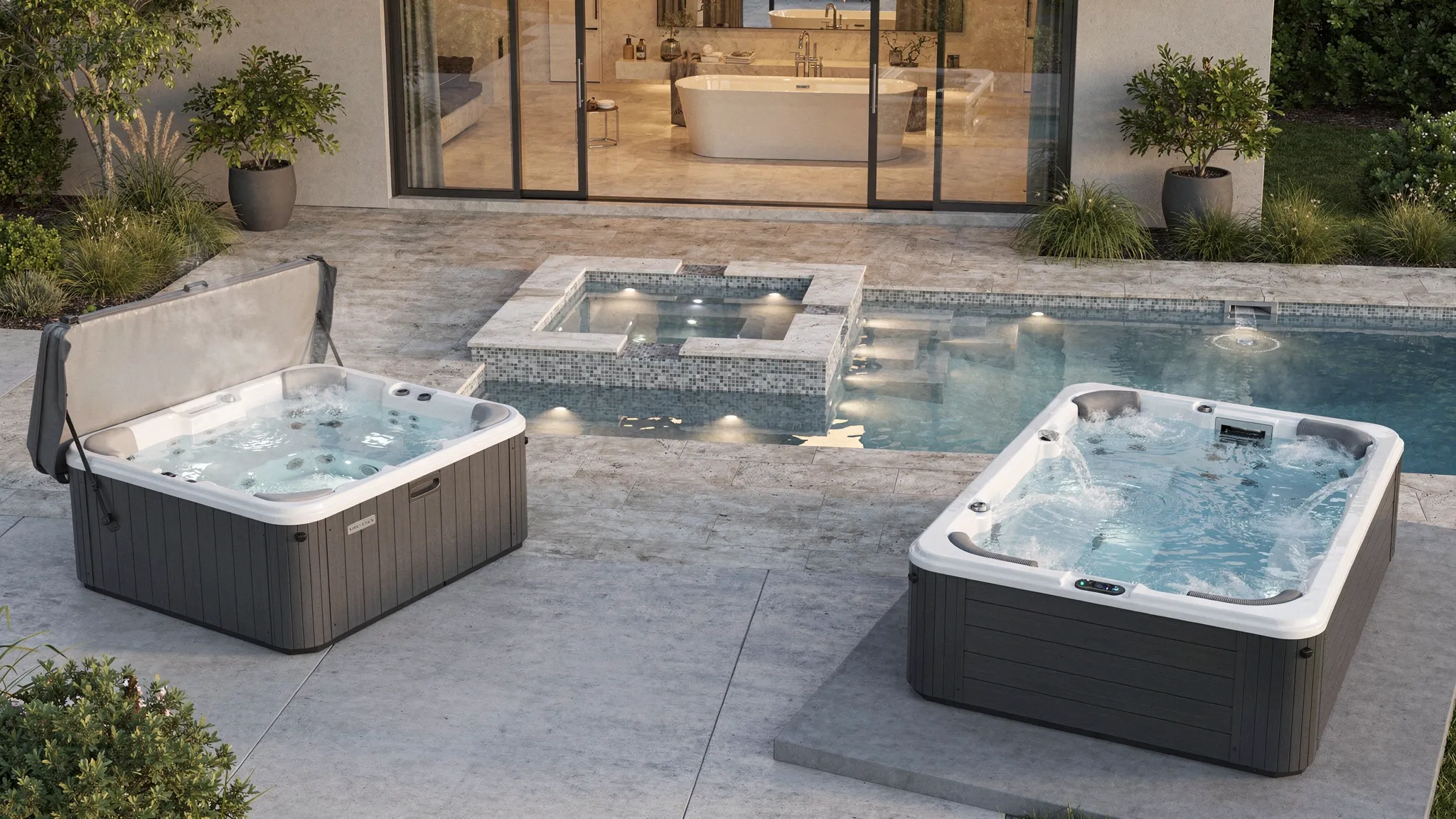
In the hot tub industry, “home spa” and “hot tub” are often used as if they mean the same thing. For buyers, that can get confusing fast. One listing may call a small plug-and-play tub a home spa, while another uses the same phrase for a built-in poolside spa, a swim spa, or even an indoor jetted bathtub.
The short version: a hot tub is usually a specific type of home spa, but “home spa” is a broader and less precise term. If you are comparing products, pricing, installation requirements, or long-term operating costs, the label matters less than the actual category, construction, voltage, insulation, service access, and warranty.
This guide breaks down the practical differences so you can avoid paying for the wrong type of spa, underestimating installation costs, or comparing two products that are not really competitors.
Quick answer: home spas vs hot tubs
A hot tub usually refers to a self-contained vessel of heated water with jets, filtration, a heater, and a cover. Most modern hot tubs are portable hard-shell units, either 120v plug-and-play or 240v hard-wired. They are commonly installed on a patio, concrete pad, deck, or reinforced outdoor surface.
A home spa is a broader marketing term. It can mean a portable hot tub, but it can also describe a custom built-in spa, swim spa, indoor soaking area, jetted bathtub, sauna and cold plunge setup, or a general backyard wellness space.
The most important rule for buyers is simple: do not compare by label alone. Compare by product type.
| Term | What it usually means | Typical installation | Best fit | Main caution |
|---|---|---|---|---|
| Home spa | Broad wellness or spa category | Varies widely | Buyers designing a relaxation space | Too vague for price comparisons |
| Hot tub | Heated, jetted, self-contained tub | Patio, pad, deck, or backyard | Most residential soaking and hydrotherapy buyers | Quality varies heavily by brand and model |
| Portable hard-shell spa | Another term for a hot tub | Delivered as one unit | Buyers wanting easier installation and service | Check voltage, insulation, and warranty |
| Built-in spa | Custom concrete, tile, or pool-adjacent spa | Contractor-built | Pool projects and luxury landscape builds | Higher install complexity and cost |
| Swim spa | Larger spa with exercise current | Dedicated pad, often 240v | Fitness plus soaking | Requires more space and usually higher operating cost |
| Jetted bathtub | Indoor bathroom fixture | Plumbed into bathroom | Solo bathing | Not the same ownership experience as a hot tub |
Why the terminology matters
The phrase “home spa” sounds appealing, but it does not tell you enough to make a smart purchase. A buyer comparing a $4,000 plug-and-play hot tub to a custom built-in spa may think they are choosing between two versions of the same thing. In reality, they are choosing between completely different projects.
That difference affects nearly every part of ownership, including the foundation, electrical work, delivery path, permits, monthly energy use, water care, repairs, and resale value.
For example, many portable hot tubs arrive as finished units with built-in equipment bays. A 120v model may plug into a properly grounded outlet, while many 240v models require a dedicated GFCI-protected circuit installed by a licensed electrician. If you are deciding between those two setups, start with our guide to 120v vs 240v hot tubs before you compare models.
A built-in home spa, by contrast, is more like a construction project. It may involve excavation, plumbing, tile or concrete work, pool equipment, drainage planning, and coordination with a pool builder or landscape contractor. It can look beautiful, but it is not a simple substitute for a portable hot tub.
The main types of home spas buyers should understand
Portable hot tubs
For most buyers searching “home spas vs hot tubs,” the portable hot tub is the category they actually want. These are self-contained hard-shell spas with seats, jets, heater, pumps, filtration, and a cover. They can be moved with the right equipment, serviced through removable panels, and compared across brands using specifications and owner feedback.
Portable hot tubs usually fall into two electrical categories. Plug-and-play models run on 120v power and are popular with renters, first-time buyers, and shoppers who want simpler setup. Hardwired 240v tubs are more common in larger or higher-performance models and usually heat faster, recover heat better during long soaks, and support stronger jet and heater combinations.
If you want a lower-complexity backyard spa, a portable hot tub is usually the best place to start. Our ranked list of best plug-and-play hot tubs is built specifically for buyers who want a hard-shell spa without jumping straight into a major electrical or construction project.
Built-in home spas
A built-in spa is the type you often see attached to a swimming pool or integrated into a custom patio. It may be made from concrete, gunite, tile, or other permanent materials. These spas can be visually impressive because they are designed into the property rather than placed on top of it.
The tradeoff is complexity. A built-in spa often depends on separate pool-style equipment, contractor workmanship, site drainage, local codes, and long-term surface maintenance. If you are already building a pool or redesigning a luxury backyard, a built-in spa can make sense. If you simply want warm water, jets, and easier service access, a portable hot tub is usually more practical.
Swim spas
A swim spa is larger than a typical hot tub and is designed for exercise, resistance swimming, aquatic therapy, or family use. Some have a dedicated swim current, while others are more like oversized therapy spas.
Swim spas can be excellent for the right buyer, but they require more space, a stronger installation plan, and usually a larger budget. They are not a one-to-one replacement for a compact hot tub. If your main goal is nightly relaxation for two to four people, a swim spa may be more product than you need.
Jetted bathtubs and indoor soaking tubs
Some people use “home spa” to describe a bathroom upgrade, such as a jetted bathtub, soaking tub, steam shower, or wellness suite. These can be great for indoor relaxation, but they do not operate like outdoor hot tubs.
A jetted bathtub is usually drained after each use. A hot tub keeps water heated, filtered, and chemically balanced between uses. That means a hot tub requires ongoing water care, but it is also ready for repeated soaking without filling and draining every time.
Inflatable spas
Inflatable spas are often marketed as home spas because they are inexpensive and easy to set up. They can be useful for temporary use, renters, or mild-weather testing before buying a hard-shell tub.
However, they are a different product category from a true hard-shell hot tub. Insulation, jet performance, durability, and winter usability are typically weaker. That is why Hot Tub Value Guide does not score them the same way as hard-shell models. If you are considering one, read our explanation of why we do not review inflatable hot tubs before assuming the low upfront price equals better value.
Home spas vs hot tubs: the buyer comparison that actually matters
Instead of asking whether a home spa or hot tub is “better,” ask which product category fits your budget, property, and ownership style.
| Buying factor | Portable hot tub | Built-in home spa | Swim spa | Jetted bathtub |
|---|---|---|---|---|
| Upfront cost clarity | Easier to compare by model | Highly project-dependent | Moderate to high | Depends on bathroom remodel scope |
| Installation complexity | Low to moderate | High | Moderate to high | Moderate to high |
| Electrical requirements | 120v or 240v depending on model | Varies by design | Usually 240v | Household bathroom electrical and plumbing |
| Monthly operating cost | Depends on size, climate, cover, and use | Depends on equipment and design | Often higher due to size | Lower if drained after each use |
| Hydrotherapy potential | Good to excellent by model | Varies by jet design | Good, plus exercise use | Limited to solo bathing |
| Service access | Usually built into cabinet panels | Depends on contractor design | Model-dependent | Bathroom access constraints |
| Moveability | Possible with professionals | Permanent | Difficult | Permanent fixture |
| Best for | Most backyard buyers | Custom pool and landscape projects | Fitness and aquatic exercise | Indoor solo soaking |
The biggest advantage of a portable hot tub is that it is easier to evaluate. You can compare voltage, jet layout, shell material, insulation, cover quality, warranty, service reputation, and owner reviews. You can also estimate operating costs before buying with tools like our hot tub monthly running cost calculator.
Built-in spas are harder to compare because the final result depends heavily on design and contractor execution. Two built-in spas with similar dimensions can perform very differently depending on plumbing runs, equipment choices, insulation strategy, and service access.
Cost: do home spas cost more than hot tubs?
The word “home spa” does not automatically mean more expensive. The category does.
A small plug-and-play hot tub marketed as a home spa may cost far less than a premium 240v hot tub. A built-in home spa attached to a pool may cost much more than either. A jetted bathtub may be affordable as a fixture but expensive once bathroom remodeling, plumbing, tile, ventilation, and labor are included.
When budgeting, separate your costs into three buckets: purchase price, installation cost, and ownership cost. Many buyers focus too much on the first number and underestimate the other two.
For a portable hot tub, installation costs may include a pad, electrical work, delivery assistance, cover lifter, steps, chemicals, filters, and accessories. For a built-in spa, installation costs may include design, excavation, plumbing, equipment, finish materials, permits, drainage, gas or electric heating, and contractor labor.
Monthly costs also vary. Climate, water volume, insulation, cover condition, electricity rate, wind exposure, and soak habits can all change the number. A well-insulated hot tub with a high-quality cover in a sheltered location may cost much less to run than a poorly insulated spa exposed to winter wind.
Maintenance: what changes between home spas and hot tubs?
Any shared heated water needs consistent care. Warm water, body oils, cosmetics, and repeated use create a perfect environment for water problems if sanitation is ignored.
For portable hot tubs, maintenance usually includes testing water, balancing pH and alkalinity, maintaining sanitizer, rinsing filters, replacing filters on schedule, cleaning the cover, and draining and refilling periodically. Beginners often overcomplicate this at first, but a simple routine makes ownership much easier. Our hot tub maintenance for beginners guide walks through the first 90 days.
Built-in spas may share maintenance tasks with a swimming pool, especially if they use pool-style equipment. That can be convenient if you already have pool service, but it also means the spa is part of a larger system. If something fails, repairs may involve plumbing, pumps, controls, heaters, or surface materials that are not as simple as replacing a portable spa component.
Jetted bathtubs have a different maintenance pattern because they are filled and drained per use. They still need cleaning, especially inside jet lines, but they do not require the same continuous water chemistry routine as a hot tub.
Comfort and hydrotherapy: do hot tubs offer a better soak?
Portable hot tubs are usually stronger for repeatable hydrotherapy because they are designed around seating ergonomics, jet placement, water temperature retention, and repeated outdoor soaking. That does not mean every hot tub is comfortable. Some six-person tubs really fit four adults comfortably, some lounge seats float certain body types, and some high jet counts do not translate into better massage.
Built-in spas can be comfortable, but many are designed first for visual integration with a pool or patio. Bench seating, fewer ergonomic contours, and less individualized jet placement are common. If your priority is targeted massage for back, neck, hips, or legs, sit in the spa before buying whenever possible.
This is where spec sheets can mislead buyers. Jet count alone does not prove quality. A 50-jet tub with weak plumbing and pump balance may feel less effective than a 30-jet tub with better jet design and pressure. Seat depth, footwell space, therapy variety, pump configuration, and real owner feedback matter more than the biggest number on the brochure.
Installation questions to answer before you buy
Before you choose between a home spa and a hot tub, answer these questions in writing. They will reveal which category makes the most sense.
- Where will it go? Confirm the exact location, surface strength, drainage, privacy, and access to power.
- How will it be delivered? Measure gates, turns, stairs, overhead clearance, and the route from curb to final location.
- What voltage does it require? Do not assume plug-and-play unless the manufacturer clearly states 120v operation.
- Who will service it? Check local dealer support, brand warranty process, and access to replacement parts.
- How many people will use it weekly? Buy for real use, not the maximum seating number in the brochure.
- What will it cost over time? Estimate electricity, chemicals, filters, cover replacement, and potential repairs.
- What does the warranty actually cover? Separate shell, surface, plumbing, equipment, labor, and exclusions.
Seller quality matters almost as much as product quality. The trust signals are similar to other specialty retail categories: clear policies, authentic reviews, responsive support, and transparent claims. For example, shoppers checking specialty products from a sneaker reseller like BigBoiSneakers would look for authenticity and shipping policies; spa buyers should apply the same discipline to warranty documents, dealer reputation, delivery terms, and service history.
Which should you choose?
Choose a portable hot tub if you want the most practical balance of relaxation, hydrotherapy, installation simplicity, and serviceability. This is the default best fit for most homeowners who want a backyard soaking experience without building a full pool-style spa.
Choose a built-in home spa if you are already investing in a custom pool, patio, or landscape project and the spa’s appearance and integration matter more than portability or easy model-to-model comparison.
Choose a swim spa if exercise, aquatic therapy, or larger family use is central to the purchase. Do not choose one just because it sounds more luxurious than a hot tub.
Choose a jetted bathtub if you want an indoor, solo, drain-after-use bathing experience and do not want to manage continuously heated and sanitized water.
Choose an inflatable spa only if your expectations are temporary, low-cost, and light-duty. It can be a stepping stone, but it is rarely a true substitute for a hard-shell hot tub.
Red flags when shopping for home spas
Be cautious when a listing uses broad spa language but avoids concrete specifications. A good listing or dealer quote should make the core details easy to verify.
Watch for vague claims like “luxury spa experience” without clear information about voltage, heater output, water capacity, insulation, cover quality, warranty coverage, and service process. Also be careful with inflated seating claims. A compact tub marketed for six may realistically fit three or four adults comfortably.
You should also question any dealer who pressures you to buy before you understand electrical requirements, delivery logistics, and warranty terms. A legitimate spa purchase should survive a night of comparison shopping.
Frequently Asked Questions
Is a home spa the same as a hot tub? Sometimes, but not always. A hot tub is usually a self-contained heated and jetted tub. A home spa is a broader term that can include hot tubs, built-in spas, swim spas, jetted bathtubs, and other wellness features.
Are home spas more expensive than hot tubs? Not necessarily. The term “home spa” does not determine price. A portable hot tub may be affordable or premium, while a built-in home spa can become expensive because it is a construction project.
Is a portable hot tub better than a built-in spa? For most buyers, a portable hot tub is easier to compare, install, service, and eventually replace. A built-in spa is better when you want a permanent custom design integrated into a pool or landscape.
Can a hot tub be installed indoors? Yes, but it requires careful planning for ventilation, humidity, drainage, structural load, electrical safety, and service access. Most buyers find outdoor installation simpler and less risky.
Should I buy a 120v or 240v hot tub? Choose 120v if you want simpler setup, have a smaller tub, live in a milder climate, or need plug-and-play convenience. Choose 240v if you want stronger heating performance, faster recovery, or a larger spa.
What is the biggest mistake buyers make? The biggest mistake is comparing spa labels instead of comparing real ownership factors: installation, insulation, voltage, comfort, warranty, service access, and operating cost.
Next step: compare by real value, not marketing labels
Whether a product is called a home spa, hot tub, portable spa, or backyard wellness tub, the winning choice is the one that fits your property, budget, climate, and long-term maintenance comfort.
Before you buy, use Hot Tub Value Guide’s independent tools to compare the numbers behind the brochure. Start with our guide to choosing the best hot tub for your budget, backyard, and setup, then run your shortlist through the operating cost calculator, size selector, voltage guide, and model reviews. A clearer category decision now can save you years of frustration later.
Helpful next steps