Jacuzzi Maintenance Tips That Prevent Costly Repairs
A well-built Jacuzzi can last for many years, but the expensive repairs usually do not start with a dramatic failure. They start with small, preventable problems: water that stays slightly out of balance, a filter that is overdue for cleaning, a cover that quietly becomes waterlogged, or a low-water event that makes the pump work harder than it should.
This guide focuses on practical Jacuzzi maintenance tips that protect the parts owners most often worry about: pumps, heaters, jets, plumbing, covers, and control systems. Jacuzzi is a brand name, although many people use the word generically for hot tubs. Either way, your owner’s manual should always be the final authority for your specific model.
The maintenance problems that turn into big repair bills
Hot tubs are simple in concept, but they operate in a demanding environment. Warm water, sanitizer, body oils, cosmetics, minerals, and constant circulation all interact with expensive components. If one part of the system is neglected, another part often pays for it.
Poor water chemistry can damage heater elements, pump seals, jets, pillows, and covers. Dirty filters can create low-flow errors and heater shutdowns. A saturated cover can increase energy use and make the heater run longer than necessary. Small leaks can soak insulation, freeze in winter, or damage the equipment bay.
That is why maintenance is not just about keeping the water clear. Good Jacuzzi maintenance protects your total cost of ownership. If you are still comparing models, maintenance burden is one of the factors we consider in our independent hot tub review process, explained in our Hot Tub Value Score methodology.
A simple Jacuzzi maintenance schedule
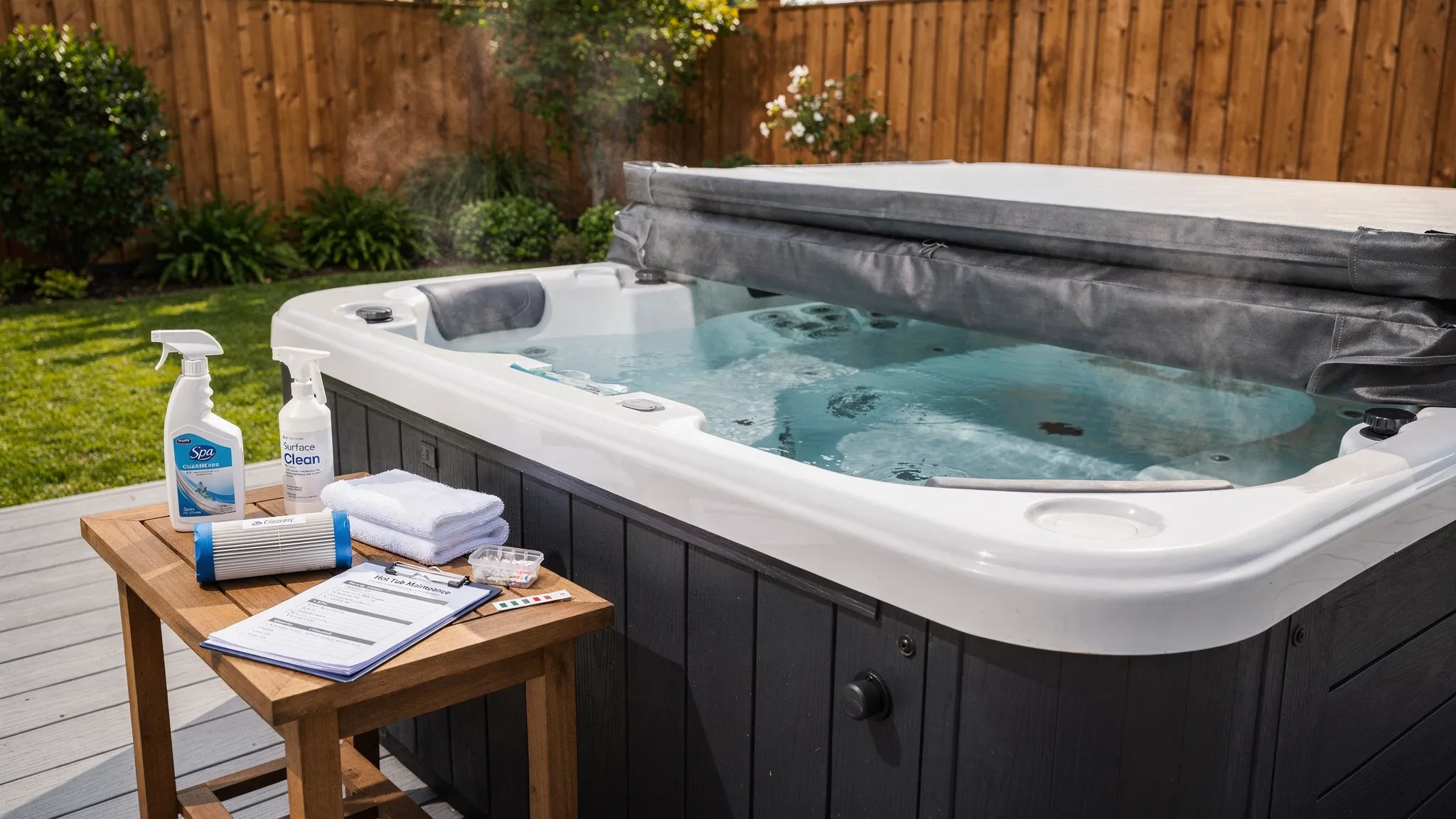
Most owners do better with a repeatable schedule than with occasional deep cleaning. The table below gives a practical baseline. Adjust it based on bather load, climate, water hardness, and your specific Jacuzzi manual.
| Frequency | Maintenance task | What it helps prevent |
|---|---|---|
| Before each soak | Check water clarity, water level, and sanitizer | Skin irritation, low-flow shutdowns, pump strain |
| 2 to 3 times per week | Test pH, sanitizer, and alkalinity | Corrosion, scale, cloudy water, heater damage |
| Weekly | Rinse filters and wipe the waterline | Restricted flow, odors, scum buildup |
| Monthly | Deep-clean filters and inspect cover, jets, and cabinet | Flow errors, heat loss, early leak signs |
| Every 3 to 4 months | Drain, purge plumbing, clean shell, and refill | Biofilm, high dissolved solids, sanitizer demand |
| Annually | Inspect equipment bay, GFCI, cover condition, and service history | Electrical issues, hidden leaks, winter failures |
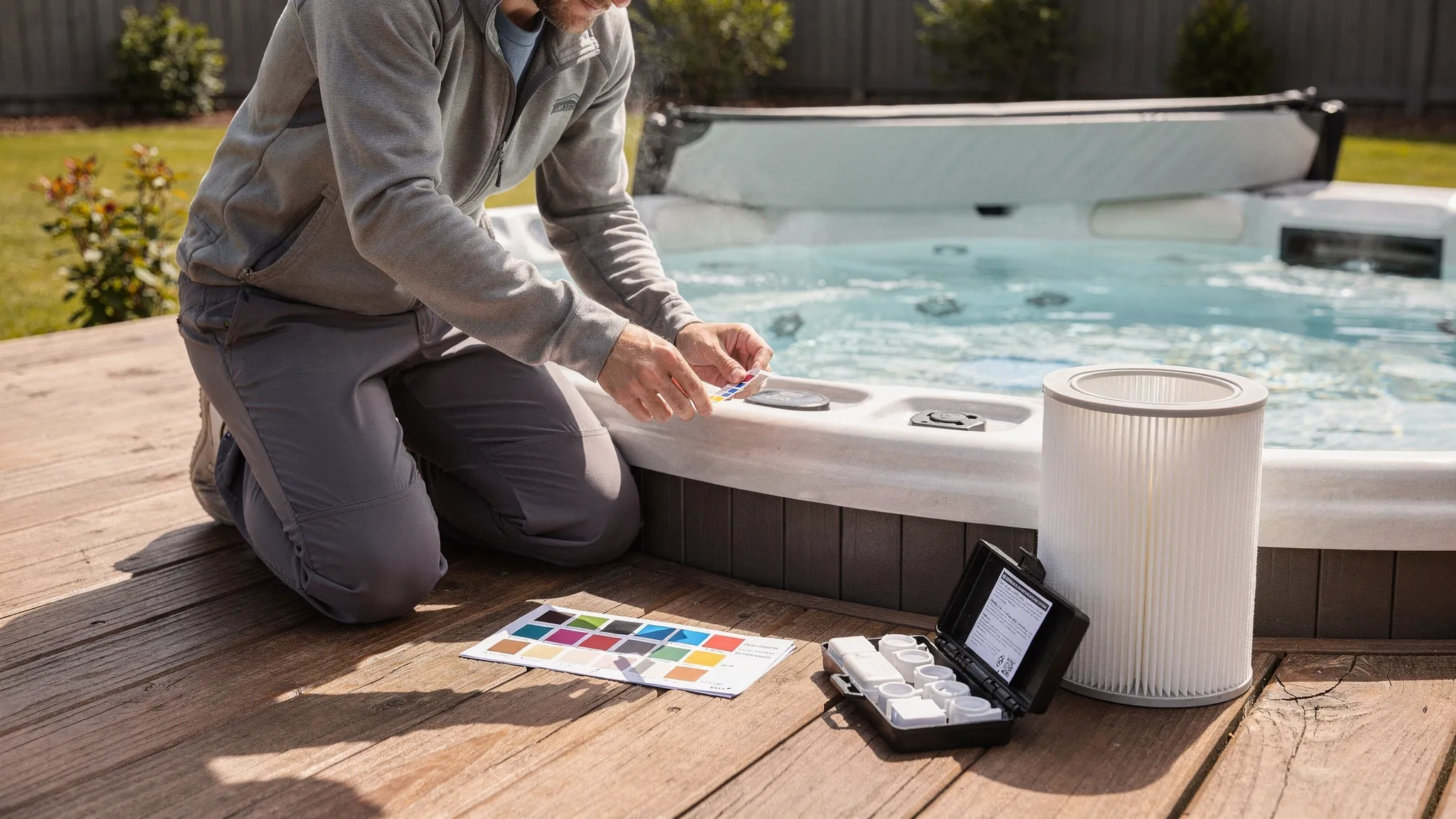
Keep water chemistry in the safe zone
Water chemistry is the single most important habit for preventing costly repairs. Clear water is not always balanced water. A hot tub can look fine while the pH is low enough to corrode metal parts or high enough to cause scale on the heater.
As a general reference, the CDC’s hot tub operating guidance points to pH in the 7.2 to 7.8 range, with appropriate sanitizer levels for chlorine or bromine systems. For residential Jacuzzi owners, always follow the chemical ranges in your owner’s manual and on your test kit, since mineral systems, ozone, UV, and cartridge systems can change the exact routine.
The most important readings to watch are:
- Sanitizer: Too little allows bacteria and biofilm to grow. Too much can damage covers, pillows, and some surfaces over time.
- pH: Low pH is corrosive. High pH encourages scale and cloudy water.
- Total alkalinity: This helps stabilize pH so it does not swing constantly.
- Calcium hardness: Too high can create scale. Too low can make water aggressive, especially in certain acrylic and plumbing environments.
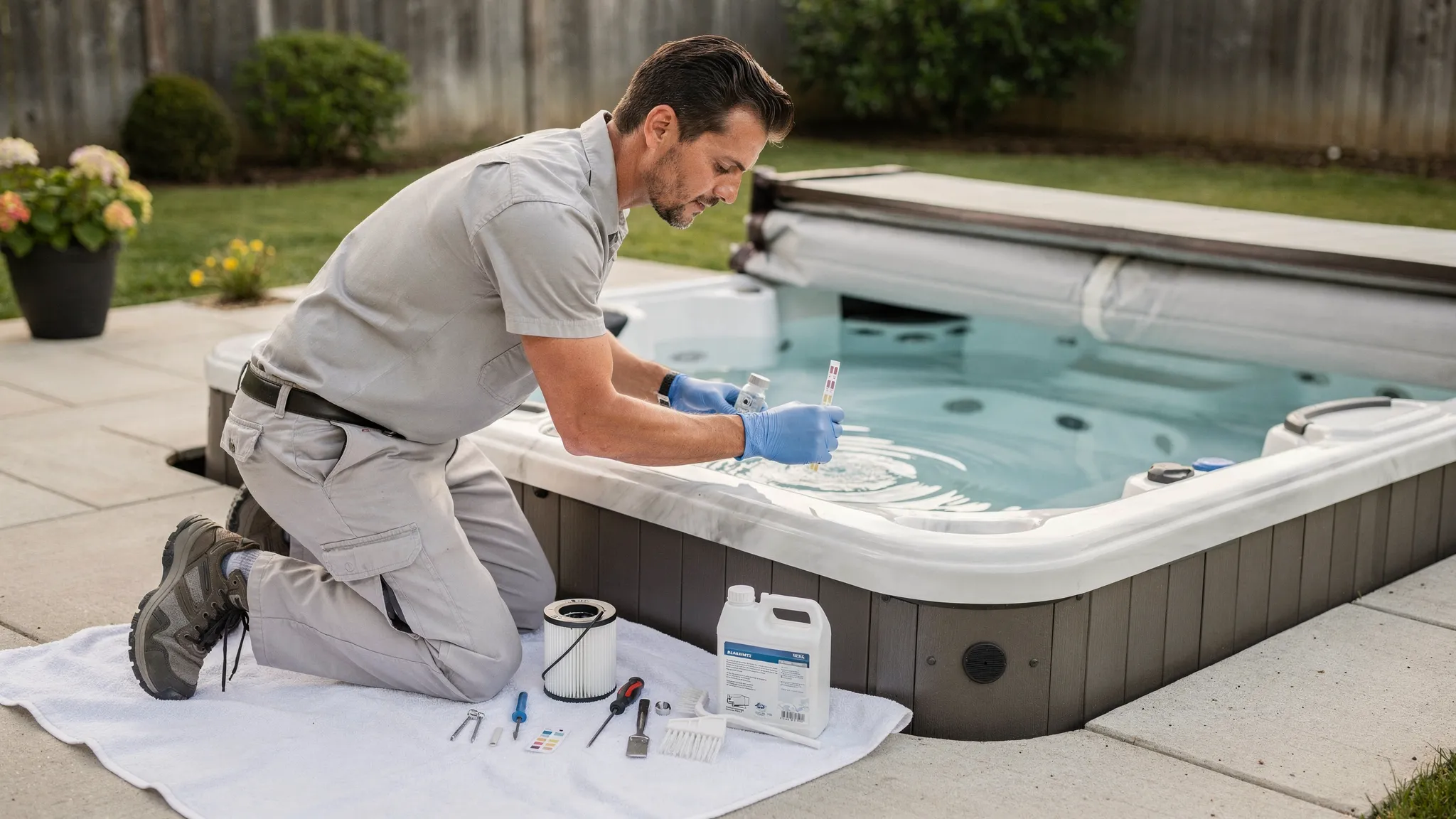
Do not guess with chemicals. Use fresh test strips or a liquid test kit, and keep them stored dry and sealed. Old test strips can lead you to add the wrong chemical, which is often worse than adding nothing.
One of the most common owner mistakes is adjusting everything at once. If pH, alkalinity, and sanitizer are all off, make one change at a time, circulate the water, and retest. Dumping multiple chemicals into a small body of hot water can create swings that are hard on both the water and the equipment.
Clean filters before they restrict flow
A hot tub filter is not just a water-clarity accessory. It protects the circulation system. When filters get loaded with oils, lotions, hair products, minerals, and debris, water flow drops. Low flow can trigger heater errors, strain pumps, and reduce jet performance.
For most Jacuzzi owners, a good routine is to rinse filters weekly and deep-clean them monthly. If the tub is used daily, by multiple people, or after workouts, you may need to clean them more often. Keep a spare filter set on hand so one set can dry completely while the other is in use.
Avoid using a pressure washer, dishwasher, or harsh household cleaners on spa filters. High pressure can damage filter pleats, and household detergents can cause foaming. Use a hose, a filter-cleaning nozzle if you have one, and a spa-specific filter cleaner for periodic soaking.
Filters do not last forever. If the pleats are frayed, the end caps are cracked, the cartridge smells bad even after cleaning, or water flow remains weak after rinsing, replacement is usually cheaper than forcing the pump to work against a clogged cartridge.
Drain and refill before the water becomes overworked
Hot tub water accumulates dissolved solids every time someone soaks. Sanitizer byproducts, sweat, cosmetics, minerals, and chemical residue all build up. Eventually, the water becomes difficult to balance even if you keep adding sanitizer.
A common refill interval is every 3 to 4 months, but bather load matters more than the calendar. A lightly used two-person tub may go longer. A family spa used nightly may need more frequent refills.
A useful estimate is:
| Spa size and use pattern | Practical refill expectation |
|---|---|
| 250 to 300 gallons, light use | About every 3 to 4 months |
| 350 to 450 gallons, moderate use | About every 2 to 4 months |
| Heavy use, frequent guests, kids, or parties | Often sooner than 2 months |
Before draining, use a plumbing purge product if your manual allows it. Biofilm can build up inside plumbing lines where you cannot see it. Purging before a drain helps remove residue that otherwise goes right back into the new water.
When refilling, do not walk away from the hose for too long. Overfilling can flood the equipment area on some installations, while underfilling can cause air locks or low-flow problems. After refilling, balance alkalinity and pH first, then sanitizer.
Protect the cover like it is part of the heating system
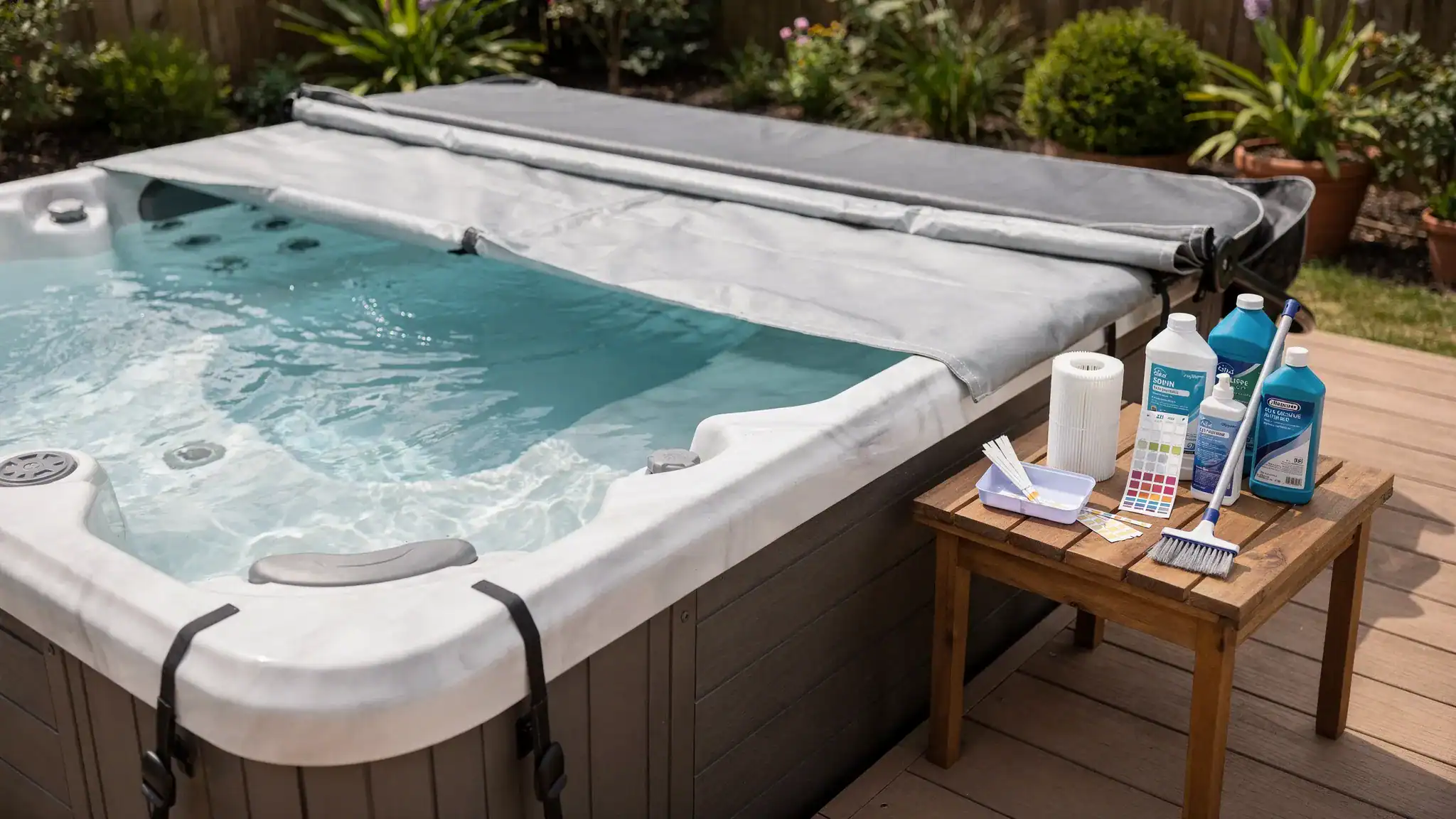
Your cover is one of the most important energy and maintenance components on the tub. A good cover reduces heat loss, keeps debris out, protects water chemistry, and reduces how hard the heater has to work.
A neglected cover can create hidden costs. If it becomes waterlogged, it loses insulation value and becomes heavy. A heavy cover is harder to lift, more likely to be dropped, and more likely to stress cover lifters or cabinet mounting points. It can also let rainwater, debris, or contaminants into the spa.
Wipe the underside of the cover regularly, especially if you see mildew or chemical residue. Keep the top clean and protected from standing water, heavy snow, and sharp objects. Make sure the cover sits evenly and latches securely in windy weather.
If your electric bill has climbed and the water is still balanced, inspect the cover before assuming the heater is failing. Our hot tub monthly running cost calculator can help you estimate how cover quality, climate, water temperature, and usage affect operating cost.
Maintain the right water level
Low water is a small issue that can become an expensive repair. If the water drops below the proper intake or skimmer level, the pump may draw air instead of water. That can cause surging jets, heater errors, pump noise, or overheating.
Check the water level before every soak, especially in winter or during heavy-use periods. Evaporation increases when the air is cold and the cover is opened often. Splash-out from kids or guests can lower the level faster than expected.
If you constantly need to top off the spa, do not assume it is normal evaporation. Look for wet spots around the cabinet, damp foam, water near the equipment bay, or a level that drops even when the tub is covered and unused. Early leak detection can prevent insulation damage, cabinet damage, and freeze risk.
Pay attention to flow errors, strange noises, and slow heating
A Jacuzzi usually gives warning signs before a major component fails. The key is to avoid repeatedly resetting the breaker or clearing an error without finding the cause.
| Symptom | Possible causes | What to do next |
|---|---|---|
| Flow or low-flow error | Dirty filter, low water, air lock, weak circulation pump | Check water level and filters first, then call for service if it returns |
| Breaker trips | Moisture, heater fault, pump fault, electrical issue | Stop using the tub and call a qualified technician |
| Water heats slowly | Poor cover seal, dirty filters, low flow, heater issue | Inspect cover and filters, then compare normal heating behavior |
| Pump hums but water does not move | Air lock, blocked intake, failing motor component | Turn off the spa if flow does not return quickly |
| Jets feel weak | Closed air controls, dirty filters, diverter issue, pump problem | Clean filters and check valves before assuming pump failure |
| Persistent water loss | Loose union, pump seal leak, jet leak, plumbing leak | Locate visible moisture and schedule repair before freeze conditions |
Some symptoms are safe to troubleshoot at the owner level. Others are not. If a GFCI trips repeatedly, if you smell burning, if water is inside the control area, or if wiring looks damaged, stop using the spa and call a professional.
Do not ignore the electrical side
Jacuzzi maintenance includes more than water and filters. Hot tubs combine electricity and water, so electrical shortcuts are not worth the risk.
For 240V Jacuzzi models, use the dedicated circuit and GFCI setup required by the manufacturer and local code. For 120V plug-and-play tubs, avoid extension cords unless the manual specifically permits them, which many do not. Voltage drop and undersized cords can create heat, nuisance trips, and safety hazards.
If you are still deciding between a plug-in tub and a hard-wired model, our 120V vs 240V hot tub guide explains the practical differences in setup, heating performance, and installation cost.
Test the GFCI on the schedule recommended by your manual or electrician. If the breaker trips and will not reset, do not bypass it. The GFCI is doing its job by interrupting a potentially unsafe condition.
Use the jets, valves, and air controls correctly
Jets, diverter valves, and air controls are designed to move water in specific ways. Forcing a stiff valve, leaving air controls open all the time, or running the tub with restricted flow can shorten component life.
Air controls introduce air into the jet stream. That can feel great during a soak, but leaving air controls open when the cover is closed can increase heat loss and affect water chemistry. Close them after use unless your manual says otherwise.
Diverter valves should move smoothly. If a diverter becomes difficult to turn, do not force it. Scale, debris, or worn seals may be the cause. Breaking a valve handle is usually avoidable if you address stiffness early.
Also be careful with bath products. Bubble bath, oils, soaps, and some lotions can create foam, clog filters, and leave residue in plumbing. If you want scent, use products specifically labeled for spas and use them sparingly.
Winterize carefully if you shut the spa down
In cold climates, freeze damage is one of the most expensive and frustrating hot tub repairs. A small amount of trapped water can expand inside plumbing, unions, pumps, or manifolds.
If you keep the Jacuzzi running through winter, maintain water level, keep the cover secure, and check the tub after storms or power outages. Do not let snow pile up heavily on the cover. If you travel, ask someone to check that the tub is powered and maintaining temperature.
If you plan to shut the spa down for winter, consider professional winterization. Draining the shell is not enough. Water can remain inside pumps, jets, manifolds, and low plumbing points. Blowing out lines and protecting components properly is far cheaper than repairing freeze-cracked plumbing.
Common maintenance mistakes that cost owners money
Many hot tub repairs are not caused by one obvious mistake. They come from repeated small habits that put stress on the system.
Avoid these common problems:
- Running the spa with dirty filters or no filters installed for regular use.
- Letting pH stay low because the water still looks clear.
- Using pool chemicals that are not intended for hot tubs.
- Ignoring small leaks because the spa still runs.
- Leaving the cover open longer than necessary in cold weather.
- Resetting a tripped breaker repeatedly without diagnosing the cause.
- Draining the tub in freezing weather without a winterization plan.
The best rule is simple: if a symptom repeats, it is not a random glitch. Treat repeat errors, recurring cloudy water, unexplained water loss, and breaker trips as early warnings.
When maintenance is no longer the best answer
At some point, a poorly performing tub may cost more to nurse along than it is worth. If the shell is sound, the cover is good, and the issue is a single replaceable component, repair may make sense. If you are dealing with repeated leaks, failing controls, weak parts support, and a high energy bill, it may be time to compare replacement options.
For owners considering a Jacuzzi upgrade or comparing current models, our reference reviews for the Jacuzzi J-235, Jacuzzi J-345, and Jacuzzi J-475 can help you evaluate model specs, setup requirements, and ownership considerations.
Frequently Asked Questions
How often should I do Jacuzzi maintenance? Check sanitizer and water level before frequent use, test pH and sanitizer several times per week, rinse filters weekly, deep-clean filters monthly, and drain/refill about every 3 to 4 months depending on use.
What is the most important Jacuzzi maintenance task? Water balance is the most important task because poor pH, sanitizer, alkalinity, or calcium hardness can damage heaters, seals, jets, covers, and plumbing over time.
Can dirty filters damage a Jacuzzi? Yes. Dirty filters restrict water flow, which can trigger flow errors, reduce heating efficiency, strain pumps, and cause shutdowns. Cleaning or replacing filters is much cheaper than repairing circulation problems.
How do I know if my Jacuzzi cover needs replacement? Replace the cover if it is heavy from water absorption, sagging, cracked, not sealing well, growing persistent mildew, or causing noticeable heat loss. A failing cover can increase operating costs and stress the heater.
Should I repair an older Jacuzzi or replace it? Repair can make sense for isolated issues on a well-maintained tub. Replacement may be smarter if you have repeated leaks, obsolete controls, poor parts availability, a failing cover, and rising energy costs.
Make maintenance part of the real ownership cost
A hot tub’s purchase price is only one part of its value. Maintenance effort, energy use, parts support, and repair risk all affect what the tub really costs over time.
If you are comparing models, start with our independent reviews and buyer tools at Hot Tub Value Guide. If you already own a Jacuzzi, use the maintenance habits above to protect the parts you already paid for and avoid preventable repair bills.
Helpful next steps