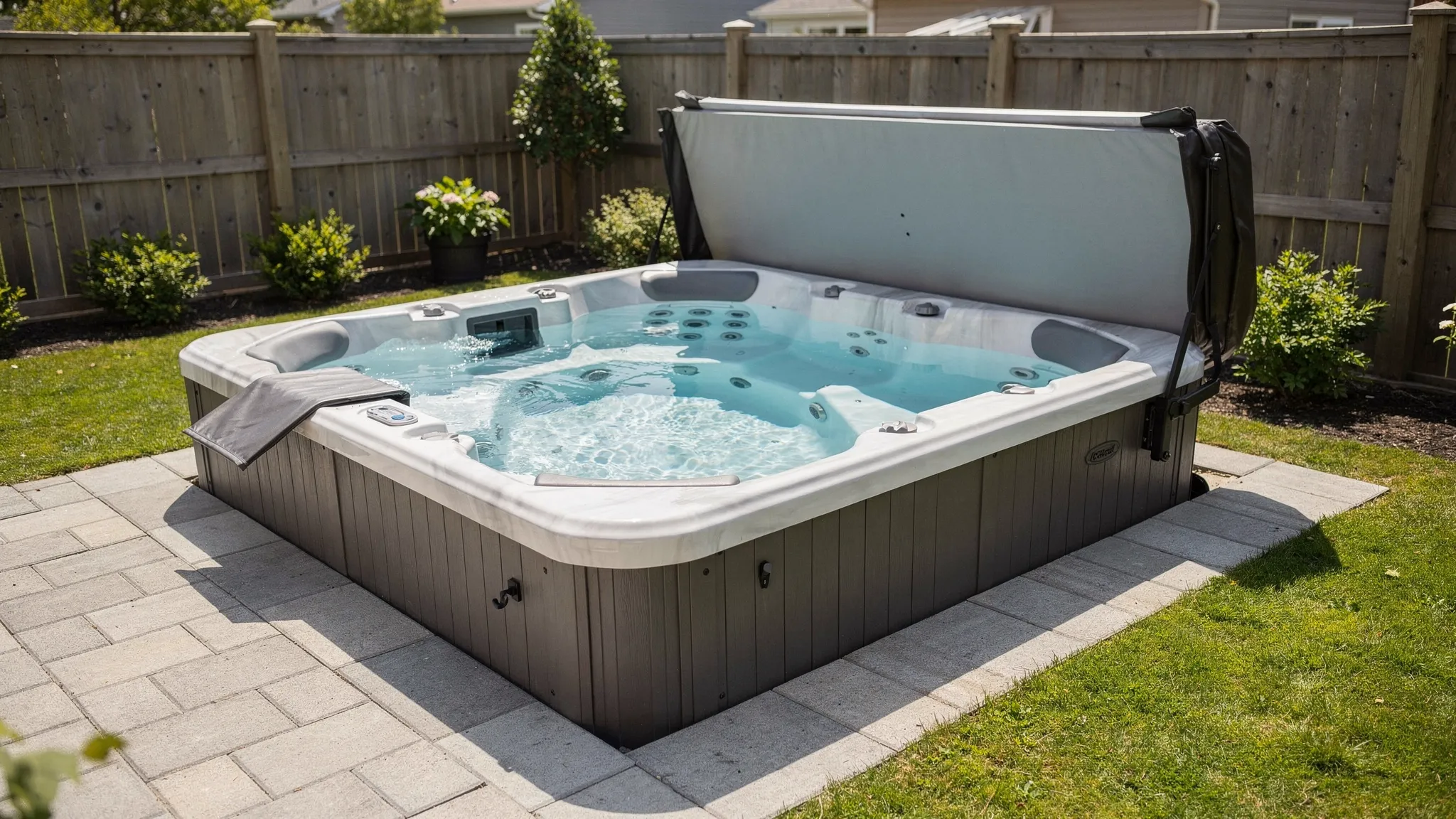
Hot Tub Maintenance Cost by Month and by Tub Type
Direct answer: In 2026, most U.S. owners should budget $35 to $120 per month for hot tub maintenance cost before electricity. If you include power, the realistic monthly ownership range is usually $65 to $230, with cold climates, large 240V tubs, weak covers, and high electric rates pushing that higher.
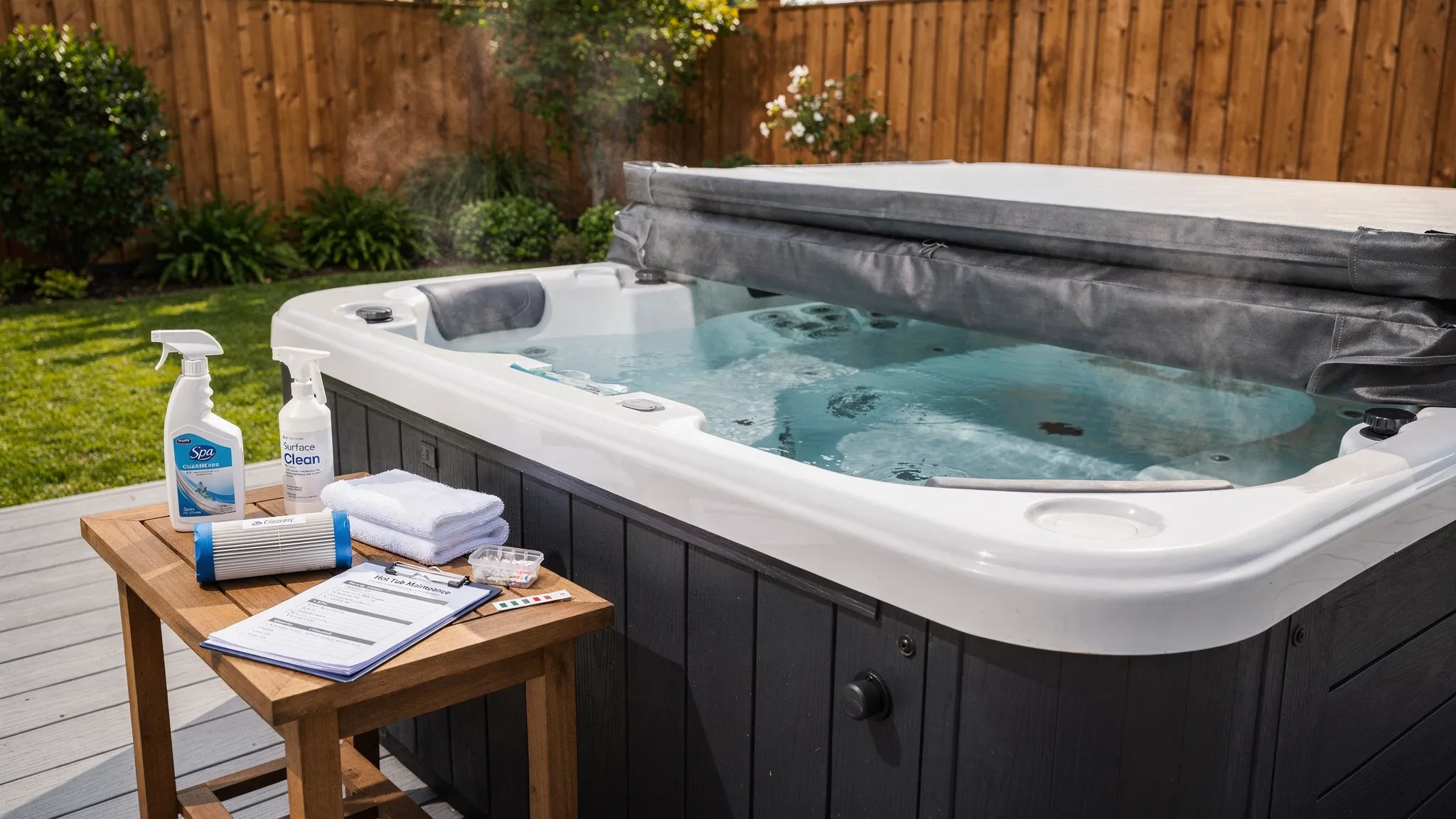
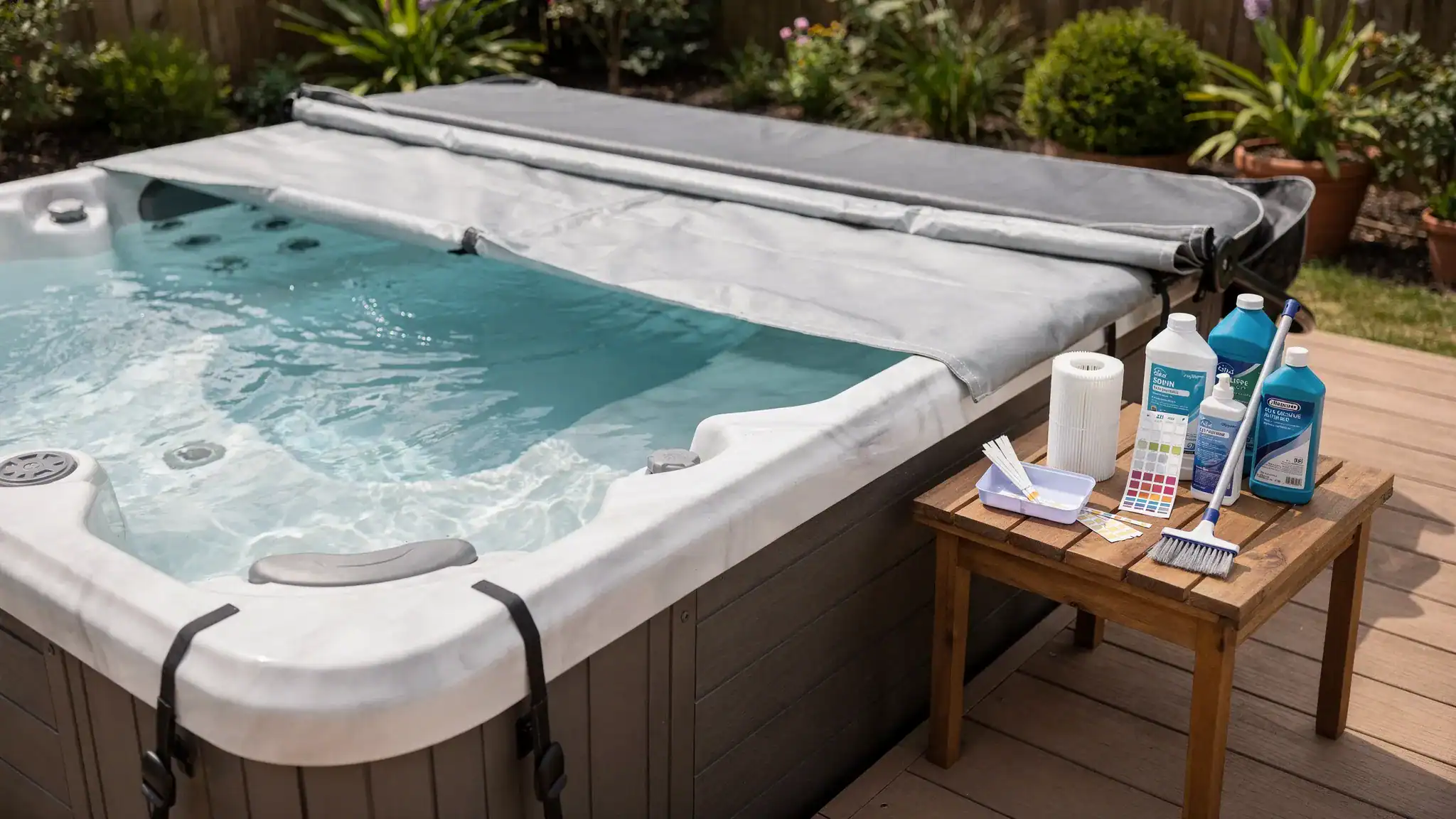
Maintenance includes chemicals, test supplies, filters, water changes, cleaning products, and small wear items. It does not include the purchase price, concrete pad, delivery, 240V wiring, or major repairs. Those one-time and surprise costs matter, so this guide separates routine monthly maintenance from energy, setup, electrical work, warranty limits, and when a tub is not worth buying.
Hot tub maintenance cost by month and tub type
Use these ranges as planning numbers, not promises. Your actual cost depends on water volume, usage, climate, cover condition, local water quality, electricity rate, and whether your tub uses standard filters or a proprietary cartridge, salt, mineral, UV, or ozone system.
| Tub type | Routine maintenance per month | Typical electricity per month | Practical monthly budget |
|---|---|---|---|
| 2-person hard-shell tub | $25 to $70 | $20 to $60 | $45 to $130 |
| 120V plug-and-play hard-shell, 4 to 6 seats | $35 to $85 | $30 to $90 | $65 to $175 |
| 240V hardwired family tub, 5 to 7 seats | $45 to $110 | $40 to $120 | $85 to $230 |
| Large or premium 240V tub | $55 to $140 | $60 to $160 | $115 to $300 |
| Cold-weather hard-shell tub | $45 to $130 | $60 to $180 | $105 to $310 |
| Inflatable or temporary vinyl spa | $20 to $60 | $50 to $150 | $70 to $210 |
The cheapest tub to buy is not always the cheapest tub to own. A poorly insulated bargain spa can cost more each month than a better-built tub with a stronger cover and more efficient cabinet. The same total-cost mindset you would use when comparing a major purchase through a transparent online car marketplace applies here: the sticker price is only one part of the decision.
If you already know the tub size, voltage, and your electric rate, run the numbers through our hot tub monthly running cost calculator before you buy.
What counts as maintenance cost?
For budgeting, separate maintenance from operating cost. Maintenance is what you spend to keep the water safe, clean, balanced, and mechanically protected. Electricity is operating cost. Repairs are a separate risk category.
| Monthly maintenance item | Typical monthly equivalent | Notes |
|---|---|---|
| Sanitizer and shock | $10 to $35 | Chlorine, bromine, non-chlorine shock, or system-specific sanitizer |
| pH, alkalinity, and calcium products | $5 to $20 | Higher if your fill water is hard, soft, or unstable |
| Test strips or liquid test reagents | $3 to $15 | Beginners often use more during the first 60 days |
| Filter cleaner and rinse supplies | $2 to $10 | Helps extend filter life and protect pumps |
| Replacement filters | $5 to $35 | Monthly equivalent based on replacement every 3 to 12 months |
| Water changes | $2 to $20 | Water and sewer costs vary by city and tub volume |
| Purge, scale control, clarifier, defoamer | $3 to $20 | Not always needed monthly, but should be budgeted |
| Small wear items | $2 to $15 | Scum sponges, cleaning cloths, o-rings, pillows, or cartridge caps |
A low-use 2-person tub in a mild climate may sit near the low end. A large family tub used by kids, guests, or rental-property occupants can sit at the high end because sanitizer demand rises quickly with bather load.
Monthly cost by tub type
2-person hard-shell hot tubs
Small tubs usually have the lowest chemical and water-change costs because they hold less water. Many 2-person models hold roughly 150 to 250 gallons, so each drain and refill is cheaper than a 400-gallon family tub.
Expect $25 to $70 per month for maintenance, plus $20 to $60 per month in electricity for a well-covered tub in normal conditions. A compact 120V model may be cheap to install, but it can still lose heat quickly if the cover is thin, waterlogged, or poorly sealed.
Best fit: couples, small patios, lower water volume, and owners who want fewer chemicals on hand.
Watch out for: cramped seating, slower 120V heat recovery, limited jet power, and small filters that need frequent cleaning.
120V plug-and-play hot tubs
Plug-and-play hot tubs are attractive because they usually avoid the cost of a 240V hardwire installation. For first-time buyers, that can be the difference between buying now and delaying a year.
Routine maintenance typically runs $35 to $85 per month. Electricity often lands around $30 to $90 per month, but cold weather can push that higher because many 120V tubs cannot heat as aggressively while jets are running.
The key is to buy a 120V tub with decent insulation, a solid cover, and realistic seating. If you are still comparing models, start with our rankings of the best plug-and-play hot tubs and read our guide to 120V vs 240V hot tubs before assuming plug-and-play is automatically cheaper.
Best fit: renters with permission, mild climates, smaller households, simple backyard setups, and buyers avoiding a large electrical project.
Watch out for: shared outlets, extension cords, undersized covers, and dealer claims that ignore winter performance.
240V hardwired family tubs
A typical 5 to 7 seat 240V hot tub costs more to install, but it usually heats faster, recovers heat better during use, and supports stronger jet and pump configurations.
Routine maintenance is usually $45 to $110 per month, with electricity often $40 to $120 per month. A well-insulated 240V tub can be more efficient in real family use than a weaker tub that struggles to maintain temperature.
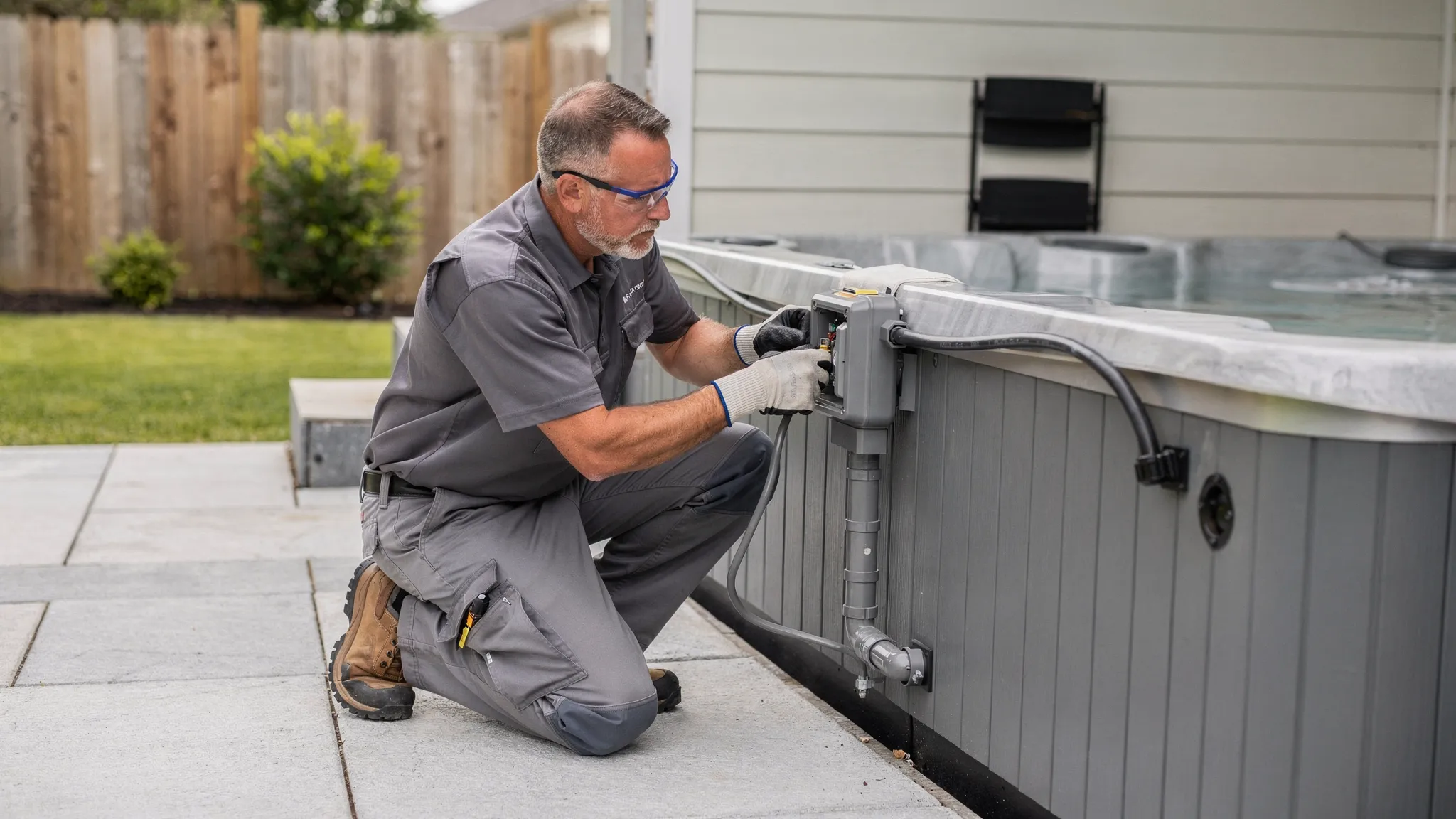
The catch is the electrical installation. Most full-size 240V tubs require a dedicated GFCI-protected circuit, often 50A or 60A depending on the model. Use a licensed electrician and follow the manufacturer manual, local code, and permit requirements. Do not treat hot tub wiring as a DIY shortcut.
Best fit: families, frequent use, cold climates, buyers who want stronger jets, and long-term homeowners.
Watch out for: long wire runs, trenching, panel upgrades, dealer-only service costs, and models with proprietary replacement parts.
Large or premium 240V tubs
Premium tubs can improve comfort, jet design, filtration, insulation, cabinet durability, and warranty coverage. They can also raise the monthly cost because they often hold more water, use larger filters, and include more systems to maintain.
Budget $55 to $140 per month for maintenance and $60 to $160 per month for electricity. If the tub uses brand-specific cartridges, mineral systems, salt cartridges, UV bulbs, or proprietary filters, check replacement prices before signing.
This is where buyers often underestimate total cost. A premium spa may be a good value if it lasts longer and has better dealer support, but it is not low-maintenance in the sense of being hands-off.
Best fit: long-term owners, heavy use, comfort-focused buyers, and shoppers who have verified local dealer service quality.
Watch out for: high MSRP anchoring, expensive accessories, proprietary consumables, and warranties with labor or travel limits.
Cold-weather hot tubs
Cold climates change the math. The maintenance chemicals may not cost much more, but energy loss, cover quality, wind exposure, and freeze protection become much more important.
For a winter-ready hard-shell tub, plan on $45 to $130 per month in maintenance and $60 to $180 per month in electricity. A weak cover can erase any savings from buying a cheaper spa. A waterlogged cover can also become heavy, unsafe to lift, and expensive to replace.
If you live in a cold-weather state, prioritize insulation, cover fit, cabinet sealing, and access to service over jet count. Our best hot tubs for cold weather guide focuses on those factors because they affect real ownership cost more than a showroom wet test alone.
Best fit: year-round users who want reliable winter soaking.
Watch out for: inflatable spas in freezing weather, low-R-value covers, tubs with poor cabinet sealing, and winter shutdowns without proper professional winterization.
Inflatable or temporary vinyl spas
Inflatable spas can look cheap because the purchase price is low. Monthly maintenance can be modest, usually $20 to $60, but energy can be surprisingly high at $50 to $150 per month, especially in cool weather.
The bigger issue is lifespan and insulation. Vinyl tubs usually do not retain heat like hard-shell spas, and many are not built for long-term year-round use. That is why we explain why we do not review inflatable hot tubs as long-term value picks.
Best fit: temporary use, renters, testing whether your household will actually use a spa, and mild climates.
Watch out for: cold-weather energy bills, punctures, short lifespan, weaker bubble-style jets, and limited repair value.
Setup and electrical costs that affect year-one ownership
Setup costs are not monthly maintenance, but they often shock first-time buyers. If you spend $2,700 on electrical work and a pad, that is effectively $225 per month if you mentally spread it across the first year.
| Setup item | Typical U.S. planning range | Buyer note |
|---|---|---|
| Delivery and placement | $0 to $700 | Curbside delivery may not include backyard placement |
| Level pad or reinforced base | $300 to $2,500 | Concrete, pavers, gravel base, or reinforced deck evaluation |
| 120V dedicated GFCI outlet, if needed | $150 to $600 | Existing outlets still need to match the manual and code |
| 240V electrical circuit | $800 to $2,500+ | Long runs, trenching, subpanels, or panel upgrades can cost more |
| Permit and inspection | $50 to $300 | Varies by jurisdiction and project scope |
| First chemical and test kit | $75 to $250 | Often underestimated by new owners |
| Steps, cover lifter, handrail, accessories | $100 to $800 | Optional, but often worth budgeting upfront |
Never use an extension cord for a hot tub. Even plug-and-play models need the correct GFCI-protected outlet and manufacturer-approved setup. For 240V tubs, get quotes before purchase, not after delivery.
Electricity is usually the biggest variable
Chemicals are predictable. Electricity is not. A 300-gallon tub in Arizona and the same tub in Minnesota can have very different monthly costs.
Your bill depends on local electricity pricing, tub insulation, cover quality, wind exposure, water temperature, pump schedule, and how often you soak with the cover open. The U.S. Energy Information Administration publishes residential electricity price data, but your actual utility rate and time-of-use plan are what matter for your home.
To reduce energy cost without making the water unsafe, focus on heat loss first. A tight cover, working cover locks, a floating thermal blanket, wind protection, and a reasonable temperature setting can save more than obsessing over small chemical purchases.
Warranty and repair costs: what maintenance does not cover
A hot tub warranty can protect you from some defects, but it will not pay for normal ownership. Most warranties exclude chemicals, filters, pillows, cover wear, water-care neglect, damage from improper chemistry, freeze damage caused by misuse, and sometimes labor or travel after an initial period.
Before buying, ask for the written warranty and read the exclusions. Do not rely only on a sales floor summary.
| Cost category | Typical owner-paid range | When it shows up |
|---|---|---|
| Replacement filters | $25 to $150+ | Every few months to annually, depending on system |
| Replacement cover | $400 to $900+ | Often every 3 to 6 years, sooner if waterlogged |
| Service call | $100 to $250+ | May apply even during parts warranty periods |
| Heater repair or replacement | $300 to $900+ | More if labor or access is difficult |
| Pump repair or replacement | $500 to $1,500+ | Depends on pump size and brand |
| Control board or pack | $400 to $1,200+ | More common as tubs age |
| Leak diagnosis and repair | $200 to $1,500+ | Highly variable based on access and location |
This is why a cheap tub with weak support can be expensive. If a retailer or dealer cannot clearly explain service, warranty handling, parts availability, and who pays labor, treat that as a cost risk.
How to lower monthly maintenance cost safely
The goal is not to use fewer chemicals than the water needs. The goal is to reduce contamination, heat loss, and preventable wear.
- Shower before soaking, especially after lotion, sunscreen, makeup, or workouts.
- Keep the cover closed and latched when the tub is not in use.
- Rinse filters regularly and deep-clean them on schedule.
- Test water more often during the first 30 to 60 days while you learn your tub.
- Drain and refill before water becomes hard to balance, not after it turns into a problem.
- Replace a waterlogged or poorly sealing cover instead of paying for heat loss every month.
- Use the sanitizer system your manual specifies, and do not mix chemical systems casually.
- Lower the temperature during longer periods away, but do not disable freeze protection in winter.
For a beginner-friendly care rhythm, use our hot tub maintenance for beginners guide alongside your owner manual.
Example monthly budgets
Here is how the numbers might look for common owners. These are planning examples, not model-specific guarantees.
| Owner profile | Maintenance | Electricity | Total monthly routine cost | Why |
|---|---|---|---|---|
| Couple with 2-person tub in mild climate | $35 | $35 | $70 | Lower water volume and moderate use |
| Family with 120V plug-and-play tub | $60 | $70 | $130 | More bather load and slower heat recovery |
| Family with 240V hardwired tub | $85 | $95 | $180 | Larger water volume but better heat recovery |
| Cold-climate winter user | $95 | $150 | $245 | Higher heat loss and longer heating cycles |
| Inflatable spa in cool weather | $40 | $120 | $160 | Low chemical cost, weak insulation |
If your estimated monthly total feels uncomfortable, do not stretch just because the purchase price is on sale. Financing a tub while underbudgeting maintenance is one of the easiest ways to regret the purchase.
When to skip or delay buying a hot tub
Skip or delay the purchase if the monthly cost only works under best-case assumptions. Hot tubs are enjoyable, but they are not set-and-forget appliances.
A hot tub may not be a good fit right now if:
- You cannot comfortably budget at least $100 to $200 per month beyond financing.
- You have not priced the pad, delivery path, and electrical work.
- A 240V installation would require a costly panel upgrade you did not plan for.
- You are unwilling to test and adjust water every week.
- The dealer will not provide the full written warranty before purchase.
- You live in a cold climate and are considering a poorly insulated or temporary spa for year-round use.
- The tub is heavily discounted but has limited parts support, unclear service coverage, or repeated owner complaints.
If you are still choosing, start with the broader guide on how to choose the best hot tub for your budget, backyard, and setup. It will help you compare purchase price against the costs that show up after delivery.
Frequently Asked Questions
What is the average hot tub maintenance cost per month? Most owners should budget $35 to $120 per month for chemicals, filters, water care, cleaning, and small wear items. With electricity included, a realistic monthly ownership range is often $65 to $230, and more in cold climates or with large premium tubs.
Are 120V hot tubs cheaper to maintain than 240V hot tubs? Usually they are cheaper for chemicals because they are often smaller, but not always cheaper to run. In cold weather, a 120V tub may lose heat faster during use and take longer to recover, which can narrow or erase the savings.
How much do hot tub chemicals cost per month? Basic chlorine or bromine care commonly costs $15 to $55 per month. Salt, mineral, ozone, or UV systems may change what you buy, but they do not eliminate testing, balancing, filter care, or periodic replacement parts.
How often do hot tub filters need to be replaced? Many owners replace filters every 3 to 12 months, depending on filter size, water quality, bather load, and brand requirements. Rinsing and deep-cleaning filters can extend their life, but old or damaged filters should be replaced.
Does a hot tub warranty cover maintenance? No. Warranties generally do not cover chemicals, filters, routine water care, normal cover wear, or damage from poor water chemistry. Some warranties also limit labor, travel, or service-call coverage, so read the written terms before buying.
What is the biggest hidden hot tub cost? For new buyers, the biggest hidden cost is often electrical work or site preparation. For owners, the biggest surprise is usually a bad cover, a service call, a pump, a heater, or a proprietary filter or cartridge system that costs more than expected.
Can I save money by turning my hot tub off between uses? For normal weekly use, fully turning it off is usually not the best strategy, especially in winter. It often takes more time and energy to reheat, and freeze risk can become serious. Lowering temperature during longer absences is safer than disabling protection systems.
Use the numbers before you buy
A good hot tub budget includes purchase price, delivery, pad or base, electrical work, monthly maintenance, electricity, warranty limits, and likely repairs over time. If the numbers still make sense after that, you are shopping with your eyes open.
To estimate your real monthly cost, use the hot tub operating cost calculator, compare voltage trade-offs in our 120V vs 240V guide, and review model rankings before committing to a tub that looks cheap only on the sales tag.