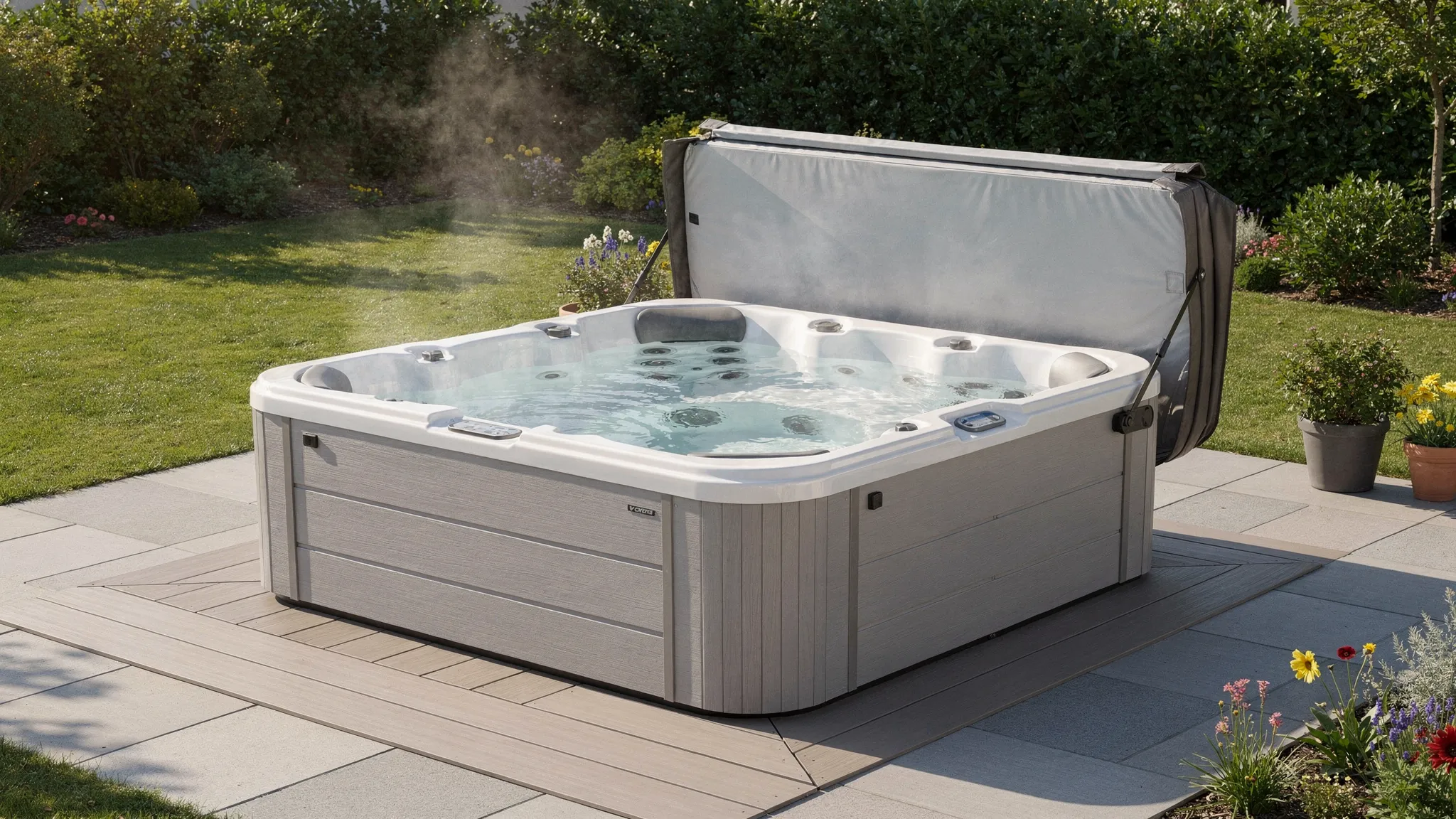
Hot Tub Installation Cost in 2026: What to Expect
Hot tub installation cost is one of the easiest parts of a spa purchase to underestimate. A plug-and-play model may need only a level surface and a suitable outdoor outlet, while a 240V dealer tub may require a dedicated circuit, a new pad, permits, and special delivery.
In 2026, most U.S. buyers should budget $500-$6,000 for hot tub installation, not including the price of the hot tub itself. Simple 120V installs can cost less. Complicated 240V installs with trenching, panel work, or crane access can go well above that range.
The right number depends less on the brand and more on your yard, electrical panel, distance from the house, delivery path, and whether the site already has a safe, level base.
Quick answer: typical hot tub installation cost in 2026
| Installation scenario | Typical 2026 cost | What is usually included |
|---|---|---|
| 120V plug-and-play on an existing suitable patio | $0-$700 | Basic delivery, minor site prep, no major electrical work |
| 120V plug-and-play with a new outlet or simple pad | $500-$2,000 | New GFCI-protected outlet, gravel or small pad, delivery placement |
| 240V hot tub on an existing suitable pad | $1,200-$3,500 | Dedicated 240V circuit, GFCI protection, disconnect, permit, inspection |
| 240V hot tub with new pad and electrical run | $2,500-$6,500 | Concrete or gravel base, electrical installation, permits, delivery placement |
| Difficult install with crane, trenching, or panel upgrade | $6,000-$12,000+ | Specialty access, long electrical run, service upgrade, complex site work |
These are planning ranges, not quotes. Labor rates, permit fees, and electrical code requirements vary by city and state. Always confirm the final scope with a licensed electrician and, if needed, your local building department.
The biggest cost driver: 120V vs 240V
Voltage is usually the first fork in the road.
A 120V plug-and-play hot tub is designed to run from a standard household-style outlet, provided the outlet meets the manufacturer’s requirements. That can make installation much cheaper because you may not need a new 240V circuit. However, many buyers still need an electrician to add a dedicated outdoor GFCI-protected receptacle, replace an unsafe outlet, or correct an outlet that is too far away.
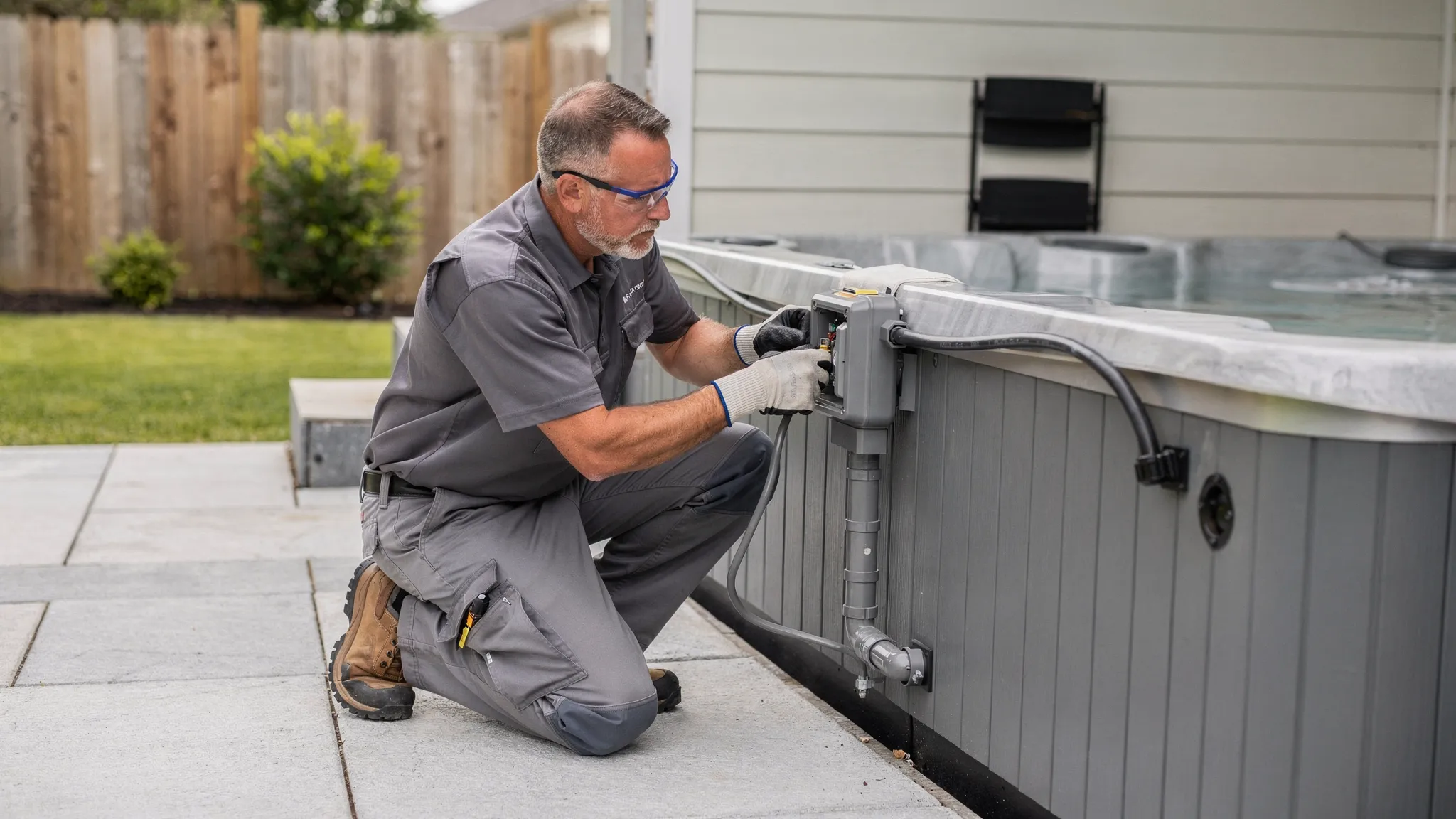
A 240V hot tub typically requires a dedicated 50A circuit, GFCI protection, a code-compliant disconnect, conduit or wiring, and inspection. This adds cost, but 240V models generally heat faster, recover heat better in cold weather, and support stronger jet and heater performance than most 120V tubs.
If you are still choosing between the two, read our full comparison of 120V vs 240V hot tubs before you commit. The cheaper install is not always the better long-term value, especially in cold climates or for frequent use.
Hot tub installation cost breakdown
A realistic installation budget should include more than the electrician. Delivery, the foundation, permits, access, and small accessories can all change the final number.
| Cost item | Typical 2026 range | Notes |
|---|---|---|
| Delivery to final location | $0-$800 | Dealer delivery may be included, curbside retail delivery often is not |
| Specialty moving or difficult access | $300-$1,500+ | Stairs, slopes, tight gates, and long carries add labor |
| Crane placement | $700-$2,500+ | Usually needed only for decks, walls, steep lots, or no clear path |
| Gravel base | $300-$1,200 | Often cheaper than concrete if properly compacted and drained |
| Concrete pad | $800-$3,000 | Cost depends on size, thickness, access, excavation, and local labor |
| Deck reinforcement | Varies widely | Requires structural evaluation, especially for filled hot tub weight |
| 120V outlet or dedicated circuit work | $250-$1,000 | Needed if the existing outlet is not suitable or code-compliant |
| 240V electrical installation | $900-$2,500 | Typical for a straightforward run from a capable panel |
| Panel upgrade or major electrical work | $1,500-$5,000+ | Needed when the panel lacks space, capacity, or safe condition |
| Electrical permit and inspection | $50-$500 | Depends on municipality and project scope |
| Startup chemicals and small accessories | $100-$700 | Steps, cover lifter, test strips, starter chemicals, handrail |
Electrical work around water should follow local code and the applicable version of the National Electrical Code, which jurisdictions adopt on different schedules. For homeowners, the practical takeaway is simple: do not improvise hot tub wiring, do not use extension cords, and do not skip GFCI protection.
Example installation budgets
The easiest way to understand hot tub installation cost is to look at real-world scenarios. These examples exclude the purchase price of the hot tub.
| Example buyer | Likely install cost | Why |
|---|---|---|
| Small 120V tub on an existing level patio | $200-$600 | Delivery placement and startup supplies only, assuming the outlet is already suitable |
| 120V retail tub with new gravel pad and outlet | $1,000-$2,000 | Modest site prep plus an electrician visit |
| 240V dealer tub near the main electrical panel | $1,500-$3,500 | Straightforward electrical run, permit, inspection, and basic placement |
| 240V tub with new concrete pad and longer wiring route | $3,500-$6,500 | Foundation work plus more electrical labor and materials |
| Premium tub in a hard-to-access backyard | $7,000-$12,000+ | Crane, trenching, panel upgrade, complicated delivery, or deck engineering |
The same hot tub can be inexpensive to install at one house and expensive at another. A 6-person 240V spa placed 10 feet from a capable electrical panel is a very different project from the same spa placed across a yard, behind a retaining wall, and on a deck that needs reinforcement.
Foundation costs: what the hot tub sits on matters
A filled hot tub is heavy. Depending on the model, water volume, and number of bathers, the total load can be several thousand pounds. The base must be flat, stable, level, and able to support the weight without settling.
Existing concrete patio
This is often the cheapest option if the slab is level, in good condition, thick enough, and properly drained. Cracked, sloped, or settling concrete may need repair before delivery.
New concrete pad
A new concrete pad is common for 240V tubs and larger spas. It costs more than gravel, but it creates a durable, clean, permanent base. The final price depends on excavation, access for the concrete crew, pad size, local labor, and whether old material must be removed.
Compacted gravel pad
A compacted gravel base can be a good value for many plug-and-play and mid-size hot tubs if it is built correctly. The key is proper excavation, compaction, drainage, and edge restraint. A poorly prepared gravel pad can settle and twist the hot tub shell over time.
Deck installation
Deck installs are where buyers need to be most careful. Most residential decks are not automatically designed for a filled hot tub. Before placing a spa on a deck, ask a qualified contractor or structural engineer to confirm the load capacity and reinforcement plan.
Deck reinforcement can cost little if the structure was designed for it in advance, or it can become one of the most expensive parts of the project if posts, beams, footings, or framing need to be added.
Delivery and access costs
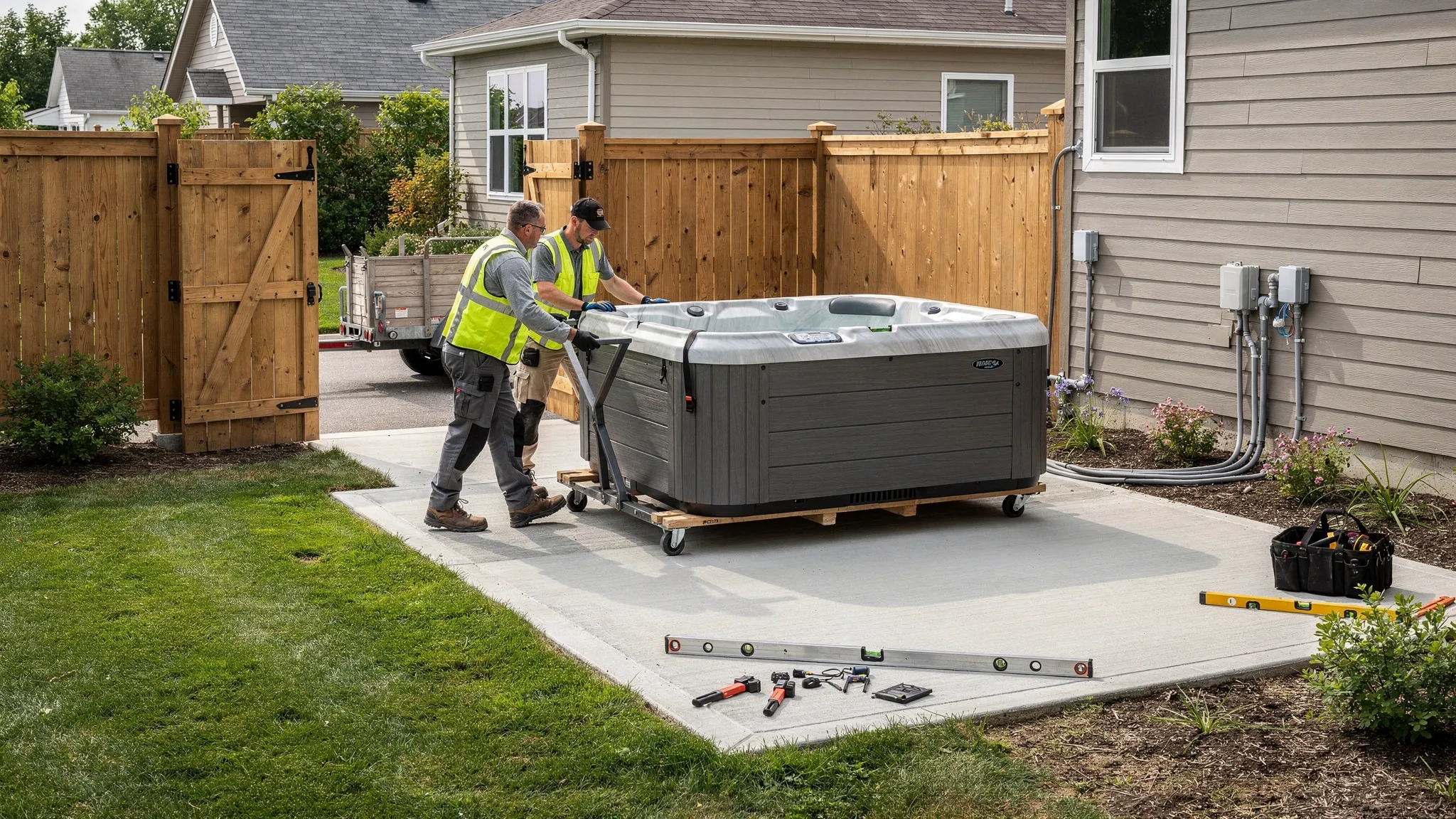
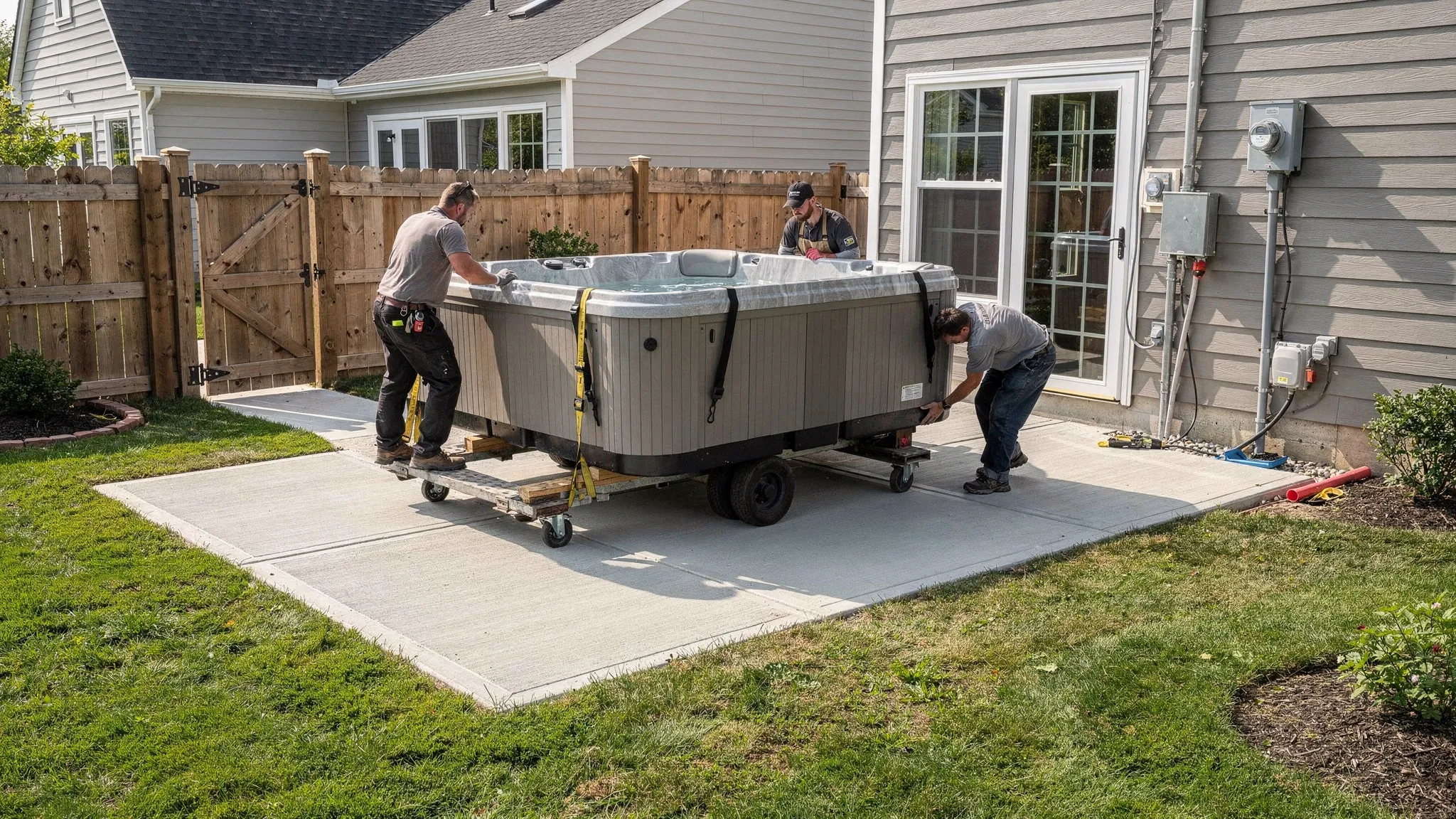
Hot tub delivery is not just a truck showing up. The crew needs a clear path from the curb or driveway to the final location. A typical hard-shell spa is large, rigid, and awkward to move, even before it is filled.
Before buying, measure:
- Gate width and fence openings
- Narrow side yards and turns
- Steps, slopes, and retaining walls
- Low rooflines, branches, and overhead wires
- Distance from driveway to pad
- Clearance around the final location for service panels
Retailers sometimes include curbside delivery, which may mean the spa is dropped at the end of the driveway. Dealer-sold tubs more often include delivery to the pad, but policies vary. Get the delivery scope in writing before comparing prices.
If the route is blocked, a crane may be the safest option. Crane costs vary by city, rental minimum, operator time, and complexity. It is not unusual for a simple crane pick to add $700-$2,500 or more.
Electrical costs: where quotes can swing the most
For 240V tubs, electrical cost depends heavily on distance and panel condition. A short run from a modern panel with available capacity is usually straightforward. A long run through finished spaces, underground trenching, or an overloaded older panel can multiply the cost.
Common electrical line items include the breaker, GFCI protection, outdoor disconnect, conduit, wiring, labor, permit, inspection, and sometimes trenching. If trenching is needed, call 811 or use your state’s utility locate process before digging. The national Call 811 service explains how utility marking works in the U.S.
For 120V tubs, the electrical bill can be zero only if the outlet already meets the manufacturer’s requirements. In many cases, a standard outdoor outlet is not on a dedicated circuit, is too far from the tub, lacks proper protection, or shares power with garage or patio loads. That is when a plug-and-play install stops being truly plug-and-play.
Permits, HOA rules, and local requirements
Electrical permits are common for 240V hot tub installs. Some areas also have zoning, setback, fencing, barrier, or HOA requirements for spas. Rural buyers may have fewer formal steps, while dense suburbs and cities may require more documentation.
Do not assume your dealer or retailer handles permits unless the contract says so. Ask who is responsible for the permit, inspection scheduling, and any corrections required by the inspector.
Skipping permits can create problems later if you sell the house, file an insurance claim, or need warranty service tied to electrical installation quality.
Hidden hot tub installation costs buyers forget
The hot tub itself gets most of the attention, but small installation details can add up quickly.
A common hidden cost is site correction. Maybe the patio has more slope than expected, the pavers are uneven, or the planned location blocks a service panel. Fixing those issues after delivery is harder and more expensive than catching them first.
Another hidden cost is electrical distance. Moving the tub 20 feet farther from the panel can require more conduit, more wire, more trenching, and more labor. In some cases, simply choosing the other side of the patio can save hundreds of dollars.
Accessories can also affect the real first-week budget. Steps, cover lifters, handrails, startup chemicals, filters, and water test supplies are not always included. A cover is often included with new hot tubs, but you should still confirm that in writing because retailer and dealer packages vary.
How to reduce installation cost without cutting corners
The best way to save money is not to hire the cheapest installer. It is to choose the right location and electrical plan before the spa arrives.
- Choose a ground-level location with a clear delivery path.
- Place the tub closer to the electrical panel when practical.
- Compare 120V and 240V models before assuming one is cheaper overall.
- Ask whether delivery to the final pad is included or only curbside.
- Get an electrician quote before buying a 240V model.
- Verify whether the tub includes a cover, steps, starter chemicals, or cover lifter.
- Avoid extension cords, temporary wiring, and unpermitted electrical shortcuts.
If you want a lower-installation path, start with our ranked guide to the best plug-and-play hot tubs of 2026. If performance, faster heating, and cold-weather recovery matter more, compare our best 240V hot tubs and include electrical work in your budget from day one.
Questions to ask before you buy
| Who to ask | Questions to confirm |
|---|---|
| Dealer or retailer | Is delivery to the final location included, or only curbside? Are steps, cover, and cover lifter included? |
| Electrician | Does my panel have capacity? What is the cost for the dedicated circuit, GFCI, disconnect, permit, and inspection? |
| Concrete or pad contractor | Is the base level, compacted, drained, and sized for this hot tub? |
| Building department | Do I need an electrical permit, zoning approval, barrier, or setback clearance? |
| HOA, if applicable | Are there rules for placement, noise, fencing, screening, or visible equipment? |
| Delivery crew | Is the path wide enough, and will stairs, slopes, or tight turns add charges? |
Get these answers before you pay for the hot tub. The worst time to discover an access or electrical problem is after the spa is sitting in your driveway.
Installation cost vs. total ownership cost
Installation is a one-time expense, but it is not the only cost that matters. Electricity, water care, filters, covers, and repairs all affect the long-term value of a hot tub.
A cheaper installation can be smart if the tub also fits your climate and usage. But if a low-cost 120V model struggles to hold temperature in winter, the savings may not feel as good after the first cold month. On the other hand, a 240V tub with a higher installation bill may deliver better heat recovery and comfort for frequent users.
Before choosing a model, estimate the operating cost too. Our hot tub monthly running cost calculator can help you compare how climate, size, insulation, cover quality, electricity rate, and use patterns affect monthly cost.
For broader buying strategy, use our guide on how to choose the best hot tub for your budget, backyard, and setup. Installation is only one part of the value equation.
Frequently Asked Questions
How much does hot tub installation cost in 2026? Most U.S. buyers should budget $500-$6,000 for installation, not including the hot tub. Simple 120V installs can cost under $700 if the site and outlet are ready. More complex 240V installs with a new pad, trenching, or panel work can exceed $6,000.
Is a 120V hot tub cheaper to install than a 240V hot tub? Usually, yes. A 120V plug-and-play tub may use an existing suitable outlet, while a 240V tub typically needs a dedicated circuit and permit. However, some 120V installs still require electrical work, and 240V may be worth the added cost for cold climates or frequent use.
Do I need an electrician for a plug-and-play hot tub? Not always, but many buyers should still have the outlet checked. The outlet must meet the manufacturer’s requirements, have proper GFCI protection, and be safely located. Do not use an extension cord to power a hot tub.
Do I need a permit to install a hot tub? Often, yes, especially for 240V electrical work. Requirements vary by municipality. Some areas may also have setback, barrier, zoning, or HOA rules. Call your local building department before installation.
Can I put a hot tub on a deck? Yes, but only if the deck is designed or reinforced for the load. A filled hot tub with bathers can weigh several thousand pounds. Have a qualified contractor or structural engineer verify the deck before delivery.
What is the most common hidden installation cost? Electrical surprises are the most common. Long wiring runs, trenching, full panels, old panels, and code corrections can add hundreds or thousands of dollars. Access issues, crane placement, and foundation repairs are also common surprises.
Should I install the pad or electrical first? Usually, finalize the hot tub model and location first, then coordinate the pad and electrical plan. The electrician needs the manufacturer’s electrical requirements, and the pad contractor needs the spa footprint, filled weight guidance, and service-clearance requirements.
Plan your hot tub budget before delivery day
A good hot tub budget includes the spa, installation, monthly operating cost, and likely maintenance. The buyer who plans all four is far less likely to be surprised after delivery.
Use Hot Tub Value Guide’s independent reviews, rankings, and free calculators to compare models by real-world value, not just showroom features. Start with the operating cost calculator, then compare models that fit your voltage, space, and budget before you schedule installation.
Helpful next steps