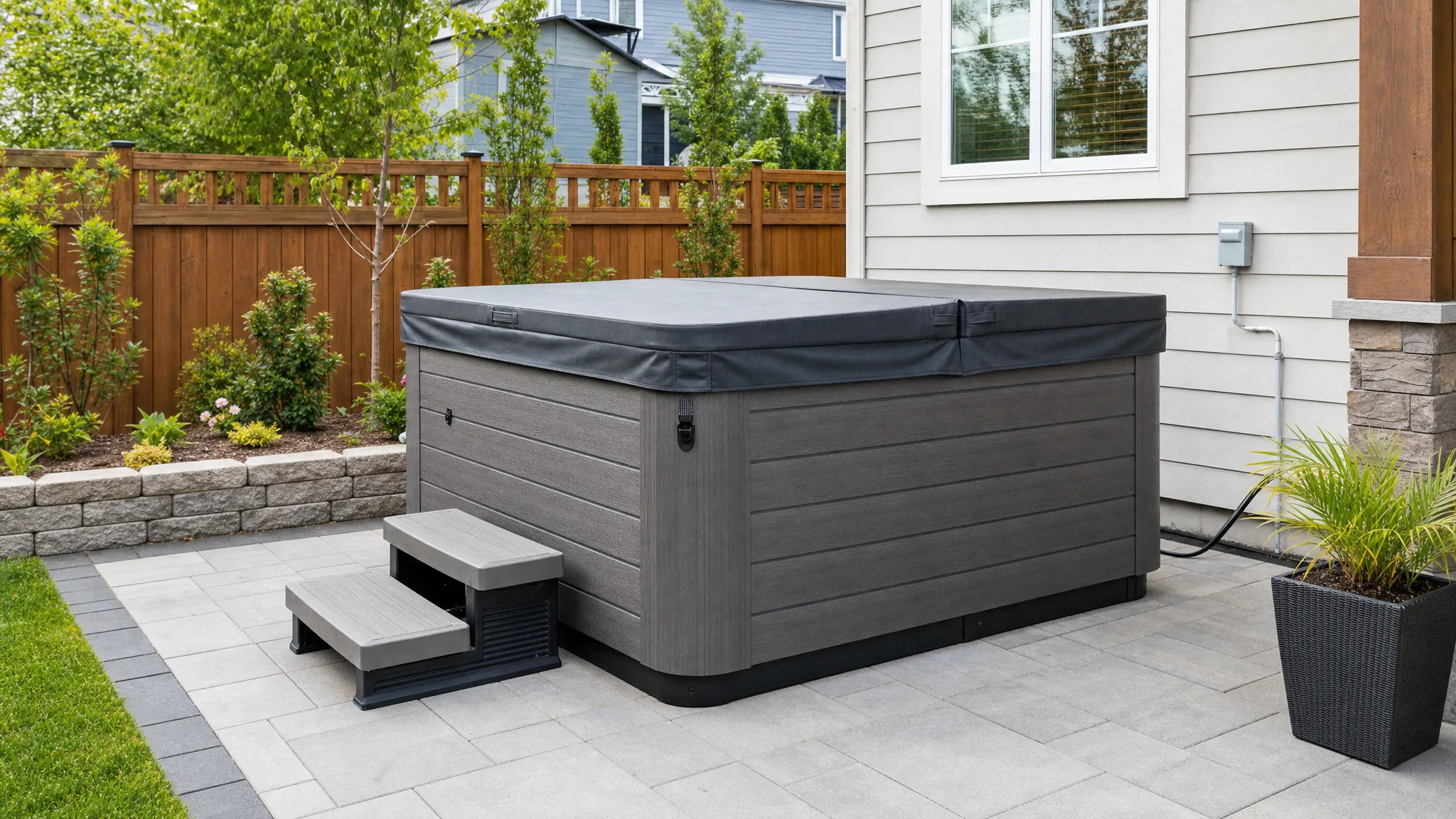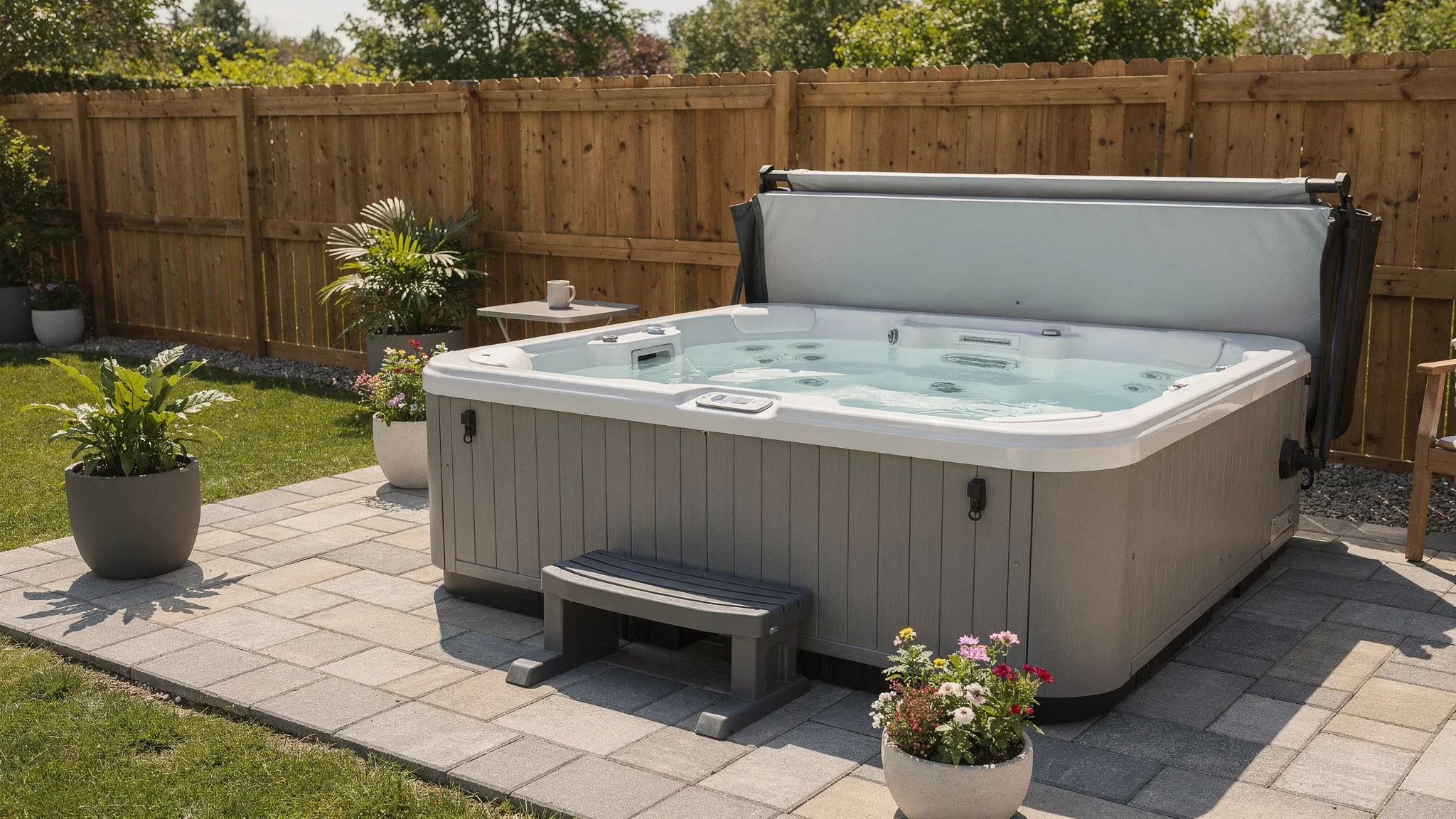
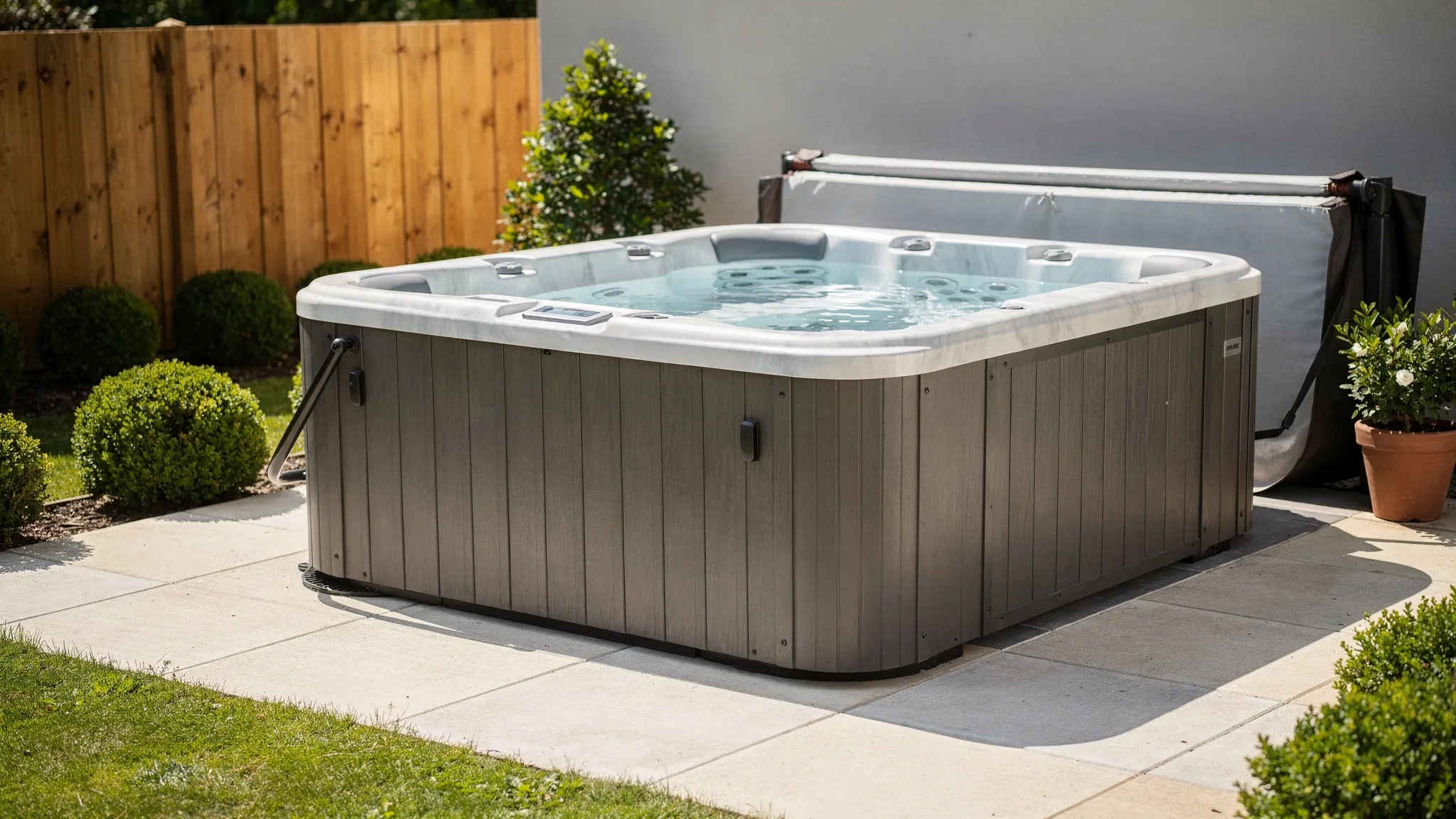
Hot Tub Weights Explained Before Delivery Day
Before delivery day, treat hot tub weights as two separate numbers: dry weight for moving the tub and filled weight for supporting it safely. Most portable hard-shell hot tubs weigh about 300 to 1,300 pounds dry, but once filled with water and people, they commonly reach 2,000 to 7,500+ pounds. That difference affects your delivery route, foundation, deck plans, electrical timing, crane costs, and even whether a “good deal” is worth buying.
The quick formula is simple:
Filled weight = dry weight + water gallons × 8.34 + estimated bather weight
So a 6-person hot tub that weighs 800 pounds dry and holds 360 gallons is already about 3,800 pounds with water. Add four adults at 180 pounds each, and you are near 4,500 pounds. That is why the right question is not just “How heavy is the hot tub?” It is “Can my delivery path and final base handle the real load?”
Typical Hot Tub Weights by Size
Hot tub weights vary by shell type, cabinet construction, insulation, water capacity, frame design, and equipment package. A compact two-person plug-and-play tub may be light enough for a spa dolly and a small crew, while a premium 7 or 8-seat acrylic model can require a professional delivery team, special equipment, or a crane.
Use these ranges for early planning, then verify the exact spec sheet before you pay a deposit.
| Hot tub size | Typical dry weight | Typical water capacity | Approx. filled weight before bathers | Common buyer notes |
|---|---|---|---|---|
| 2-person compact | 300 to 600 lb | 150 to 250 gal | 1,550 to 2,700 lb | Easier delivery, still too heavy for an unverified deck |
| 3 to 4-person | 400 to 800 lb | 190 to 300 gal | 2,000 to 3,300 lb | Common plug-and-play size for patios and small yards |
| 5 to 6-person | 500 to 1,000 lb | 280 to 400 gal | 2,850 to 4,350 lb | Most family tubs fall here before people are added |
| 7 to 8-person | 800 to 1,300+ lb | 380 to 500+ gal | 4,000 to 5,500+ lb | Often needs more clearance, stronger base, and 240V wiring |
Filled weight before bathers is not the final structural load. If six adults use the tub, you may add another 900 to 1,200 pounds or more. For a large family spa, the total load can easily exceed three tons.
Dry Weight, Shipping Weight, and Filled Weight Are Not the Same
Retail listings often create confusion because they may show one of several different weight numbers.
Dry weight is the weight of the hot tub without water. This is the number that matters most for delivery crews moving the spa from the truck to your backyard.
Shipping or crated weight includes packaging, pallet material, protective wrap, and sometimes accessories. It may be 50 to 200 pounds higher than dry weight, depending on the model and shipping method. If you are buying online, the freight carrier may care more about shipping weight than the product’s dry weight.
Filled weight includes water and is the number that matters for your slab, patio, pavers, or deck. If the tub will sit on an elevated deck, filled weight plus bathers is the number to discuss with a structural professional.
Operating weight is a practical planning number that includes the tub, water, cover, bathers, steps, accessories, and sometimes snow load on the cover in cold climates. It is not always listed by manufacturers, but it is the number real owners live with.
Why Hot Tub Weight Matters Before Delivery
A hot tub’s weight affects far more than the moment it comes off the truck. It changes how you plan the entire purchase.
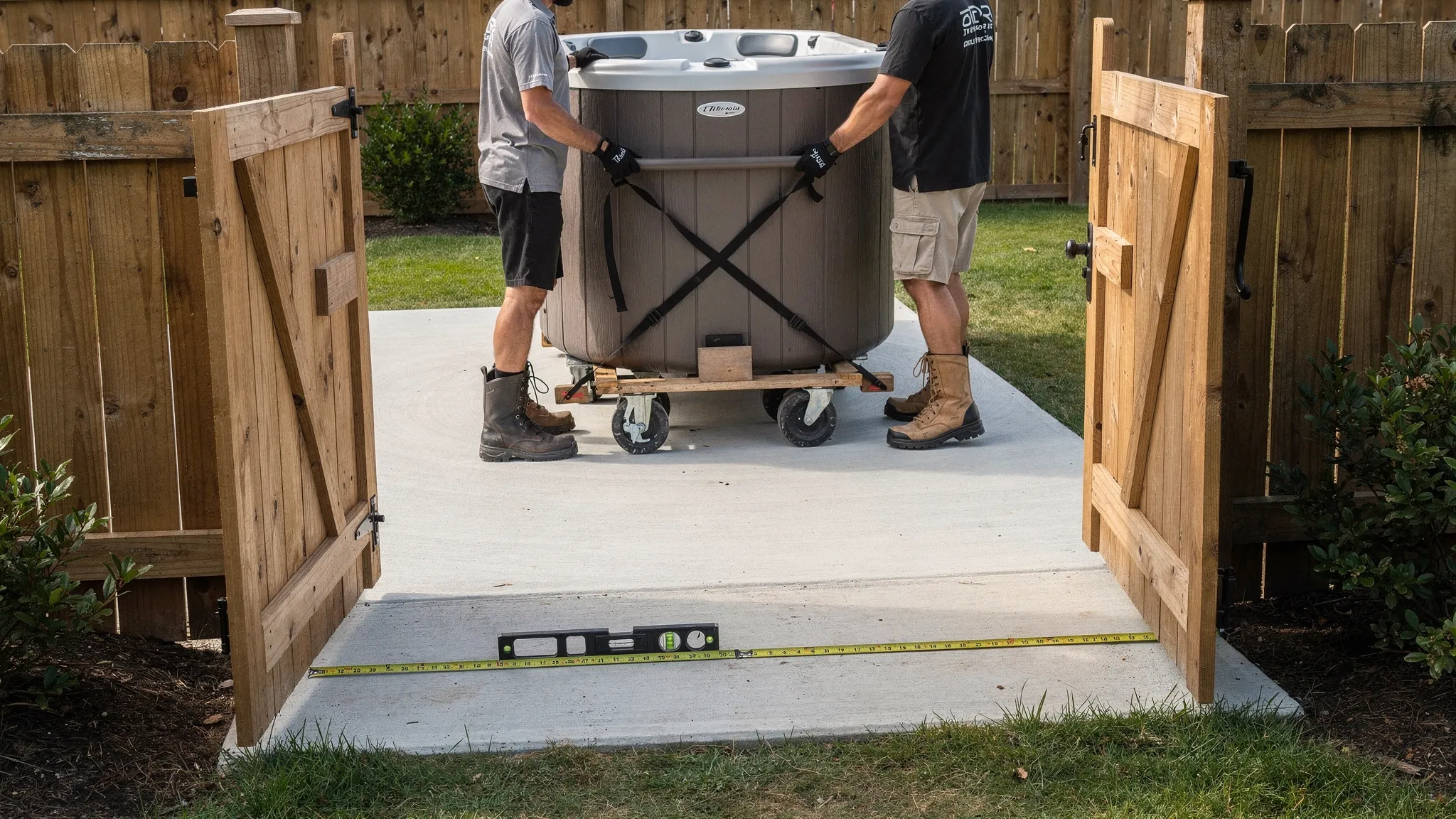
First, weight affects access. A 700-pound spa can often be moved on its side using a spa dolly, but the crew still needs a wide route, enough turning space, stable ground, and overhead clearance. A narrow side yard, tight gate, steep slope, or steps can turn a standard delivery into a special-equipment job.
Second, weight affects foundation cost. A hot tub must sit on a flat, level, stable base. Concrete slabs, properly prepared paver bases, reinforced decks, and manufacturer-approved spa pads are common options, but the right choice depends on total load, soil conditions, drainage, and local building practices.
Third, weight affects whether you should buy a larger model at all. A discounted 8-person tub is not a bargain if you need a crane, a new slab, a panel upgrade, and higher monthly energy costs just to make it usable.
Manufacturing choices also play a role. A tub’s shell, insulation, frame, cabinet, plumbing, and equipment all contribute to weight. This is not unique to spas. In many product categories, from outdoor equipment to apparel development and manufacturing partners such as Arcus Apparel Group, material selection and production methods directly affect durability, handling, and logistics. For hot tub buyers, the takeaway is simple: do not judge quality by weight alone, but do pay attention to what that weight says about delivery and ownership.
How to Calculate Your Hot Tub’s Real Filled Weight
The most reliable calculation uses the exact dry weight and water capacity from the manufacturer’s spec sheet.
| Input | Example |
|---|---|
| Dry hot tub weight | 800 lb |
| Water capacity | 360 gal |
| Water weight | 360 × 8.34 = 3,002 lb |
| Four adults | 720 lb |
| Estimated total in use | 4,522 lb |
Now divide that total by the footprint if you want a rough pounds-per-square-foot estimate. A 7 ft × 7 ft tub has a 49 sq ft footprint. In this example, 4,522 pounds divided by 49 sq ft equals about 92 pounds per square foot.
That calculation is useful, but it is not a substitute for a structural evaluation. Hot tub loads may not be evenly distributed across the entire footprint. Some models concentrate more load around the frame, base pan, or support points. If the tub will sit on a deck, balcony, rooftop, raised platform, or older patio, get qualified advice before delivery.
Foundation and Setup Costs to Budget For
Weight is one of the biggest reasons first-time buyers underestimate setup cost. The tub price is only one part of the project.
For a basic backyard installation, common setup costs can include the base, delivery upgrades, electrical work, accessories, and initial water-care supplies. These ranges vary by region and site complexity, but they are realistic placeholders for budgeting.
| Setup item | Typical budget range | Weight-related note |
|---|---|---|
| Gravel or paver base | $300 to $1,500+ | Must be compacted, level, and appropriate for the load |
| Poured concrete pad | $800 to $2,500+ | Often chosen for heavier family and premium tubs |
| Prefab spa pad | $150 to $600+ | Works for some models only when installed per instructions |
| Crane or special delivery | $300 to $1,500+ | May be needed for fences, slopes, stairs, or tight access |
| Basic steps, cover lifter, accessories | $200 to $800+ | Not weight-critical, but part of real setup cost |
| Initial chemicals and test kit | $50 to $150+ | Needed before normal use begins |
If a seller says delivery is “included,” ask what that means. Curbside freight delivery may only get the tub to your driveway. White-glove or backyard placement may have limits on distance, stairs, slopes, and access width. Dealer delivery is often more complete, but you still need what happens if the route is blocked.
Electrical Costs and Timing
Hot tub weight does not determine voltage, but larger and heavier tubs are more likely to be 240V hardwired models. Smaller plug-and-play tubs are often 120V, although they may still require a dedicated GFCI-protected outlet.
A 120V plug-and-play setup may cost little if you already have the correct outdoor outlet in the right location. If you need a new dedicated outlet, GFCI protection, conduit, or panel work, expect extra cost. A 240V hot tub commonly requires a licensed electrician, a dedicated circuit, an outdoor disconnect, proper GFCI protection, and permits where required. Many buyers should budget roughly $800 to $2,500+ for a 240V electrical installation, with higher costs possible for long wire runs, trenching, panel upgrades, or difficult access.
Do not improvise hot tub wiring. Do not use indoor extension cords, undersized wiring, or non-GFCI setups. Have the electrical plan reviewed and installed by a licensed professional who follows the manufacturer’s manual and local code.
If you are still deciding between plug-and-play and hardwired models, compare setup, heating performance, and long-term tradeoffs in our guide to 120V vs 240V hot tubs.
Does a Heavier Hot Tub Cost More to Run?
Not directly. Monthly energy use is driven more by water volume, insulation, cover quality, climate, wind exposure, set temperature, and usage habits than by dry weight alone.
That said, hot tub weights often correlate with size. A larger tub usually holds more water, has more surface area, and may take more energy to heat after refills or heavy use. A well-insulated 240V family tub can outperform a cheaper, poorly insulated model in cold weather, even if it is larger. A light tub with weak insulation may be easy to deliver but expensive to keep hot.
As a broad planning range, many owners spend $20 to $100+ per month on electricity, with cold climates, high utility rates, large water volumes, and poor covers pushing costs higher. Use the Hot Tub Monthly Running Cost Calculator to estimate your likely cost before choosing a model.
Maintenance and Warranty Issues Tied to Weight
Weight also matters after delivery. A heavier filled tub is not something you casually reposition later. If the pad slopes, the cover opens into a fence, the service panel faces a wall, or the tub blocks drainage, fixing the mistake can be expensive.
Plan for maintenance access before the spa is filled. Leave room to remove equipment panels, access pumps, open the cover, drain water safely, and reach the breaker or disconnect. If a model has service panels on a specific side, confirm orientation before the delivery crew sets it down.
Typical ongoing maintenance costs include chemicals, filters, water testing supplies, and eventual cover replacement. Many owners should budget around $15 to $40 per month for routine chemicals and testing, plus periodic filter replacement. Covers can become waterlogged over time, adding weight and increasing energy use. A replacement cover may cost several hundred dollars, depending on size, thickness, and features.
Warranty coverage can also depend on proper installation. Manufacturers may deny certain claims if the tub was placed on an uneven base, wired incorrectly, moved improperly, or damaged during self-delivery. Before delivery, read the warranty exclusions and confirm whether coverage starts at purchase, delivery, or installation. Also ask who handles warranty service if you bought online rather than through a local dealer.
Delivery-Day Checklist for Hot Tub Weights
Before the truck arrives, collect the numbers and measure the route. Do not rely on photos or guesses.
| What | Why it matters |
|---|---|
| Dry weight and shipping weight | Determines delivery equipment and crew requirements |
| Filled weight with water and bathers | Determines foundation and deck planning |
| Width, length, and height on its side | Determines gate and side-yard clearance |
| Delivery type | Curbside, driveway, backyard placement, or crane |
| Service panel location | Prevents the tub from being placed backward |
| Electrical location | Avoids unsafe wiring routes and post-delivery delays |
| Drainage path | Prevents water from draining toward the house or under the pad |
If you are buying from a dealer, ask for a pre-delivery site check. If you are buying online, ask the retailer and freight company what the driver will and will not do. Large online tubs can be a good value, but only if you are prepared for the logistics.
When to Choose a Smaller or Different Hot Tub
Skip the larger model, or pause the purchase, if the weight creates problems you cannot solve affordably.
A smaller tub may be the better value if your only available location is an elevated deck that has not been evaluated for spa loads. It may also be smarter if the delivery route requires a crane that pushes the total project beyond your budget.
You should also reconsider if your electrical panel cannot support the model without a costly upgrade, if your rental or HOA rules do not allow permanent spa placement, or if the tub would block service access after installation. In cold climates, be cautious with very cheap lightweight tubs if insulation, cover quality, and freeze protection are unclear.
If the full setup cost feels uncomfortable, step back and compare total ownership, not just the sale price. Our guide on how to choose the best hot tub for your budget, backyard, and setup can help you narrow the field before committing.
Weight Should Shape the Buying Decision, Not Scare You Away
Hot tub weights sound intimidating, but they are manageable when you plan around the right number. Use dry weight for delivery planning. Use filled weight plus bathers for foundation planning. Use gallons, insulation, voltage, and cover quality for energy planning.
The biggest mistake is treating delivery day as a simple drop-off. By the time the truck arrives, your base should be ready, your delivery path should be measured, your electrical work should be scheduled or complete, and your warranty requirements should be understood.
If you are still shopping, compare models by size, voltage, energy use, warranty, and total ownership cost rather than just jet count. For easier-delivery models, start with our best plug-and-play hot tubs. For larger hardwired family tubs, compare our best 240V hot tubs.
Frequently Asked Questions
How much does an empty hot tub weigh? Most portable hard-shell hot tubs weigh about 300 to 1,300 pounds empty. Compact plug-and-play tubs are usually on the lighter end, while large acrylic 240V tubs are often 800 pounds or more.
How much does a full 6-person hot tub weigh? A typical 6-person hot tub can weigh roughly 3,500 to 5,500 pounds once filled with water and people. The exact number depends on dry weight, gallon capacity, and how many bathers you include in the calculation.
Can my deck hold a hot tub? Do not assume it can. Many filled hot tubs exceed several thousand pounds, and elevated decks need proper structural evaluation. Ask a qualified contractor or structural engineer before placing any spa on a deck.
Does a heavier hot tub mean better quality? Not always. Heavier tubs may have thicker acrylic, more insulation, stronger frames, or more equipment, but weight alone does not prove durability. Look at construction, warranty, owner reviews, dealer support, insulation, and service access.
Who moves the hot tub from the curb to the backyard? It depends on the seller and delivery type. Curbside freight may leave the tub at the driveway, while dealer delivery may include backyard placement within certain limits. Confirm this in writing before ordering.
Should I fill the hot tub before the electrician finishes? Follow the manufacturer’s installation sequence and your electrician’s guidance. In general, hot tubs should not be powered on until they are properly filled and installed, but electrical work should be planned before delivery so the spa can be commissioned safely.
Plan the Weight Before You Pick the Tub
A hot tub that fits your budget but not your backyard is not a good value. Before you buy, write down the dry weight, filled weight, water capacity, voltage, delivery path, foundation plan, and estimated monthly running cost.
Hot Tub Value Guide is built to help buyers compare those real-world tradeoffs. Use our rankings, model reviews, calculators, and buyer tools to check whether a tub makes sense before delivery day, not after it is sitting in your driveway.