
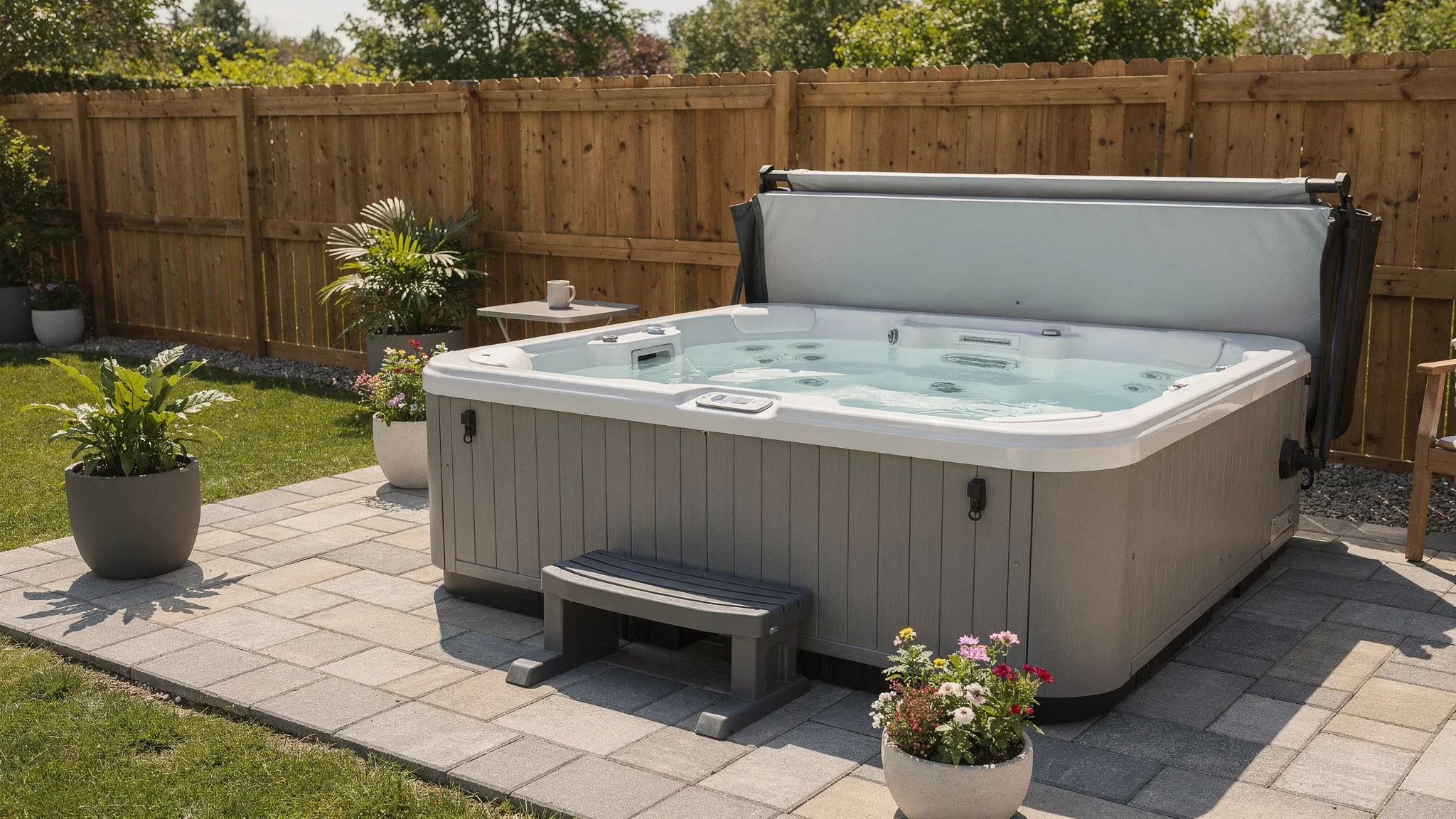
Brands of Hot Tubs That Deliver Real Value in 2026
The brands of hot tubs most likely to deliver real value in 2026 are Lifesmart, Strong Spas, Aquaterra, Freeflow, Nordic, Bullfrog, Hot Spring, Caldera, Master Spas, and Marquis, depending on your budget and setup. For most first-time buyers, the best value usually comes from a correctly sized hard-shell tub with a realistic warranty, manageable monthly energy use, and a local or retailer-backed service path, not from the brand name alone.
If you want the short version: budget shoppers should start with Lifesmart, Freeflow, Aquaterra, and select Strong Spas models. Cold-weather and family buyers should compare Strong Spas, Nordic, Bullfrog, Hot Spring, and Caldera. Premium buyers should only pay up for Bullfrog, Hot Spring, Caldera, Master Spas, Marquis, Jacuzzi, or Sundance if the dealer support, warranty terms, and total installed price justify it.
No hot tub brand wins every category. A great brand can still sell a poor-value model, and a decent model can become a bad buy if delivery, electrical work, service fees, or proprietary maintenance costs are ignored.
What “real value” means for hot tub brands in 2026
A value-focused hot tub is not necessarily the cheapest one. It is the tub that gives you the best balance of comfort, reliability, energy use, warranty coverage, and service support for the total amount you will spend over the first 5 to 10 years.
At Hot Tub Value Guide, we look at hot tubs through an weighted-methodology lens: price-to-features, setup cost, energy cost, durability, comfort, jet performance, maintenance burden, and warranty strength. That matters because brand marketing often emphasizes jet count, waterfalls, lighting, or “sale” pricing, while ownership costs are hidden in the fine print.
| Value factor | Why it matters when comparing brands |
|---|---|
| Purchase price | Dealer brands can vary by thousands of dollars by region and negotiation. |
| Setup cost | 120V tubs are easier to place, while 240V tubs usually need licensed electrical work and permits. |
| Energy use | Insulation, cover quality, water volume, climate, and usage habits can change monthly cost dramatically. |
| Durability | Shell type, cabinet design, plumbing quality, and parts access affect long-term ownership. |
| Comfort | Seat depth, footwell space, lounger fit, and real seating capacity matter more than brochure capacity. |
| Jets and pumps | Jet count alone is not enough. Pump sizing, plumbing design, and seat layout matter. |
| Maintenance | Filters, chemicals, cartridges, UV bulbs, salt systems, and proprietary parts affect recurring cost. |
| Warranty and service | A warranty is only as useful as the dealer, retailer, or service network behind it. |
Before choosing between brands, decide whether you are buying a plug-and-play 120V tub, a convertible model, or a hardwired 240V tub. If you are not sure, start with our 120V vs 240V hot tub guide.
Best-value hot tub brands by buyer type
These price bands are realistic 2026 shopping ranges for many U.S. buyers, but they are not guarantees. Dealer pricing, freight, taxes, seasonal promotions, included accessories, and regional labor costs can change the final number.
| Brand | Best value for | Typical 2026 tub price range | Setup profile | Where value can break down |
|---|---|---|---|---|
| Lifesmart | Budget plug-and-play and small-space buyers | $3,000 to $6,500 | Mostly 120V plug-and-play | Limited jet power, shorter warranty, fewer premium features |
| Freeflow | Simple entry-level hard-shell buyers | $3,500 to $8,000 | Mostly 120V or convertible | Smaller pumps and simpler cabinets than premium lines |
| Aquaterra | Costco-style value shoppers | $4,000 to $8,500 | 120V, convertible, or select 240V | Retailer support may differ from local dealer support |
| Strong Spas | Cold-weather value and retail-channel buyers | $4,000 to $13,000+ | 120V and 240V options | Service path and warranty execution need checking by model |
| Nordic Hot Tubs | Simple, durable dealer-channel tubs | $7,000 to $13,000+ | Often 240V or convertible | Less flashy design, dealer quote must stay competitive |
| Bullfrog Spas | Premium buyers who want seat customization | $10,000 to $22,000+ | Mostly 240V dealer install | Higher price and proprietary components |
| Hot Spring and Caldera | Long-term premium ownership | $8,000 to $22,000+ | Mostly 240V dealer install | Higher upfront cost and potentially higher accessory costs |
| Master Spas and Marquis | Jet-focused dealer shoppers | $9,000 to $18,000+ | Mostly 240V dealer install | Dealer pricing, proprietary consumables, and service quality vary |
Use this table as a starting point, not a final ranking. If you want model-level rankings instead of brand-level guidance, compare our Best Hot Tubs 2026 hub, best plug-and-play hot tubs, and best 240V hot tubs.
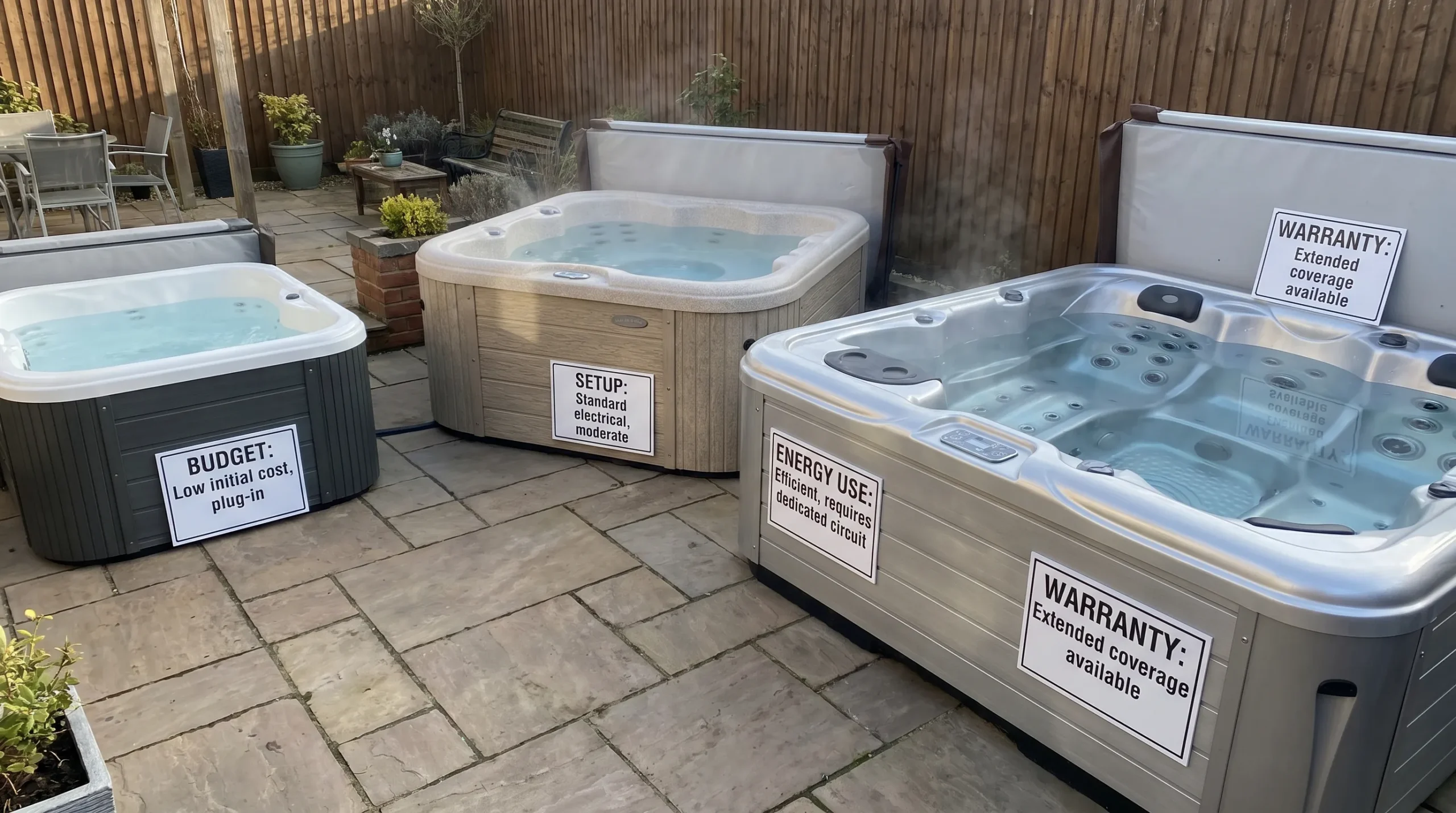
1. Lifesmart: best for budget plug-and-play value
Lifesmart is one of the strongest value brands for buyers who want a simple hard-shell spa without dealer pricing. The brand is commonly associated with 120V plug-and-play models, compact footprints, and lower purchase prices than premium dealer brands.
The value case is strongest if you want an easy first hot tub for two to five people, especially if your budget is under about $5,000 to $6,500. Models like the Rock Solid series tend to appeal to shoppers who care more about setup simplicity and a sturdy basic shell than premium jet therapy, app controls, or luxury trim.
Setup costs are usually lower than a 240V dealer tub, but “plug-and-play” does not always mean “plug into any random outlet.” Many buyers still need a proper outdoor GFCI-protected dedicated outlet installed or verified by a licensed electrician. Depending on your home, that can cost roughly $150 to $800, and more if the panel is far from the tub location or needs upgrades.
Energy use depends heavily on climate and cover condition. A smaller 120V tub in a mild climate might run around $20 to $60 per month, while cold-weather use can be noticeably higher. Use the hot tub cost-to-run calculator before assuming the low purchase price is the full story.
When to skip Lifesmart: Skip if you want strong jet pressure, frequent winter entertaining, deep lounger ergonomics, or premium dealer-backed service. Lifesmart is usually a good value because it stays simple, not because it competes feature-for-feature with high-end 240V spas.
2. Strong Spas: strong value when the service path is clear
Strong Spas can be a good value brand for shoppers comparing both plug-and-play and 240V tubs, especially through retail and warehouse channels. The brand appears in several value categories because it offers a wide spread of models, from more affordable Aqualife and Evolution tubs to larger Summit and Durasport options.
The best use case is a buyer who wants a hard-shell spa with decent cold-weather practicality without jumping straight into the most expensive dealer brands. Some Strong Spas models also appeal to buyers who want straightforward delivery through large retailers, although the exact warranty and service experience can vary.
For 120V models, expect easier setup but slower heating and limited simultaneous heating and jet performance in many configurations. For 240V models, budget for licensed electrical work, often around $1,000 to $3,000 or more depending on panel capacity, trenching, distance, permits, and local code requirements. Do not let a salesperson minimize electrical cost without a real quote.
Maintenance is usually similar to other standard chlorine or bromine tubs: chemicals, filters, test strips, water balancing products, and occasional cover care. A realistic annual maintenance budget for many owners is $300 to $800, not including major repairs or cover replacement.
When to skip Strong Spas: Skip if you cannot confirm who handles warranty service in your area, what trip fees apply, and how quickly parts are available. A strong-looking spec sheet can lose value quickly if support is unclear.
3. Aquaterra: good value for Costco-style buyers
Aquaterra is often a smart value option for shoppers who like the simplicity of warehouse or retailer purchasing. Many buyers consider Aquaterra because it offers hard-shell alternatives to dealer spas at a lower price point, often with simpler buying logistics.
The value is strongest for first-time buyers who want a real hard-shell tub and are comfortable with a less personalized dealer experience. Aquaterra models can make sense for patios, small backyards, and families who want practical soaking without paying premium dealer pricing.
The setup depends on the model. Some are 120V plug-and-play, some are convertible, and some may be designed for 240V operation. Convertible models can be attractive because you can start simpler and potentially upgrade electrical service later, but conversion should always be handled according to the manufacturer’s instructions and local electrical code by a qualified professional.
Energy use will vary by water volume, cover quality, and winter exposure. If you live in a windy or freezing climate, do not assume any retail-channel tub will perform like a fully insulated premium spa unless you have confirmed insulation details and owner feedback.
When to skip Aquaterra: Skip if you want a white-glove local dealer experience, wet testing before purchase, custom shell/cabinet choices, or immediate local service coordination.
4. Freeflow: simple, low-hassle hard-shell tubs
Freeflow is another strong entry-level value brand, especially for buyers who want an easy-to-own hard-shell spa without moving into premium pricing. The brand is known for simple molded designs and plug-and-play convenience, making it a practical step up from inflatable hot tubs.
Freeflow can be a good fit for couples, small households, renters with permission, and homeowners who want a lighter ownership commitment. Compared with premium acrylic spas, the appeal is lower cost, fewer complex features, and easier placement.
Running costs are usually manageable because many models are smaller, but winter performance still depends on climate and usage. A compact tub used several nights per week in a cold climate can cost much more to run than a brochure implies, especially if the cover gets waterlogged or the tub is exposed to wind.
Warranty expectations should be realistic. Entry-level tubs usually do not match premium dealer warranties for components, labor, cabinet finish, or long-term service. That does not make them bad values, but it means you should buy them for what they are: simple, approachable, lower-cost hard-shell spas.
When to skip Freeflow: Skip if you want large family seating, strong therapy-style jets, premium cabinet styling, or a tub you expect to keep for 15 years with minimal repairs.
5. Nordic Hot Tubs: value through simplicity, not flash
Nordic Hot Tubs can be a strong value brand for buyers who prefer simpler dealer-channel spas with fewer gimmicks. The brand is often considered by shoppers who want a durable, practical tub with good everyday soaking comfort instead of a long list of luxury features.
Nordic makes the most sense when the dealer quote stays reasonable. If a Nordic quote is thousands below a more complex premium tub and the dealer has a good service record, it can be an excellent middle-ground choice. If the quote rises close to top-tier premium brands, you need to compare warranty, insulation, seating, and dealer support carefully.
Most buyers should plan for 240V installation or at least confirm electrical requirements for the exact model. A 240V tub usually heats faster and performs better in cold climates than a basic 120V setup, but the higher setup cost must be included in your budget.
Maintenance tends to be more straightforward than brands built around highly proprietary water-care systems, although exact filter and parts costs vary by model. Ask for replacement filter prices, cover replacement pricing, and typical service call costs before buying.
When to skip Nordic: Skip if you are shopping mainly for LED-heavy styling, app controls, waterfalls, or showroom luxury. Nordic’s value is usually in simplicity and soaking performance, not in flashy extras.
6. Bullfrog Spas: premium value if customization matters
Bullfrog is not a budget brand, but it can deliver real value for premium buyers who care about long-term comfort and seat customization. Its JetPak system is the main differentiator: instead of choosing a fixed jet layout forever, buyers can select seat modules with different jet patterns.
That can be valuable if multiple people in the household want different seating experiences. It can also reduce the risk of buying a tub that looks good in the showroom but has one or two seats nobody uses.
The trade-off is cost. Bullfrog models are typically premium-priced, and proprietary components can cost more than generic parts. Dealer quality also matters. A Bullfrog bought from a responsive dealer with clear warranty support can be a different ownership experience from the same brand sold through a weak service operation.
Expect 240V installation for most family-sized Bullfrog tubs. That means a dedicated circuit, GFCI protection, bonding and grounding requirements, permits where required, and a licensed electrician. Also budget for a level pad, delivery access, and possible crane or special placement costs if your yard is difficult.
When to skip Bullfrog: Skip if you are stretching your budget just to buy the brand. A smaller premium tub is not automatically a better value than a well-matched midrange tub with lower operating and repair costs.
7. Hot Spring and Caldera: premium value for long-term owners
Hot Spring and Caldera, both associated with Watkins Wellness, are premium brands that can deliver real value for buyers who plan to keep a tub for many years and have a strong local dealer. They are rarely the cheapest options, but they often compete well on build quality, dealer network, comfort, and resale reputation.
The value case is strongest when the dealer provides transparent pricing, a written warranty explanation, fair accessory pricing, and reliable service. A higher upfront price can make sense if it reduces ownership friction over the next decade.
The cost side deserves attention. Premium dealer spas often start around the upper four figures and can move well into the $15,000 to $22,000+ range depending on series, size, options, and market. Accessories such as steps, cover lifters, upgraded covers, salt systems, water-care cartridges, delivery, and electrical work can add significantly to the total.
Energy performance is usually a major selling point for premium brands, but your actual bill still depends on water temperature, climate, cover condition, wind exposure, and electricity rate. If a dealer gives you a monthly energy estimate, ask what climate, electricity rate, and usage pattern it assumes.
When to skip Hot Spring or Caldera: Skip if the quote is vague, the dealer will not provide a full out-the-door price, or the recurring cost of proprietary water-care products does not fit your budget.
8. Master Spas and Marquis: good values when the dealer price is disciplined
Master Spas and Marquis can both be good value brands for buyers who care about strong seating comfort and jet performance. They often appeal to shoppers who are comparing midrange and premium dealer tubs but do not want to pay only for a luxury badge.
The key phrase is “when priced correctly.” Dealer-only brands can vary widely by market. A fair quote with delivery, cover, lifter, steps, start-up chemicals, and clear service terms can be a solid value. A high-pressure quote with vague discounts and expensive add-ons can quickly become a poor buy.
Master Spas buyers should pay attention to water-care system costs, filters, and replacement parts. Marquis buyers should evaluate actual seat comfort and jet feel rather than relying on jet count or showroom claims. With both brands, wet testing or at least dry testing the exact model is worth the time.
Most models in this category are 240V, so electrical and pad costs matter. A realistic project budget should include the spa, tax, delivery, electrical work, permits, pad or reinforced surface, accessories, chemicals, and any privacy or wind-blocking improvements.
When to skip Master Spas or Marquis: Skip if the dealer creates urgency, refuses to itemize the quote, or cannot explain labor coverage and trip fees in writing.
Brands to price carefully: Jacuzzi, Sundance, Cal Spas, and other big names
Jacuzzi and Sundance are well-known brands with strong name recognition, and some models can be excellent tubs. The problem is that name recognition can inflate buyer expectations and pricing. A famous logo does not automatically mean better value than Hot Spring, Bullfrog, Nordic, Marquis, Master Spas, or a strong retail-channel model.
Cal Spas is another brand where the model, dealer, and warranty execution matter a lot. Some buyers are attracted to high jet counts and strong-looking spec sheets, but the real value depends on build quality, parts availability, and local service support.
This does not mean you should avoid these brands. It means you should force the comparison back to total ownership value. If a Jacuzzi, Sundance, or Cal Spas quote is competitive, the dealer is excellent, and the warranty terms are clear, it may be a good buy. If the quote relies on brand prestige, inflated MSRP discounts, or vague service promises, keep shopping.
What you should budget beyond the brand name
The tub price is only one part of the purchase. Many first-time buyers underestimate the cost of installation, monthly energy, and recurring maintenance.
| Cost category | Typical 2026 range | Notes |
|---|---|---|
| Budget 120V hard-shell tub | $3,000 to $6,500 | Lower entry cost, slower heating, limited jet/heater performance in many models. |
| Midrange 240V family tub | $7,000 to $14,000 | Better cold-weather and family performance, higher setup cost. |
| Premium 240V tub | $12,000 to $25,000+ | Better finish, stronger dealer support potential, but higher depreciation risk if overpriced. |
| Basic electrical verification or outlet work | $150 to $800+ | Applies mostly to 120V setups; must be code-compliant and outdoor-rated. |
| 240V electrical installation | $1,000 to $3,000+ | Can be higher with long runs, panel upgrades, trenching, or permit requirements. |
| Pad or base | $500 to $2,500+ | Concrete, pavers, spa pad, or reinforced deck evaluation. |
| Monthly energy | $20 to $200+ | Climate, insulation, cover quality, size, use, and utility rate drive the range. |
| Maintenance supplies | $300 to $800+ per year | Chemicals, filters, test supplies, cleaning products, and periodic replacement items. |
| Replacement cover | $400 to $900+ | Often needed every few years depending on weather and care. |
If a premium 240V tub is part of a larger backyard project, compare the dealer’s promotional financing against cash, credit union loans, HELOC options, or broader home financing options before signing. The monthly payment can look manageable while the total project cost is still too high.
Warranty: the hidden difference between a value brand and a regret purchase
Warranty length matters, but warranty execution matters more. A tub with a long warranty and poor local service may be more frustrating than a simpler tub with shorter but clearer support.
Before buying any brand, ask for the full warranty document and get written answers to these questions:
- Who performs warranty service in your ZIP code?
- Are labor and trip charges covered, and for how long?
- Does the warranty start at purchase, delivery, or installation?
- Are the shell, shell surface, plumbing, controls, pumps, heater, cabinet, cover, and labor covered for different lengths?
- What maintenance records are required to keep coverage valid?
- Are parts proprietary, and how much do common replacements cost?
- Is the warranty transferable if you sell the home or tub?
Be cautious with any brand or dealer that only talks about “lifetime shell” language while avoiding components, labor, and service-call fees. Pumps, heaters, control boards, covers, and leaks are where real ownership costs often appear.
When to skip a hot tub brand or deal
A brand may be worth considering in one situation and worth skipping in another. The warning signs are usually the same, regardless of logo.
| Red flag | Why it matters |
|---|---|
| The dealer refuses an itemized quote | You cannot compare real value without delivery, accessories, tax, and setup details. |
| The “sale” price expires today | High-pressure urgency is often used to prevent comparison shopping. |
| Jet count is the main selling point | More jets do not guarantee better comfort or stronger performance. |
| Electrical cost is dismissed as minor | 240V installation can materially change the budget. |
| Warranty labor is unclear | Parts coverage without affordable labor can still leave you with large bills. |
| The cover feels flimsy or poorly insulated | A weak cover increases energy cost and can shorten ownership satisfaction. |
| The tub is too large for your real use | Bigger tubs cost more to heat, fill, clean, and cover. |
| No one can explain parts availability | Long repair delays can ruin the ownership experience. |
Also skip inflatable hot tubs if your goal is long-term value. They can make sense for temporary use, renters, or mild-climate testing, but hard-shell tubs are usually the better value for multi-year ownership.
The bottom line: the best brand is the one that fits your setup
For most buyers in 2026, the best-value brand depends on the job the hot tub needs to do.
If you want the lowest practical entry cost, start with Lifesmart, Freeflow, Aquaterra, and selected Strong Spas models. If you need cold-weather performance or family use, compare Strong Spas, Nordic, Bullfrog, Hot Spring, and Caldera. If you want premium jets and dealer support, include Master Spas, Marquis, Jacuzzi, and Sundance, but require a strong written quote and service plan.
The smartest move is to compare models, not just brands. A well-priced, well-supported midrange tub can beat a famous premium brand if it fits your space, electrical setup, climate, and maintenance tolerance.
Frequently Asked Questions
What are the best brands of hot tubs for value in 2026? Lifesmart, Freeflow, Aquaterra, Strong Spas, Nordic, Bullfrog, Hot Spring, Caldera, Master Spas, and Marquis can all deliver good value in the right situation. The best choice depends on whether you need a budget 120V tub, a cold-weather 240V family tub, or a premium dealer-supported spa.
Are premium hot tub brands worth the extra money? Sometimes. Premium brands can be worth it if you plan to keep the tub for many years, have a strong local dealer, and value better comfort, insulation, warranty support, and resale reputation. They are not worth it if the price forces you to ignore electrical, maintenance, or repair costs.
Which hot tub brands are best for first-time buyers? First-time buyers should usually start with Lifesmart, Freeflow, Aquaterra, and Strong Spas for lower-cost hard-shell options. If you already know you want stronger winter performance and family use, compare Nordic, Hot Spring, Caldera, Bullfrog, and Master Spas.
Is a 120V hot tub or 240V hot tub the better value? A 120V tub is often the better value for smaller budgets, mild climates, and simple setup. A 240V tub is usually better for cold climates, frequent use, larger families, and stronger heating performance. The better value depends on installation cost and how you will actually use the tub.
How much should I budget for hot tub maintenance? Many owners should budget about $300 to $800 per year for chemicals, filters, test supplies, and basic upkeep. Proprietary cartridges, UV bulbs, salt systems, and replacement covers can increase that number. See our hot tub maintenance for beginners guide for a practical upkeep plan.
Should I buy from a dealer or a big-box retailer? Dealers can offer wet testing, delivery coordination, setup help, and local service, but prices are often higher and negotiation matters. Big-box retailers can offer simpler pricing and lower entry costs, but service support may be less personal. The better option is the one with the clearest total price and support path.
Ready to compare specific models? Start with our hot tub buying guide, then use the rankings and cost tools on Hot Tub Value Guide to check whether the brand you are considering still looks like a good value after setup, energy, and maintenance are included.


